
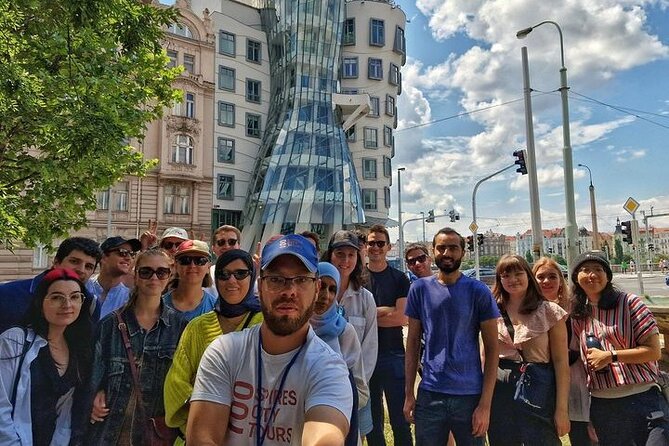
Reviewed · PRAGUE COMMUNISM TOURS
Second World War & Communism (Tip-based 3 hour tour)
Prague turns into a history timeline fast. This tip-based Second World War and Communism walk connects the fate of Czech Jews, the Prague Uprising, and the rise and fall of communism, with a real finale at the Operation Anthropoid site. It is built for people who want their Czech history in clear, human-sized chunks rather than a museum-only marathon.
I love the way the route uses specific places with specific stories, from Pinkas Synagogue to Wenceslas Square. I also love the guide style many people highlight, like Kamil and Vaclav using a clear, linear flow and storytelling that keeps your attention as you move city blocks.
One consideration: you should plan for moderate walking and not expect this to work well if mobility is limited. The tour is not recommended for travelers with mobility problems, and one reviewer even flagged that the walking felt closer to 5K.
In This Review
- Key highlights worth your attention
- Tip-based value for a 3-hour Prague history walk
- Klárov memorials and the WWI to WWII setup
- Pinkas Synagogue: the fate of Czech Jewish communities during WWII
- Staroměstské náměstí and the Prague Uprising context
- Wenceslas Square, 1968, and the site of Jan Palach
- OC Quadrio and Kafka, plus art under communism
- Narodni třída and the Velvet Revolution, then Vaclav Havel at National Theater
- Dancing House and the story behind the Valentine’s Day bombing
- Operation Anthropoid finale at St Cyril and St Methodius Cathedral crypt
- What makes the guides matter on this route
- Walking, group size, and how to prepare like a pro
- So, should you book the Second World War and Communism tour?
Key highlights worth your attention
- WWII to communism in one tight storyline: you move from wartime occupation and resistance to the Cold War, then to the Velvet Revolution.
- Pinkas Synagogue as a serious center point: you focus on the fate of Czech Jewish communities and the choices that led to emigration versus staying.
- The Prague Uprising gets real context: you learn what happened during the uprising and how the end of WWII set the stage for communism.
- Cold War details you will remember: the 1968 Warsaw Pact invasion and where Jan Palach’s self-immolation took place.
- Art and public memory under communism: you stop at OC Quadrio for the Rotating Head of Kafka and a discussion of art in that era.
- Operation Anthropoid finale included: entry to the Museum of Anthropoid Operation plus the crypt hideout where the soldiers stayed.
Tip-based value for a 3-hour Prague history walk
This tour is priced as a tip-based experience, with a listed price of $3.60 per person and an in-person, English-speaking certified guide. The real value comes from what you get in only about 3 hours: major WWII and Cold War landmarks, plus free entry to the Museum of Anthropoid Operation.
It also helps that the tour is set up as a private group for your party, so you are not forced into a big scramble for attention at every stop. Reviews give you a strong signal that the guiding matters here, with people singling out clear explanations and strong storytelling.
If you are watching your budget, the tip-based format can be a great deal, as long as you go in with the mindset that you will tip fairly for the effort. One review even called out appreciation for that pay structure, saying they ended up paying more than they did for similar tours because they felt it was worth it.
More of the years behind the Iron Curtain:
- Prague: Communism History and Nuclear Bunker Guided Tour
★ 4.7 · 2,417 reviews - Prague Communism History and Nuclear Bunker Tour
★ 5.0 · 1,742 reviews - Communism & Nuclear Bunker Tour + 70s Canteen Lunch (own expense)
★ 5.0 · 1,036 reviews
Klárov memorials and the WWI to WWII setup
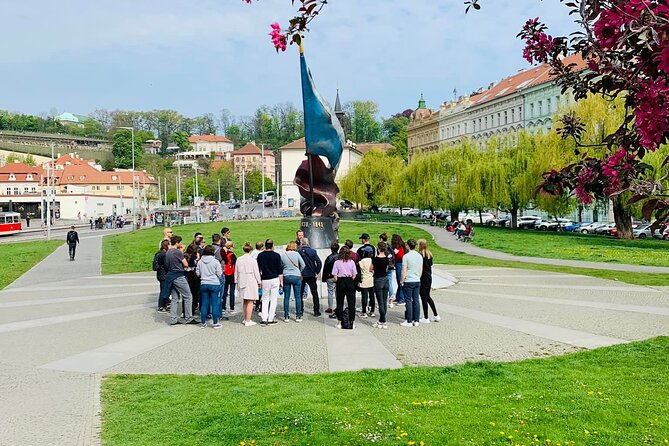
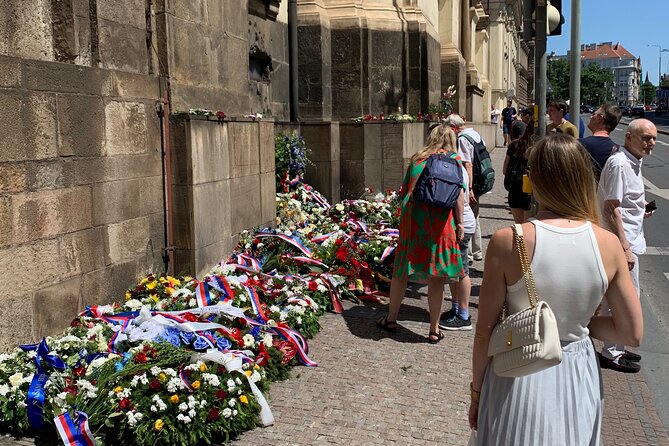
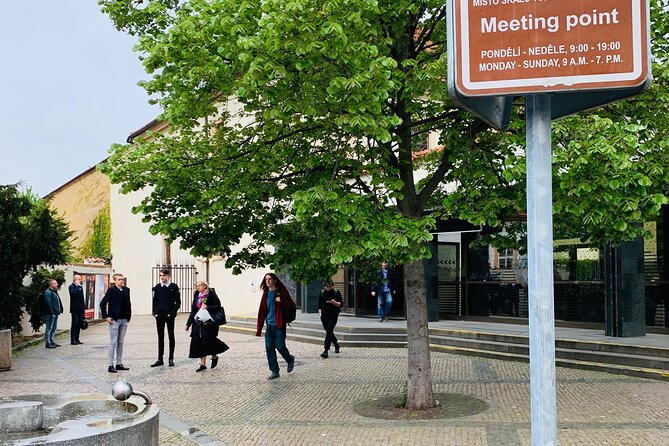
You start at Metrocafe Klárov, a practical jump-off point in the Malá Strana area. The first stop is Klárov, where you visit two key monuments tied to resistance and memory: the Memorial to the Second Resistance and the Winged Lion Memorial.
This is not just a quick photo stop. The guide sets the stage by explaining how Czechoslovakia gained independence in the First World War, why it became one of the first places Hitler occupied, and what happened to Czechoslovak soldiers during WWII.
This kind of grounding matters because the rest of the tour moves through fast shifts in power. If you start with the “why,” the later stories about uprisings and communism feel connected instead of random.
Stop time is about 20 minutes, and there is no admission ticket for this part.
Pinkas Synagogue: the fate of Czech Jewish communities during WWII
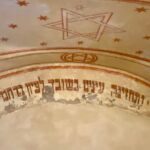
Next you head to Pinkas Synagogue for one of the tour’s most emotionally direct segments. Here, the focus is on the fate of Czech Jewish people during WWII, including how many managed to emigrate and what happened to those who did not.
This is one of those stops where the value is in the guide’s framing. You are learning history, but also learning how choices, persecution, and survival played out inside a real community. Even if you think you know the broad story of the Holocaust, this kind of place-based narrative is different because it anchors the facts in the reality of Czech Jewish life.
Plan for about 15 minutes at this stop. Admission is free, but do not expect it to feel like a casual stop.
Staroměstské náměstí and the Prague Uprising context
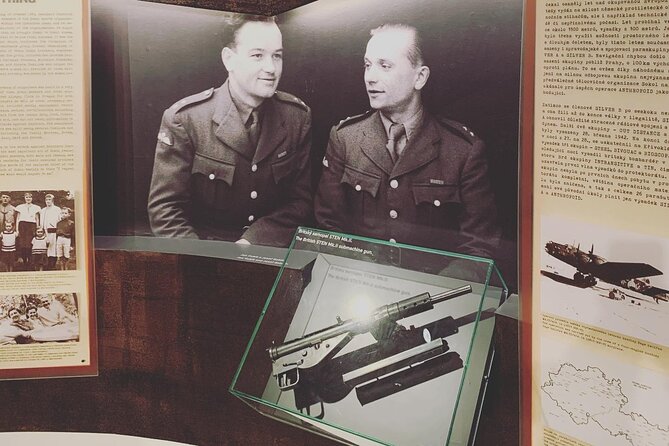
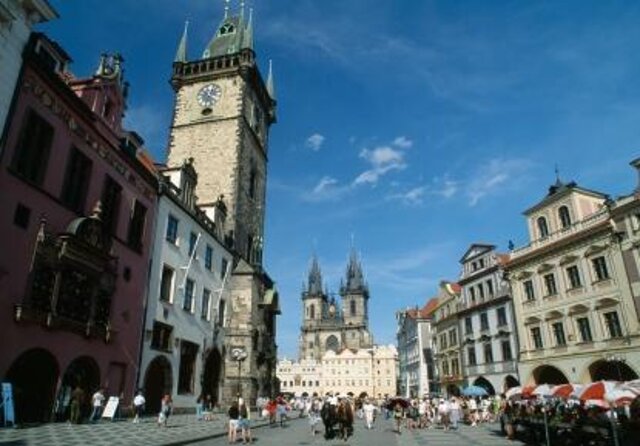
You then move to Staroměstské náměstí, near the Old Town Hall area. The guide uses this setting to tell the story of the Prague Uprising and then connects what happened at the end of WWII to the rise of communism in Czechoslovakia.
This stop is key because it helps you understand that WWII did not simply end. It left behind a power vacuum, damaged institutions, and new political pressures. When you hear how the uprising fit into that wider transition, communism stops feeling like a surprise twist and starts feeling like an outcome.
Expect about 20 minutes here. Admission is free.
Wenceslas Square, 1968, and the site of Jan Palach
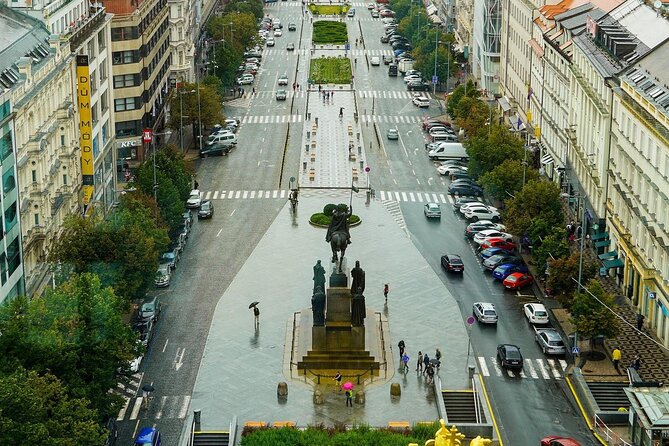
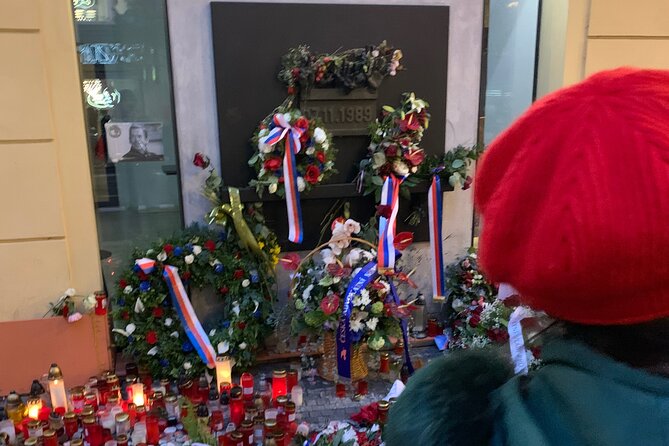
At Wenceslas Square, the tour shifts into the Cold War and life under communism after it begins. You hear what happened once communism started in Czechoslovakia, why Warsaw Pact armies invaded in 1968, and where Jan Palach’s self-immolation took place.
This is the moment where the tour becomes less about WWII history alone and more about the lived experience of dissent. Jan Palach’s story is especially important for understanding how people responded when public life felt trapped.
This stop runs about 20 minutes, and it is free to visit.
Other wartime walks through Prague:
OC Quadrio and Kafka, plus art under communism
Next you reach OC Quadrio, a modern stop that works well for this tour because it links public art to political eras. You will see the Rotating Head of Kafka, and the guide talks about art during communism.
The point is not the landmark itself. The point is what the guide draws from it: how culture functioned under pressure, what got encouraged, what got controlled, and what artists and audiences managed to express anyway. You get a useful contrast after the darker sections focused on persecution and repression.
Plan for about 15 minutes at this stop, and admission is free.
Narodni třída and the Velvet Revolution, then Vaclav Havel at National Theater
You then go to Narodni třída to see the hands reaching out of the wall, a stop used to explain the Velvet Revolution and the fall of communism. Expect about 15 minutes here.
After that, you head to the National Theater to learn about Vaclav Havel, the first president of Czechoslovakia after the fall of communism, and his role during the Velvet Revolution. This segment is about 10 minutes.
Together, these stops help you understand that the “end of communism” was not one instant. It was a chain of political courage, public pressure, and leadership. Even in a short walking tour, you get the human dimension, not just dates.
Dancing House and the story behind the Valentine’s Day bombing
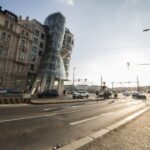
At Dancing House, the guide shows you the building and tells the story of the Valentine’s Day bombing. This stop is about 10 minutes and is free.
This is a smaller beat compared to Pinkas Synagogue or the Operation Anthropoid finale, but it helps with contrast. WWII resistance was not only military operations and uprisings. It also included attacks and events that shaped everyday fear and political consequences.
If you like hearing how the city itself became part of the narrative, this short stop works.
Operation Anthropoid finale at St Cyril and St Methodius Cathedral crypt
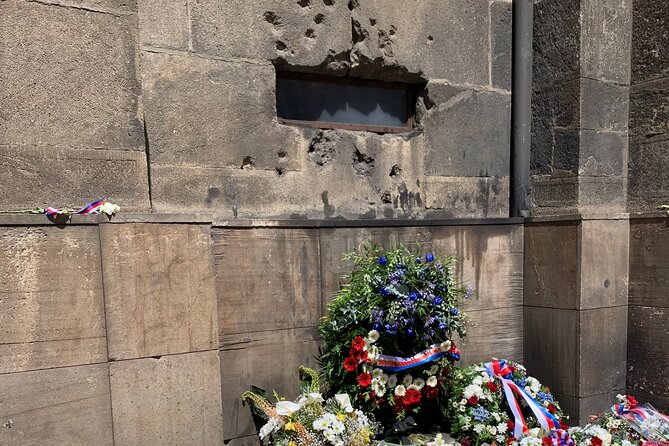
The tour ends at St Cyril and St Methodius Cathedral, where you hear the story of one of the most important Czech resistance achievements during WWII, Operation Anthropoid. This final stop takes about 20 minutes.
You also get free entry to the Museum of Anthropoid Operation, and the tour finishes in the crypt that was the hideout of the soldiers from the operation. The crypt is noted as a short walk, about 1 minute, from the Dancing House or Charles Square area.
This ending is powerful because it shifts from street-level talking to a physical place tied to hiding and survival. It makes the operation feel close, not abstract.
One practical rule to plan for: animals are not allowed inside the war memorial we visit at the end. Service animals are allowed, but if you are traveling with a pet, this is a key detail.
What makes the guides matter on this route
The strongest theme across the feedback is that the guides turn a short city walk into a story arc you can hold in your head.
Kamil is repeatedly praised for presenting information clearly and in a logical progression as you moved through Prague. One review specifically praised him for linearly explaining how events connect, and another said he brought passion and personal experience into the narrative, making it feel more than a lecture.
Vaclav is another name that comes up a lot. One review described his pacing as clear and linear, plus said he built suspense during his storytelling so the 3 hours passed quickly. That same review also noted he handled a larger group smoothly in busy streets.
Katerina is highlighted for knowledge and for providing interesting, first-hand accounts of life under communism. Another review credited Kuba with being very informative, and also called out strong teaching of events across WWII, communism, and to the present.
If you book this because you like history, pick it because it comes with people who can tell that history well. In a route this tight, bad pacing would ruin it. These guides seem designed to keep it moving.
Walking, group size, and how to prepare like a pro
You should come prepared for a city-walk format. The tour asks for travelers with moderate physical fitness, and it is not recommended for people with mobility problems.
One review flagged that the walking felt like about 5K, which is a helpful warning. Even if you are generally fit, this is not a sit-down, stop-and-start itinerary. Wear comfortable shoes and dress for weather, because Prague can shift quickly.
Group size can also vary. One review mentioned a group size of 24, which they felt was larger than expected. Since this is a private experience for your group, the big question for you is whether your party is large internally or if you end up in a bigger group due to operational factors.
Good news: the tour is near public transportation, which means if you need to pause or re-group, you typically have a simple way to catch up or regroup nearby.
So, should you book the Second World War and Communism tour?
Book it if you want a 3-hour Prague history tour that covers WWII to the Cold War without getting stuck only in castle viewpoints and the usual postcard stops. This one is built around turning points: the Second Resistance memorials, Pinkas Synagogue, the Prague Uprising story, 1968 Warsaw Pact invasion details, Jan Palach’s site, and then the Velvet Revolution and Havel.
Book it if you care about how art and memory fit into politics, since you get the Kafka stop discussion. And if Operation Anthropoid is on your Prague must-see list, the included Museum of Anthropoid Operation entry plus the crypt hideout ending is a strong reason to choose this over a purely outside-walking tour.
Skip it or rethink it if walking distance is a struggle for you, since the tour is not recommended for mobility problems and can feel like a solid city trek. Also note the animal rule at the end, if you are traveling with non-service pets.
If your goal is to leave Prague knowing how a single generation lived through occupation, resistance, propaganda, and finally a political reset, this tour is built for that mission.
Just written up in Prague
- Private Transfer from Prague to Regensburg★ 5.0 · 1 review
- Prague: TV Tower Ticket & Novi Grad Digital Tour★ 5.0 · 1 review
- Prague to Dresden’s Old Town, Zwinger & Frauenkirche by Car★ 3.0 · 1 review
- Prague to Český Krumlov Private Guided Tour – With Mike★ 5.0 · 1 review
- Prague to Munich Private Transfer with 2 hours sightseeing★ 5.0 · 1 review
- Prague: 3-Hours Wars & Totality Guided Walking Tour★ 5.0 · 1 review
- Prague to Berlin Private Transfer with Optional Sightseeing★ 5.0 · 1 review
- The Plague Doctor of Prague: Self-Guided Mystery Puzzle Walk★ 3.0 · 1 review
Prague Communism Tours, compared.
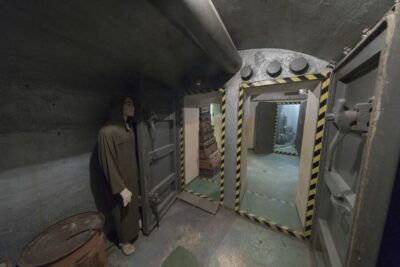
Communism History and Nuclear Bunker Guided Tour
Read our review →
Prague Communism History and Nuclear Bunker Tour
Read our review →
Communism & Nuclear Bunker Tour + 70s Canteen Lunch (own expense)
Read our review →
Communism and Bunker Tour with 70s Canteen Lunch
Read our review →
Prague Communism and World War II Walking Tour
Read our review →Browse the lists this tour appears in