
Reviewed · PRAGUE COMMUNISM TOURS
Communism & Nuclear Bunker Tour + 70s Canteen Lunch (own expense)
Prague has a Cold War secret below. This small-group walking tour strings together the biggest moments of Czechoslovak history and ends with a visit to a real nuclear bunker. You’ll move through places tied to the communist rise, the Soviet clampdown, and the Velvet Revolution, all with English commentary that keeps the story human, not just political.
I love the max 10 people group size, because questions actually happen and the route sticks close to the places that matter. I also love the 70s canteen stop, where you can try classic Czech choices like kofola on your own tab. One drawback to plan for: the bunker is underground and it’s not recommended for claustrophobic travelers.
In This Review
- Key Highlights You’ll Care About
- From Powder Tower to Cold War Context in 3.5 Hours
- Republic Square: 1918 Independence, WWII Shadows, and 1946 Politics
- Old Town Square: 1948 Victory Celebrations and the 1950s Era of Fear
- Wenceslas Square: Prague Spring, the Soviet Crush, and Velvet Revolution Momentum
- Walking Between Secrets: Secret Police, Side Streets, and Key Markers
- The 70s Canteen Stop: Kofola, Worker Food, and How to Budget
- The Nuclear Bunker Finale in Vaclavské náměstí
- What to Expect Underground
- Why This Ending Works
- Price and Value: About $35 with the 10 EUR Admission Included
- Pace, Timing, and What to Wear
- Who Should Book This Tour, and Who Should Skip It
- Should You Book This Communism and Nuclear Bunker Tour?
- FAQ
- Is the tour offered in English?
- How long is the tour?
- What’s included in the price?
- Do I need to pay extra for lunch or drinks?
- Is the nuclear bunker visit suitable for claustrophobic travelers?
- Can I cancel for a full refund?
Key Highlights You’ll Care About
- A real 1950s nuclear bunker visit, not a generic reenactment
- Small-group pacing (up to 10) with lots of time for questions
- Old Town and New Town history in one walk, from 1918 through 1989
- A worker’s canteen from the 70s experience, including kofola options
- The guide matters a lot, with consistently high marks for storytelling and clarity (often noted for Klara and Leo)
From Powder Tower to Cold War Context in 3.5 Hours
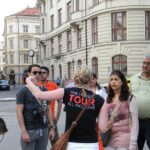
Most Prague tours start in the center and skim past the important parts. This one starts at a spot that naturally divides the Old and New Town storylines: Náměstí Republiky, where you meet at the Powder Tower (look for the guide holding a blue umbrella).
From there, you’re not just walking from postcard to postcard. You’re building a timeline. Your guide ties the buildings around you to the big turning points of the 20th century, so the streets start to feel like evidence instead of scenery.
The route is designed to be understandable even if you did not study Czech history before you arrived. That matters, because the subject can get heavy fast. The tour keeps it grounded in everyday life, not just dates.
More of the years behind the Iron Curtain:
- Prague: Communism History and Nuclear Bunker Guided Tour
★ 4.7 · 2,417 reviews - Prague Communism History and Nuclear Bunker Tour
★ 5.0 · 1,742 reviews - Prague: Communism and Bunker Tour with 70s Canteen Lunch
★ 4.8 · 269 reviews
Republic Square: 1918 Independence, WWII Shadows, and 1946 Politics
Your first major stop centers on Republic Square (Náměstí Republiky), a good place to get your bearings. This is where the tour explains why the new state of Czechoslovakia mattered so much right away.
You’ll connect three threads that shaped everything that followed:
- Independence in 1918 and why Hitler had his eyes on the region
- The impact of World War II on the country’s post-war direction
- How the Communist Party won elections in 1946, setting up the rapid political shift that people could feel in daily life
This isn’t a dry lecture. The value here is that the tour frames the communist takeover as a process, not a sudden movie ending. You’ll walk away with clearer cause and effect, which is how this era stops feeling like a blur.
Old Town Square: 1948 Victory Celebrations and the 1950s Era of Fear
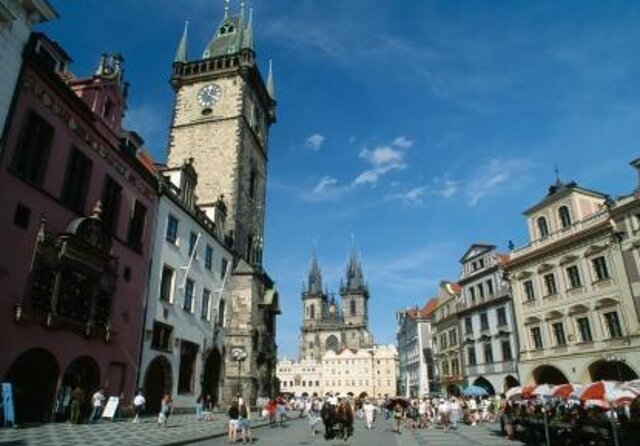
Next you head to Staroměstské náměstí (Old Town Square). This is the stop that turns architecture into political theater.
You’ll learn how, in 1948, Communist Party leaders celebrated their victory right here. That changes how you view the monumental buildings. You start noticing how public space can be used to project power.
The tour then moves into what it calls the 50s era of fear, with practical examples of what life could become under strict control. Expect discussion of themes like:
- working camps
- manipulated trials
- collectivization
- the secret police and surveillance culture
You also hear about the site where a major Stalin monument used to stand. Even if you’ve seen Soviet-era references around Europe, this kind of specific local footprint is where it becomes real.
Time at this stop is about 20 minutes, and it’s paced so you can ask questions without feeling rushed.
Wenceslas Square: Prague Spring, the Soviet Crush, and Velvet Revolution Momentum
The heart of the walk becomes Wenceslas Square (Václavské náměstí). This stop does two big things at once.
First, it places the Prague Spring in context. You’ll stand in the area tied to the events of August 1968, when hopes for reform ran into the reality of Soviet power. Your guide covers the conflict as more than an abstract invasion story, including how the “help” narrative collided with what people actually experienced.
Second, you connect it to November 1989 and the Velvet Revolution. The tour references the protests against the Communist regime, and it explains how the movement gathered strength. The guide also names major modern Czech figures, including Václav Havel, so the revolution has faces, not just slogans.
Time at Wenceslas Square is roughly 30 minutes for this history chunk. It’s a useful rhythm break because you’re taking in a huge open public space after narrower Old Town lanes.
Walking Between Secrets: Secret Police, Side Streets, and Key Markers
Not every meaningful stop has a giant sign. This walk intentionally includes the kind of street-level details you’d miss on your own.
As you move through the Old Town, you pass points tied to the communist security apparatus and everyday life under control, including:
- the former headquarters of the secret police on Bartolomejská Street
- the Kotva shopping mall as part of the city’s changing public life
- Narodní Street and the events connected with 17 November 1989, when students were massacred by state police
That Narodní Street reference matters because it anchors the Velvet Revolution in something tangible and painful, not just a peaceful turning point.
This kind of route is one reason the tour feels more “Prague” than “museum on legs.” You see how history sits in the streets you already plan to walk anyway.
Other midday stops folded into the day:

The 70s Canteen Stop: Kofola, Worker Food, and How to Budget
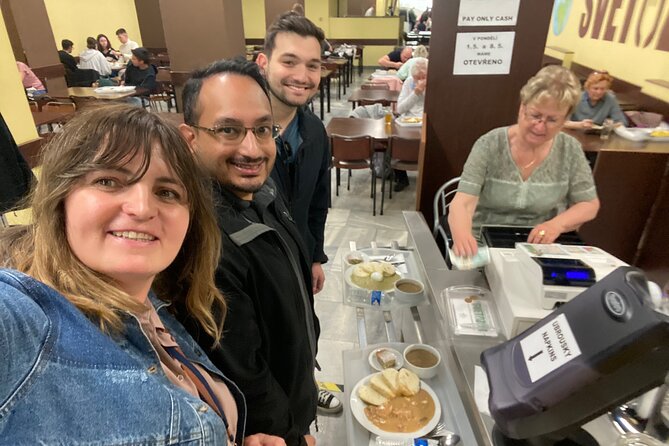
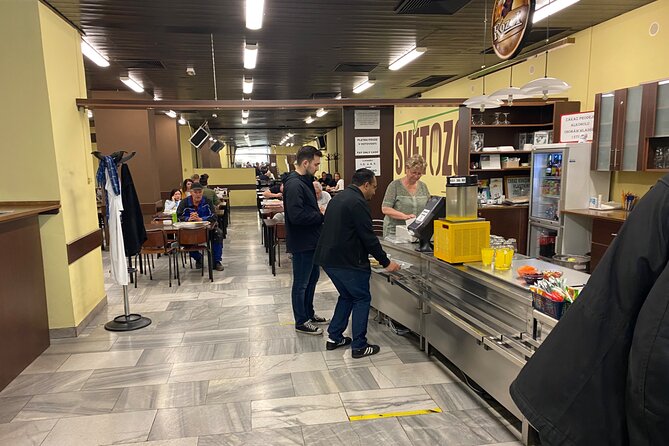
After you’ve built the political timeline above ground, you get a breather. There’s a lunch break in an authentic canteen from the 70s, guided so you know what to order and what to expect.
This is also where you should set expectations properly:
- Food and drinks are not included
- You can pay for things like kofola (a popular Czech soda)
- You can also try a proper working-class lunch option, if you want something more than a quick drink
The benefit of this stop is simple. You don’t just hear about “everyday life” under communism, you sit down in a place designed for that kind of daily rhythm. Even if you only have a drink, it’s a useful sensory pause in a heavy tour.
Budget-wise, plan extra cash on the day for the canteen. Your total tour price is low, but meals are intentionally separate.
The Nuclear Bunker Finale in Vaclavské náměstí
Then you go underground.
You finish on Václavské náměstí, at a nuclear shelter in the upper part of the square. The bunker admission fee (10 EUR) is included, so you do not need a second ticket purchase for the main attraction.
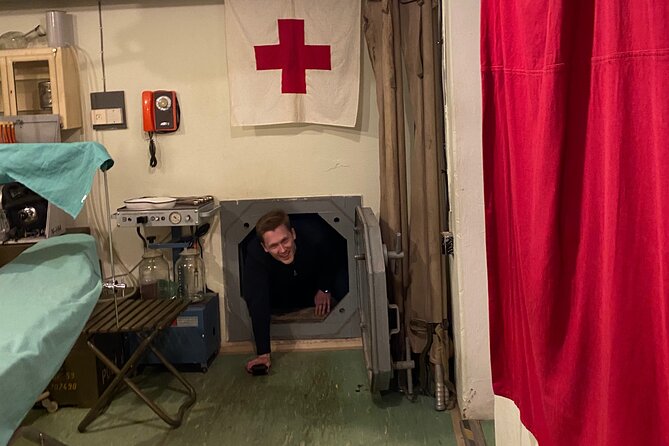
The bunker itself dates from the 1950s, and it is described as a real Cold War facility. That is the point. This isn’t just a themed room. You’ll feel like you’re stepping into a survival mindset.
What to Expect Underground
The visit involves some vertical movement and confined space. One review notes that there is an elevator for going one level down, followed by about 30 steps to reach the second level. That means:
- you should wear shoes you’re comfortable on stairs with
- claustrophobic travelers should skip this one, because it is explicitly noted as not recommended for them
- mobility constraints may require extra planning, since underground layouts can be tighter than street-level Prague
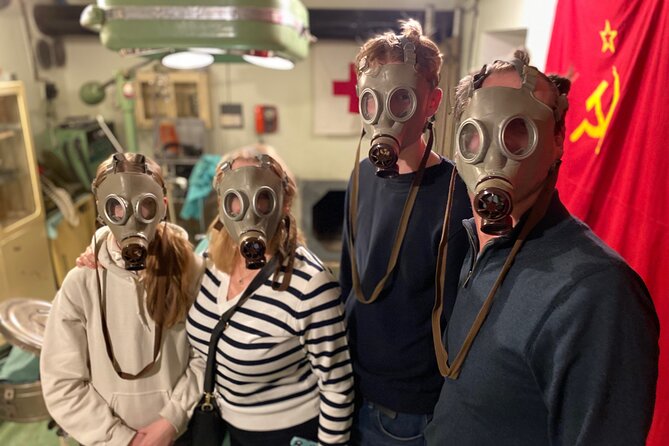
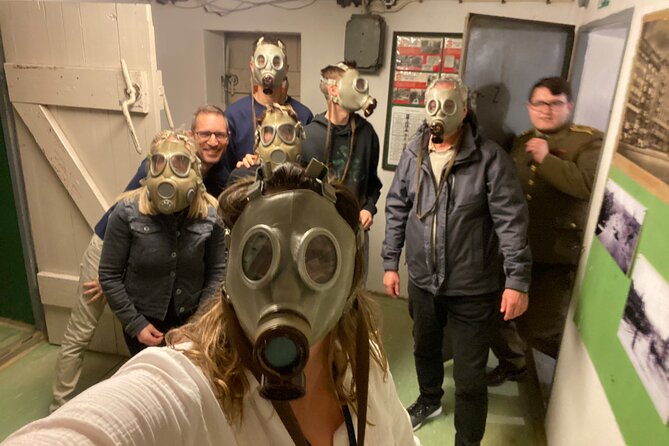
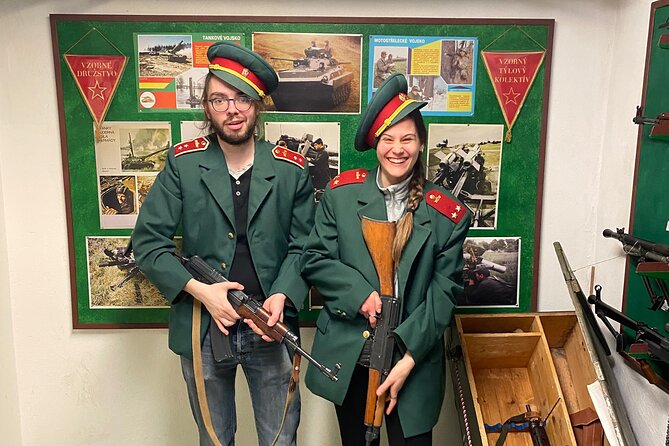
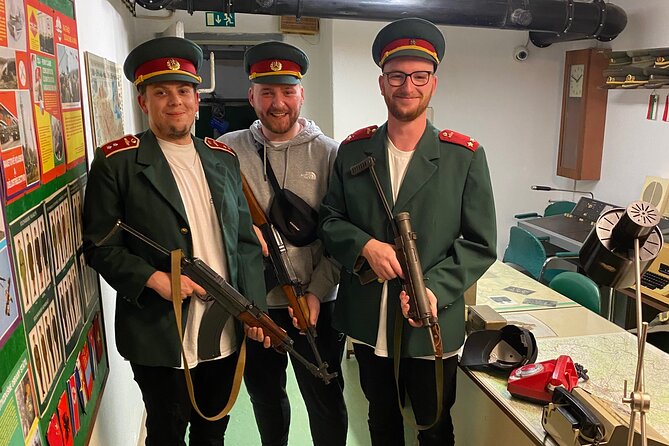
Interactive moments show up too. Some visitors mention trying on a gas mask and role-play style interactions connected to the secret police theme. Others highlight hands-on elements like reenactment type experiences. Even if those specifics vary by visit, the bunker part consistently aims to make the Cold War feel physical, not theoretical.
Why This Ending Works
The walking portion builds the story of control and fear. The bunker gives it a physical location.
That contrast is powerful: you go from public monuments and rallies to a space built for the unthinkable. If you only like Prague for beauty, this stop might feel too serious. If you like understanding how governments and fear shape daily life, it’s the best part of the whole day.
Price and Value: About $35 with the 10 EUR Admission Included
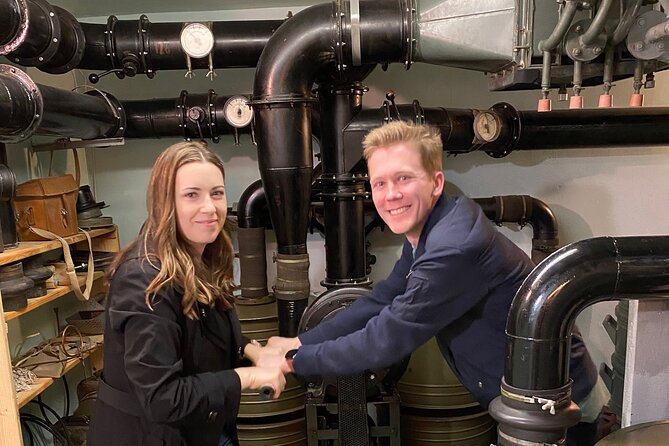
At around $35.07 per person for a 3 hours 30 minutes tour, the value is all about what’s included versus what’s add-on.
What you get included:
- a local guide
- a small group (maximum 10 people)
- the Cold War Museum fee of 10 EUR (tied to the bunker visit)
What costs extra:
- food and drinks during the canteen stop
That structure keeps the tour price reasonable while still letting you choose how much you want to eat. If you’re the type who enjoys proper lunch, you’ll spend a bit more than the base price. If you just want a kofola and a snack, you can keep costs under control.
I also like the fact that the tour is offered in English and uses a mobile ticket, which is easier than juggling paper in your pocket.
Pace, Timing, and What to Wear
This tour is about 3 hours 30 minutes with specific stop timings that add up well without turning into a full-day commitment.
You’ll spend roughly:
- 15 minutes at the first historical stop
- 20 minutes at Old Town Square
- 30 minutes at Wenceslas Square for Prague Spring and Velvet Revolution context
- 30 minutes for the canteen break
- about 1 hour in the bunker shelter
That schedule is why it works as a “real add-on” to a Prague visit. You can do it early in your trip and then revisit places like Wenceslas Square or Old Town Square with much richer context.
Wear:
- comfortable walking shoes for uneven old streets
- layers, since underground spaces can feel cooler than the surface
- anything that you can manage through stairs, given the noted step count after the elevator
Who Should Book This Tour, and Who Should Skip It
This tour suits you best if you want history that feels local and specific. You’ll get more out of it if you enjoy:
- political history tied to real places
- the human impact of systems like the secret police and censorship
- hands-on or interactive museum-style experiences underground
It may not fit if:
- you’re claustrophobic or hate confined underground spaces, because it’s specifically not recommended for that
- you want only light, cheerful sightseeing with zero heavy themes
The payoff is huge for people who like Central European history and want an honest look at how ordinary life changed under communism and Soviet pressure.
Should You Book This Communism and Nuclear Bunker Tour?
If your Prague plans include both Old Town and modern-city landmarks, this is one of the most effective ways to connect them. The walking portion gives you the timeline, and the bunker gives you the physical reality.
I’d book it if you’re curious, open-minded, and comfortable with a serious subject matter. I would not book it if underground confinement would ruin your day, since the bunker visit involves stairs and tight spaces.
If you can handle that, this is the kind of experience that makes Prague feel bigger than its postcards.
FAQ
Is the tour offered in English?
Yes. The experience is offered in English, and you’ll get the commentary throughout the walk and during the bunker visit.
How long is the tour?
It runs for about 3 hours 30 minutes (approximately).
What’s included in the price?
The price includes a local guide, a max group size of 10, and the Cold War Museum fee of 10 EUR for the bunker admission.
Do I need to pay extra for lunch or drinks?
Yes. Food and drinks are not included. At the 70s canteen break, you can buy items like kofola and a worker-style lunch on your own.
Is the nuclear bunker visit suitable for claustrophobic travelers?
It is not recommended for claustrophobic travellers. The bunker is underground and involves confined spaces.
Can I cancel for a full refund?
Yes, you can cancel for a full refund if you cancel up to 24 hours in advance of the experience start time.
Just written up in Prague
- Private Transfer from Prague to Regensburg★ 5.0 · 1 review
- Prague: TV Tower Ticket & Novi Grad Digital Tour★ 5.0 · 1 review
- Prague to Dresden’s Old Town, Zwinger & Frauenkirche by Car★ 3.0 · 1 review
- Prague to Český Krumlov Private Guided Tour – With Mike★ 5.0 · 1 review
- Prague to Munich Private Transfer with 2 hours sightseeing★ 5.0 · 1 review
- Prague: 3-Hours Wars & Totality Guided Walking Tour★ 5.0 · 1 review
- Prague to Berlin Private Transfer with Optional Sightseeing★ 5.0 · 1 review
- The Plague Doctor of Prague: Self-Guided Mystery Puzzle Walk★ 3.0 · 1 review
Prague Communism Tours, compared.
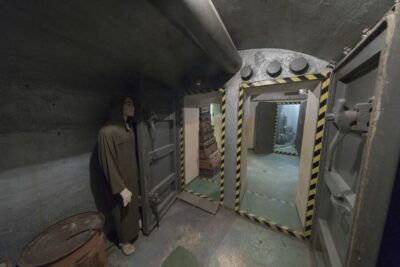
Communism History and Nuclear Bunker Guided Tour
Read our review →
Prague Communism History and Nuclear Bunker Tour
Read our review →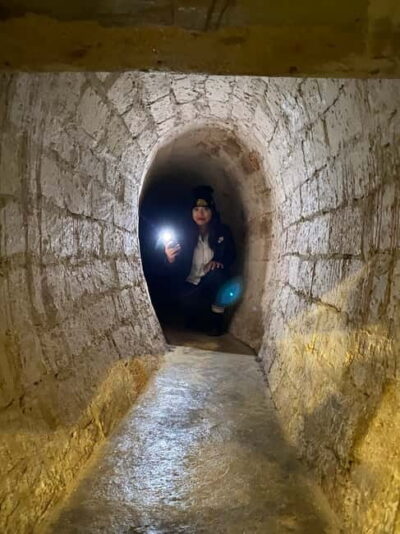
Communism and Bunker Tour with 70s Canteen Lunch
Read our review →
Second World War & Communism (Tip-based 3 hour tour)
Read our review →
Prague Communism and World War II Walking Tour
Read our review →Browse the lists this tour appears in