
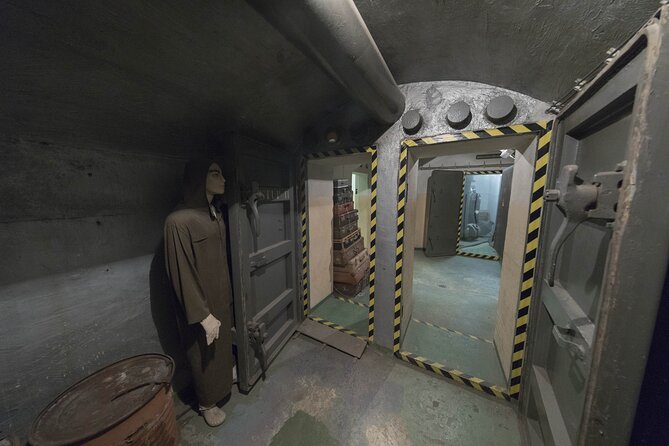
Reviewed · PRAGUE COMMUNISM TOURS
Prague Communism History and Nuclear Bunker Tour
Communism in Prague feels real fast. This tour strings together Cold War stories with real locations, ending underground in a nuclear bunker museum.
I love the way StB Holding Cells ties fear and control to specific places in the city, and I like that the bunker visit comes with a bunker survival guide plus a photo booklet.
One big consideration: it is not a sit-and-sip outing. You should expect lots of stairs and tight spaces, so it is not a good match for claustrophobia or mobility limits.
In This Review
- Key things that make this tour worth your time
- A Cold War walk that ends four floors underground
- Where to meet in Malé Náměstí, right by Hotel U Prince
- StB Holding Cells, Vaclav Havel, and how Prague tells its dark stories
- The Velvet Revolution Memorial: the 1989 turning point in plain language
- Národní třída and Wenceslas Square: Soviet invasion pressure, 1968 context
- Olšanské náměstí: socialist architecture you can still recognize today
- The nuclear bunker museum: what happens four floors down
- Guides, pacing, and group size: why the experience can swing
- Price and value: what $45.16 buys you in real access
- Practical tips before you go: shoes, photos, and what to skip
- Who should book this Prague Cold War tour
- Should you book the Prague Communism History and Nuclear Bunker Tour?
- FAQ
- How long is the Prague Communism History and Nuclear Bunker Tour?
- How much does the tour cost?
- What is included with admission?
- Where does the tour start?
- Do I need to speak the tour language?
- Can I take photos and record video?
Key things that make this tour worth your time
- StB Holding Cells stops the Cold War in front of you, not in a textbook
- A nuclear bunker museum four floors underground with hands-on, survival-style material
- A guided city walk that connects 1968 and 1989 to street-level Prague
- Personal guide storytelling you can actually feel, with names like Ladislav, Stan (Stan the Man), Pavel, Karl, Maki, Tom, and Lada showing up in past groups
- Practical included extras like transport to and from the bunker, plus the bunker museum admission
A Cold War walk that ends four floors underground
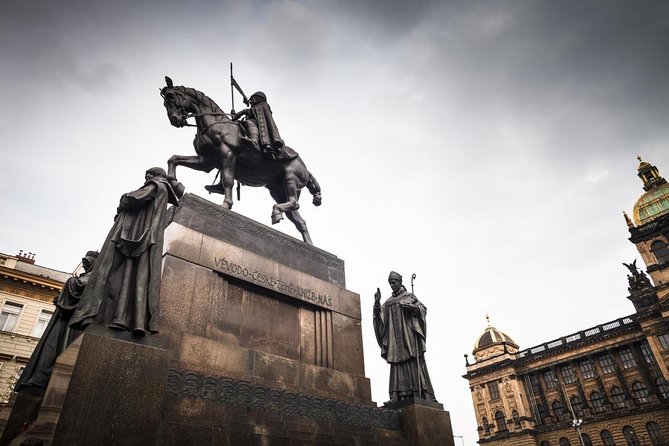
This is the kind of Prague tour that doesn’t stop at pretty facades. You walk through sites tied to surveillance, Soviet pressure, and the late-1980s pushback that culminated in the Velvet Revolution. Then you go where fear was stored, literally, with a visit to a nuclear bunker museum hidden four floors underground.
The value is in how the guide threads the big timeline into everyday geography. You start with secret-police history, you move to memorials and political landmarks, and you end where governments tried to imagine survival. It is a heavy subject, but the format stays active, with short stops and a long, detailed visit underground.
More of the years behind the Iron Curtain:
- Prague: Communism History and Nuclear Bunker Guided Tour
★ 4.7 · 2,417 reviews - Communism & Nuclear Bunker Tour + 70s Canteen Lunch (own expense)
★ 5.0 · 1,036 reviews - Prague: Communism and Bunker Tour with 70s Canteen Lunch
★ 4.8 · 269 reviews
Where to meet in Malé Náměstí, right by Hotel U Prince
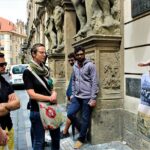
Your tour starts at Malé Náměstí 459/11, at the ticket office inside the passage at the same address. The Passage is about 20 meters to the right from Hotel U Prince.
Why that matters: Prague Old Town meeting points can be a scavenger hunt if you arrive late. Get there a few minutes early. Also note that once the group leaves the start point, you are not guaranteed to join, so plan for crowds and slow crossings.
StB Holding Cells, Vaclav Havel, and how Prague tells its dark stories
One of the first stops focuses on the StB Holding Cells, tied to Prague’s former secret police system. You also hear stories connected to Vaclav Havel, a name that keeps resurfacing when you talk about Czechoslovakia’s resistance and political change.
This stop works best if you pay attention to the guide’s framing. The Cold War in Prague is not just about leaders. It is about control mechanisms, detention, and the constant background pressure that shapes daily life. Even from outside, the building context helps you understand why fear could become routine.
A heads-up: if you are hoping for a calm museum pace here, it is more like a story stop. The guide uses the location as a prompt, then moves you along so you can connect the dots across the rest of the city.
The Velvet Revolution Memorial: the 1989 turning point in plain language
Next comes the Velvet Revolution Memorial, where you hear the story of the 1989 revolution. This is an important pivot. After the earlier surveillance theme, the tour shifts to how public pressure, protest, and political shifts actually changed the outcome.
You get an admission ticket for this stop, which is a good sign if you like moments where you are not just looking at buildings from the sidewalk. It is also a reminder that Prague’s political history is not frozen in the past. It is tied to how people remember, mark, and teach that turning point.
Národní třída and Wenceslas Square: Soviet invasion pressure, 1968 context
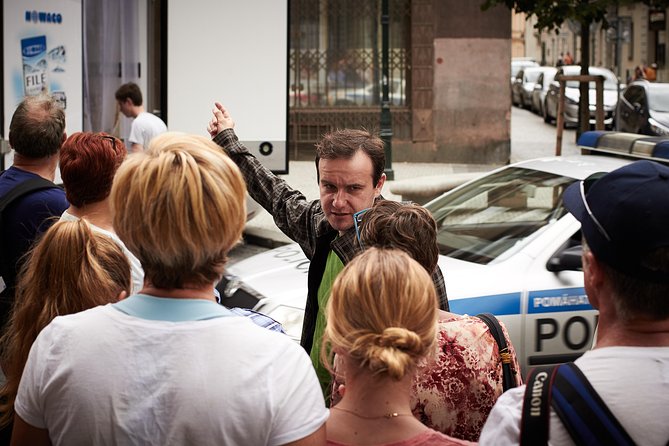
Two street-focused stops give you the Cold War context you can carry into the bunker.
At Národní třída, you cover historical events and more recent political history of the Czech Republic. It helps set a larger stage, so the later underground material does not feel like a random detour.
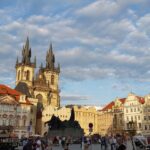
Then you hit Wenceslas Square, where the focus is on the Soviet invasion of August 1968 and Alexander Dubček. This is one of those Prague landmarks where history is layered. By the time you reach the square, the guide should help you connect why 1968 mattered, and why Czech political life stayed tense even as time passed.
If you want to get the most from these stops, do this: watch how the guide ties dates to names, and then ties names back to what Prague looked like at the time. That is the skill that turns dates into meaning.
More centuries stacked along the Royal Route:
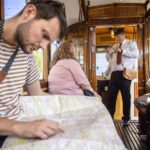
Olšanské náměstí: socialist architecture you can still recognize today
At Olšanské náměstí, the tour shifts from “politics as headlines” to “politics as built environment.” The area is described as being in the former workers district, with socialist architecture and original buildings from the 1970s concrete era still visible.
This stop is especially useful if you like learning through your senses. Buildings made for certain social goals also reveal what leaders expected from ordinary people. If you have ever wondered why communist-era Prague can feel both sturdy and impersonal, this is the kind of stop that explains why.
Practical note: it is still part of a walking route, so comfortable shoes matter. You will be looking up at facades and down at the route, and you do not want sore feet by the time the tour switches to stairs underground.
The nuclear bunker museum: what happens four floors down
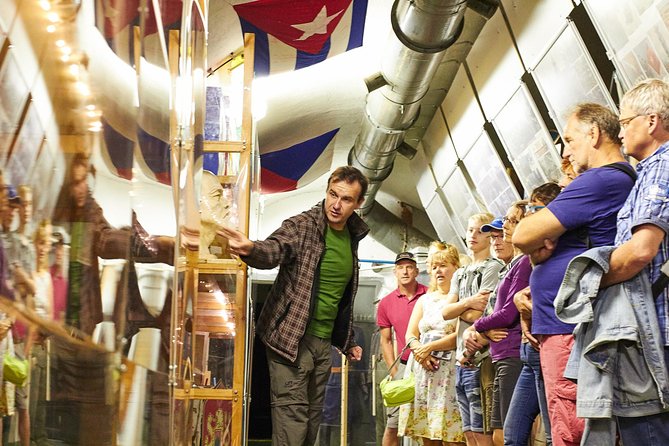
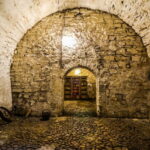
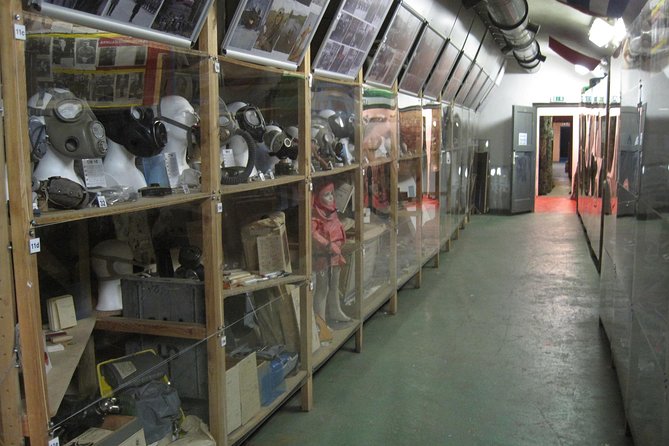
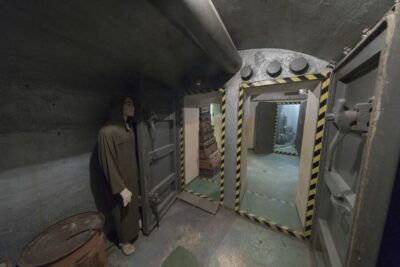
The heart of the experience is the Prague Nuclear Bunker Communism and Cold War Museum. You go underground for about one hour, and the entry ticket is included.
What makes this portion different from most history stops is that it is not just interpretation. You feel how the bunker changes your movement and your attention. This is also why the tour has clear warnings about claustrophobia and serious heart issues. It is an enclosed environment, and you should take those notes seriously.
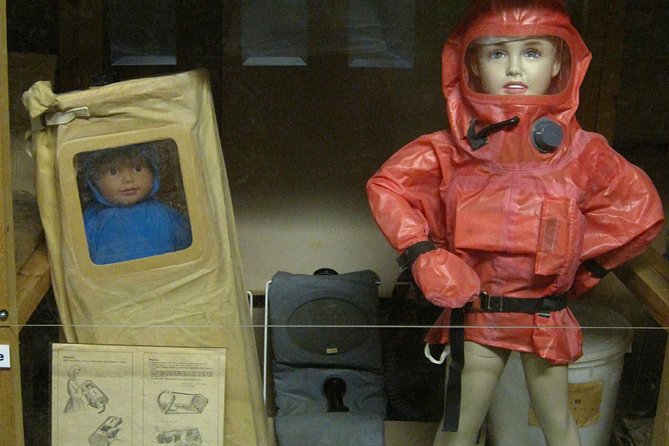
You also receive bunker-related material like the bunker survival guide, plus the photo booklet. That combination is useful. The guide helps you connect what you see to why it existed, and the printed materials give you something to reference after the tour when the details start blending.
A balanced expectation to set: the bunker museum may not satisfy everyone who wants “what daily life was like” under communism. The exhibits include a lot of museum-style content, and one theme that comes up in people’s impressions is that the experience can feel like Cold War fear staged as an attraction, rather than a full slice of ordinary life. Still, if you are curious about how governments imagined catastrophe and managed the story of survival, this is the most unique part of the day.
Also, be prepared for a lot of stairs and up ramps. The tour includes transport to and back from the bunker, and past groups mention trolley or tram rides on that approach, but once you are underground, the physical part becomes real.
Guides, pacing, and group size: why the experience can swing
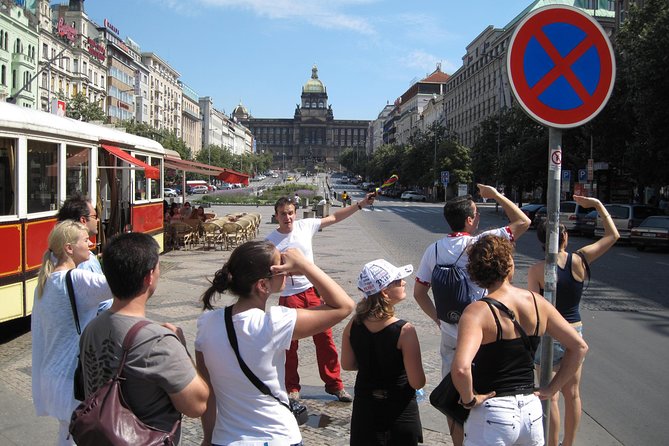
This tour caps at 26 people, which is small enough for a real conversation but big enough that pace matters. The itinerary is built from short city stops and then a longer bunker block.
Where your enjoyment can swing is the guide’s storytelling style and how the group moves through the city segments. Some guides are described as funny, passionate, and focused on personal context, with names like Ladislav, Stan (Stan the Man), Pavel, Karl, Maki, Tom, and Lada showing up in guide credits. That matters, because Cold War history can turn dry if the guide sticks only to dates.
On the flip side, a few people found the pacing frustrating, especially when city transit takes longer than expected or when they felt certain points repeated. So, if you know you get restless with lots of talking and waiting, arrive with the right mindset: this is a story tour, not just a photo tour, and some time is spent moving between locations.
One more practical note: you need to speak the chosen tour language. The tour rules say the guide requires the language you selected, and translating during the tour to other languages is not allowed. That is good for keeping everyone together, but it also means your best experience depends on choosing the language you are truly comfortable with.
Price and value: what $45.16 buys you in real access
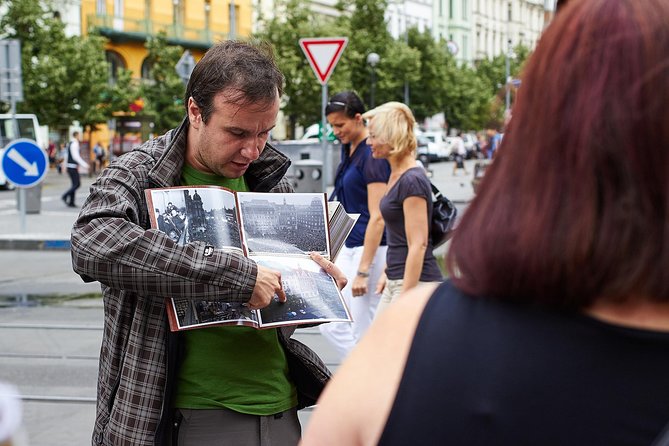
At $45.16 per person, this tour is priced like a guided experience with at least one premium ticket included. You get an English live guide, entrance to the nuclear bunker museum, and transport to and back from the bunker. You also get printed extras, the photo booklet and the bunker survival guide.
Is it worth it? For many people, yes, because you are not just paying for a walk. You are paying for controlled access to a four-floor-down underground site, plus guided interpretation connecting that bunker to visible Prague sites above ground.
Where it may feel expensive is if your main goal is detailed “daily life under communism” in a social-science sense. Some visitors want deep everyday details and felt the tour leaned more toward the Cold War fear package, or that the bunker exhibits are more about the bunker concept than the day-to-day texture of life.
My advice: if you want a mix of political history and a physical underground experience, this price makes sense. If you only want one type of history, do a quick reality check first and pick accordingly.
Practical tips before you go: shoes, photos, and what to skip
Here are the practical things that will keep you comfortable and help you get better photos.
- Wear comfortable shoes. Normal walking footwear is recommended, and you will be on your feet for the walking portion plus stairs underground.
- Bring patience for enclosed spaces. If you are sensitive to tight environments, follow the tour warning. Claustrophobia is called out as a reason the tour may not be suitable.
- Photos are allowed, but video recording needs special permission. If video is important to you, ask early how permissions work.
- Stay flexible on timing. The tour duration may vary by 10 to 15 minutes depending on the group.
If you want to make the day feel smoother, show up slightly early, keep your phone charged for meeting point photos, and use the printed survival guide as a pacing tool while you wait for group movement.
Who should book this Prague Cold War tour
This is a strong fit if:
- You like history that connects names and dates to real places.
- You are curious about nuclear-era fear and how it was packaged into public understanding.
- You enjoy guided storytelling and personal perspective, especially when guides share lived memories of the communist era.
It may not be your best choice if:
- You cannot handle lots of stairs or tight underground spaces.
- You want a fully detailed, life-in-the-trenches look at everyday life under communism, without any theatrical museum framing.
- You get easily irritated by pacing that includes transit time and multiple short stops.
Should you book the Prague Communism History and Nuclear Bunker Tour?
I think you should book this tour if your Prague trip includes at least one “serious history” block and you want something you cannot replicate on your own. The underground bunker museum is the big differentiator, and the city walk gives it context so the visit means more than just seeing an exhibit.
I would skip or rethink it if stairs and enclosed spaces are a dealbreaker, or if you are only interested in surface-level photos. This is a guided experience with a strong physical component. It rewards curiosity and attention, not speed-scrolling.
If you are on the fence, one simple test: ask yourself whether you want to understand how the Cold War shaped Prague above ground, then experience how survival was imagined below ground. If yes, this is an easy choice.
FAQ
How long is the Prague Communism History and Nuclear Bunker Tour?
It is about 2 hours 20 minutes, and the duration can vary by around 10 to 15 minutes depending on the group.
How much does the tour cost?
The price is $45.16 per person.
What is included with admission?
Admission to the nuclear bunker museum is included, and the tour also includes an English live guide. The tour includes a photo booklet and a bunker survival guide, plus transport to and back from the bunker.
Where does the tour start?
The meeting point is inside the Passage at Malé Náměstí 459/11. It is about 20 meters to the right from Hotel U Prince.
Do I need to speak the tour language?
Yes. For safety it is required to speak the chosen language of the tour, and translating during the tour to other languages is not allowed.
Can I take photos and record video?
Photos are allowed. Video recording is only allowed with special permission.
Just written up in Prague
- Private Transfer from Prague to Regensburg★ 5.0 · 1 review
- Prague: TV Tower Ticket & Novi Grad Digital Tour★ 5.0 · 1 review
- Prague to Dresden’s Old Town, Zwinger & Frauenkirche by Car★ 3.0 · 1 review
- Prague to Český Krumlov Private Guided Tour – With Mike★ 5.0 · 1 review
- Prague to Munich Private Transfer with 2 hours sightseeing★ 5.0 · 1 review
- Prague: 3-Hours Wars & Totality Guided Walking Tour★ 5.0 · 1 review
- Prague to Berlin Private Transfer with Optional Sightseeing★ 5.0 · 1 review
- The Plague Doctor of Prague: Self-Guided Mystery Puzzle Walk★ 3.0 · 1 review
Prague Communism Tours, compared.
Communism History and Nuclear Bunker Guided Tour
Read our review →
Communism & Nuclear Bunker Tour + 70s Canteen Lunch (own expense)
Read our review →
Communism and Bunker Tour with 70s Canteen Lunch
Read our review →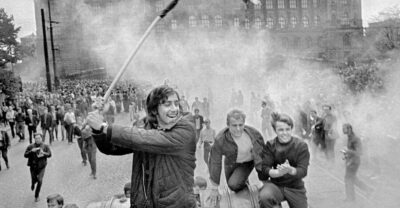
Second World War & Communism (Tip-based 3 hour tour)
Read our review →
Prague Communism and World War II Walking Tour
Read our review →Browse the lists this tour appears in