
Reviewed · PRAGUE GUIDED WALKING TOURS
Prague Communism and World War II Walking Tour
Prague carries its 20th-century scars on foot. This walking tour strings together Nazi rule, communist takeover, and the march to the Velvet Revolution using real streets, not just dates in a book. You get city orientation fast, with the kind of context history buffs crave.
I love how your local guide turns big events into everyday life. Hearing the Prague of the 1970s and 80s through personal stories makes the politics feel real. I also love the clear, chronological flow, so the whole arc from WWII to 1989 clicks into place without you having to connect the dots.
One drawback to consider: this is story-led history, not a tour of underground sites or special exhibits. If you’re hoping for lots of physical stops like tunnels and hideouts, you may want to add extra experiences on your own after the walk.
In This Review
- Key things you’ll notice on this Prague Nazi-to-Communism walk
- A Prague history walk that feels like a timeline you can touch
- Křižovnické náměstí to Prague Castle views, Stalin’s statue, and the story starts running
- New Town at a crossroads: Austrian rule to Czechoslovakia, WWII Protectorate fears, and Operation Anthropoid
- Wenceslas Square, 1968 tanks, 1969 student resistance, and 1989’s Velvet Revolution payoff
- What makes the guides here work so well: personal memory and clear storytelling
- How much walking, what to wear, and how to plan your morning
- Price and value for a focused 20th-century history tour at $30.12
- Should you book this Prague Communism and World War II Walking Tour?
- FAQ
- How long is the Prague Communism and World War II Walking Tour?
- How much does the tour cost?
- What language is the tour offered in?
- What’s included in the price?
- Are there admission fees during the stops?
- Where does the tour start?
- What time does the tour start?
- Is the tour suitable for families or children?
- What is the cancellation policy?
Key things you’ll notice on this Prague Nazi-to-Communism walk
- Local-guided, street-level storytelling that links WWII, Soviet influence, and communism into one timeline
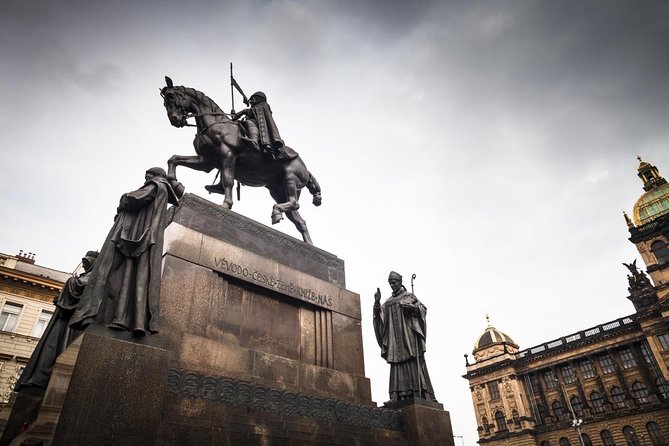
- Big visual checkpoints near Prague Castle and on Wenceslas Square, where political moments played out in public
- Operation Anthropoid context and what the Protectorate of Bohemia and Moravia meant for daily life
- Prague Spring and 1968 invasion details, plus the 1969 student memorial moment on the same square
- Velvet Revolution focus on named people and tense street clashes, including discussion of Václav Havel and Narodní třída
- Small group energy, with a maximum of 25 people, and the occasional very small group in real life
A Prague history walk that feels like a timeline you can touch
If you want a Prague tour that actually explains why everything happened, this one is built for you. The route is short enough to feel manageable, but it covers a huge slice of the 20th century, from Nazi rule to communist dictatorship and then the late-80s break toward democracy.
What makes this tour work is the structure. You move through central neighborhoods while your guide keeps the story straight: who held power, what changed, and what it did to ordinary people. That’s the difference between memorizing history and understanding it.
Also, you’re not just listening. You’re using the city as the map. The guide points out where major events unfolded, where propaganda shaped public space, and where resistance took shape. And since the tour starts in the Old Town area and ends back in central Prague, it also sets you up to explore the rest of your trip with better bearings.
More of the years behind the Iron Curtain:
- Prague: Communism History and Nuclear Bunker Guided Tour
★ 4.7 · 2,417 reviews - Prague Communism History and Nuclear Bunker Tour
★ 5.0 · 1,742 reviews - Communism & Nuclear Bunker Tour + 70s Canteen Lunch (own expense)
★ 5.0 · 1,036 reviews
Křižovnické náměstí to Prague Castle views, Stalin’s statue, and the story starts running
You begin at Křižovnické náměstí in central Old Town, near the Old Town Bridge Tower area. The mood is immediate: you get a panoramic view with Prague Castle in sight, and the guide uses that skyline to frame the era that came before and after the war.
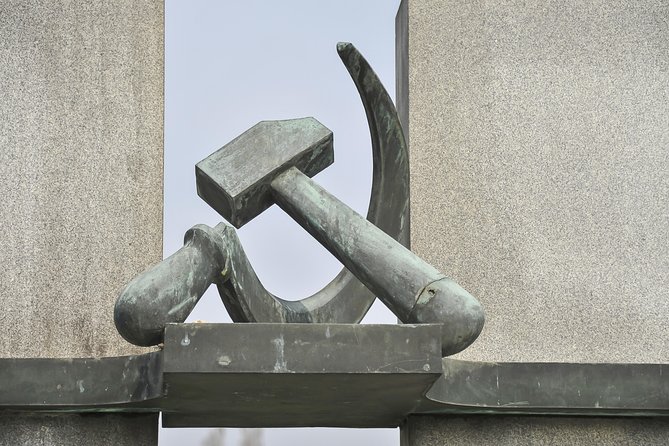
One of the most memorable details you’ll hear here is that not far from this area once stood the largest statue of Joseph Stalin in the world. Even if you know the name, you probably do not know how intensely visible Soviet power was made in Prague. This stop turns an abstract “communism happened” into something you can picture.
From here, the guide sets the tone for the whole walk: major turning points, what drove them, and how Prague’s position in Europe shaped what happened next. The pacing is also practical, with about 15 minutes built into this first segment, enough time to take in the view and lock in the big framework.
Practical tip: bring a little patience for standing still for viewpoints. Reviews mention the route moving you away from huge tourist clusters quickly, so you get the benefits of Old Town sightseeing without feeling stuck in the thickest crowds.
New Town at a crossroads: Austrian rule to Czechoslovakia, WWII Protectorate fears, and Operation Anthropoid
The walk shifts to Nové Město (New Town), where your guide lays out why Czechoslovakia mattered in the first place. You’ll hear how the Czech nation moved from the grip of the Austrian monarchy toward an independent Czechoslovak democratic state, and you’ll also learn how strong the economy was for its time.
But then the story turns darker. The guide explains what it was like under the Nazi Protectorate of Bohemia and Moravia, including the suffering that came with occupation. This is one of the tour’s strengths: it doesn’t treat WWII as a single invasion date, it treats it as a sustained period that shaped daily life, fear, and choices.
Then you get one of the clearest, most specific WWII anchors on the whole route: Operation Anthropoid. Your guide covers why it stands out, including the claim that it was the only successful assassination of a senior Nazi leader during World War II. Even if you’ve heard the name before, walking through central Prague while the guide explains the significance makes it easier to remember.
The stop also connects occupation to the post-war shift. You’ll learn about the methods and strategies of the communist regime as the USSR influence expanded, turning a once democratic state into a tougher dictatorship. The guide’s emphasis here is on how the takeover worked, not just that it happened.
Why this stop is valuable: if your Prague trip mostly focuses on castles and churches, this is the part that explains why Prague’s modern identity is so politically charged. It gives context for the sites you’ll see later, including the monuments and street names tied to resistance.
Wenceslas Square, 1968 tanks, 1969 student resistance, and 1989’s Velvet Revolution payoff
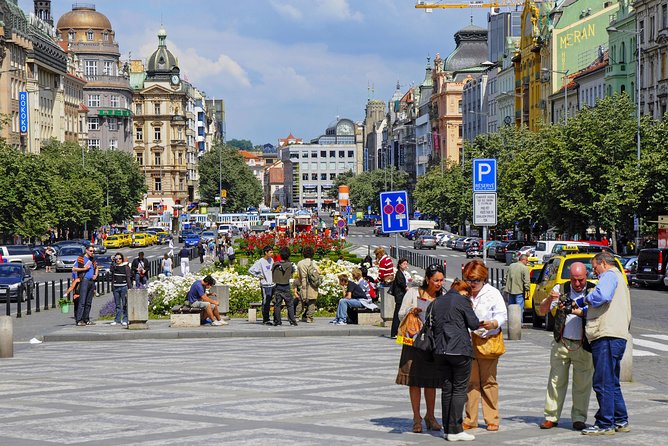
This is the heart of the tour, with about an hour devoted to Václavské náměstí (Wenceslas Square). The guide builds the emotional contrast in a very specific way: first the euphoria of Prague Spring, then the sudden brutality of the Soviet invasion in 1968.
You’ll hear how Soviet tanks entered Prague and how the conflict even reached the National Museum building on the square. This is where the tour becomes more than political background, because the story connects directly to visible landmarks you will recognize instantly.
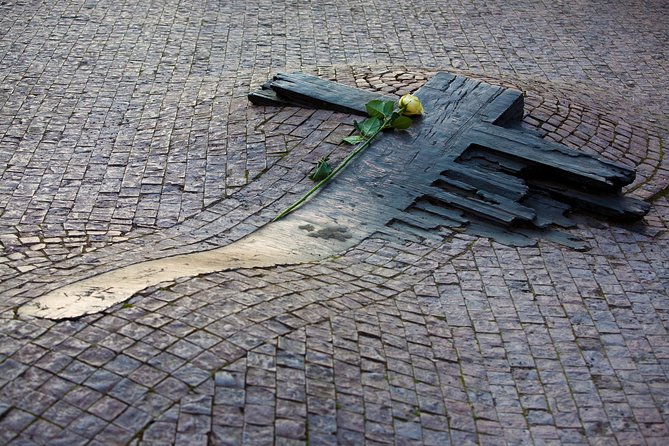
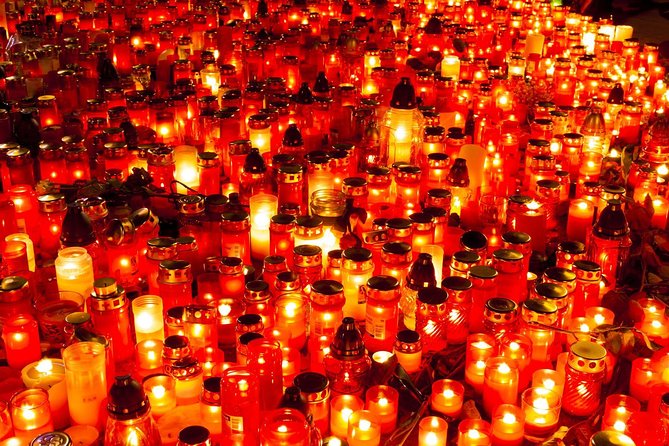
Next comes a heavy, unforgettable memorial moment. On the same square, you’ll learn about the memory of young students who burned themselves alive in 1969 to push the nation toward unity against the common enemy. This section is not quick or casual. Expect your guide to slow down the pacing because the meaning matters.
From there, the walk moves into the 1970s and 80s. The guide points out the long, tense buildup that led to the Velvet Revolution in 1989, including discussion of Václav Havel and the courage of student resistance. You’ll also hear about clashes around Narodní třída and the role of brutal policing in maintaining control.
And just when the subject matter could feel only grim, the guide brings in stories with a lighter edge from the period after freedom came. One reason this tour gets such high marks is that it balances weight with human detail, including the kind of humor and obscure anecdotes that make the era feel like lived experience rather than a textbook chapter.
If you like history that comes with names and decisions, this stop delivers. It’s also the best section for picture-taking because Wenceslas Square is visually strong and the story landmarks are close together.
What makes the guides here work so well: personal memory and clear storytelling
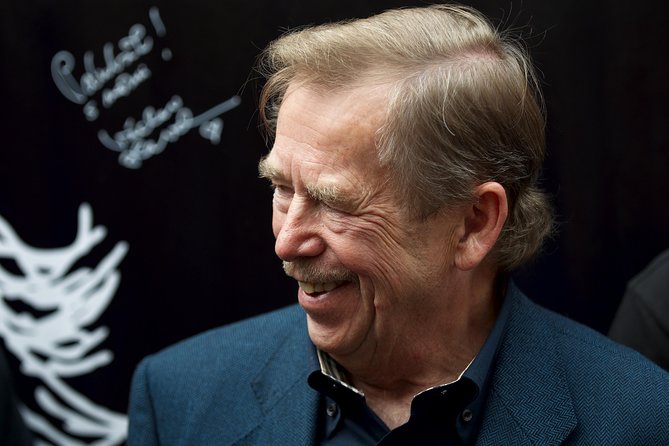
This tour’s success is strongly tied to the guides. You’ll see names pop up repeatedly in past groups, including Tomas, Martin, Maria, Dominik, and Zdenek. Different guides, same core approach: local perspective, organized explanation, and lots of room for questions.
Some guides bring first-hand involvement in late-communist history. For example, one guide’s background as a student demonstrator during the Velvet Revolution style of events gives a gripping, personal angle. Others share memories of childhood life under communism, including stories about atomic drills in primary school. Even if you never expected to hear personal memories, that kind of detail is exactly what makes this tour feel different from the average history walk.
Another helpful sign: guides in these reviews don’t just lecture. They chat with you while walking, answer questions directly, and often adjust on the fly when you’re genuinely interested. One review mentioned that a guide extended the tour beyond the planned time because the group wanted more, which tells me the format is flexible when the conversation is good.
That said, remember the tour is still primarily a walking narrative. You’ll get strong context and direction, but not a museum-like set of physical exhibits at every stop. If your top priority is highly specific sites like hidden WWII tunnels or parachutist hideouts, plan a supplement after this walk.
Other wartime walks through Prague:
How much walking, what to wear, and how to plan your morning
You’re looking at about 2 hours (approx.) of walking and storytelling, starting at 10:00 am. The pace is usually manageable, and the route stays in central Prague, which helps if you’re balancing this with other highlights like the Old Town sights or a castle visit.
Still, this is a walking tour, and Wenceslas Square plus Old Town streets add up. Wear comfortable shoes. Reviews repeatedly point out the importance of good footwear, since you’re on your feet for the whole narrative.
Planning-wise, it helps to book ahead. This particular experience is often booked around 28 days in advance on average, and with group size capped at 25 travelers, earlier reservations tend to give you more choice.
One more practical note: food and drinks aren’t included. That matters because you may end near places where you want a snack or a beer right away, so plan to eat before or after the tour based on your schedule.
Price and value for a focused 20th-century history tour at $30.12
At $30.12 per person for about 2 hours, this is priced like a serious history add-on rather than a casual city stroll. The value comes from two things.
First, you’re paying for a professional guide who can explain cause and effect across multiple decades. For many visitors, that’s the hardest part of Czech history to sort out on your own. The tour does that work quickly, from Nazi occupation through communist rule to 1989.
Second, you’re getting orientation in central Prague while the story is happening. That means the walking time doubles as sightseeing time. You leave with a better mental map of the city, including why certain streets and buildings matter beyond their architecture.
The only real cost in this experience is what you bring emotionally. WWII and communist dictatorship are heavy themes. If you want your Prague day to be light and breezy, this may feel intense. But if you want context for why Prague feels the way it does today, it’s a smart use of time.
Should you book this Prague Communism and World War II Walking Tour?
I’d book it if you want:
- A chronological Prague history walkthrough that connects WWII to communism and then to the Velvet Revolution
- A guide-led explanation of events like the Nazi Protectorate and Operation Anthropoid
- City orientation that helps you understand what you see later around Prague Castle views and Wenceslas Square
I’d be cautious if you’re looking for:
- A tour heavy on physical sites like tunnels, hideouts, or museum-style stops
- A focus mainly on topics outside the Nazi and communist narrative
If you want one morning (or early block of your day) to give your whole Prague trip more meaning, this is a strong pick. And if you’re a history buff, the street-level details plus the chance to ask questions can turn a quick walk into one of your best memories in the city.
FAQ
How long is the Prague Communism and World War II Walking Tour?
It runs for about 2 hours (approx.).
How much does the tour cost?
The price is $30.12 per person.
What language is the tour offered in?
The tour is offered in English.
What’s included in the price?
A professional guide is included.
Are there admission fees during the stops?
The stops listed for the tour show admission ticket free, so you should not expect paid entries as part of this walk.
Where does the tour start?
You meet at Křižovnické náměstí, 110 00 Praha 1-Staré Město, Czechia.
What time does the tour start?
The start time is 10:00 am.
Is the tour suitable for families or children?
Most travelers can participate. Children must be accompanied by an adult.
What is the cancellation policy?
Free cancellation is available. You can cancel up to 24 hours in advance for a full refund. If you cancel less than 24 hours before the start time, the amount you paid will not be refunded.
Guided Walks Around the Centre
- Prague: 3-Hour Walking Tour of Old Town & Prague Castle
★ 4.7 · 5,696 reviews - Prague: Ghost Walking Tour Where Legends Come To Life
★ 4.4 · 5,253 reviews - Prague: Jewish Quarter Walking Tour with Admission Tickets
★ 4.7 · 3,729 reviews - Prague Guided Walking Tour and Cruise with Authentic Czech Lunch
★ 5.0 · 3,627 reviews
Just written up in Prague
- Private Transfer from Prague to Regensburg★ 5.0 · 1 review
- Prague: TV Tower Ticket & Novi Grad Digital Tour★ 5.0 · 1 review
- Prague to Dresden’s Old Town, Zwinger & Frauenkirche by Car★ 3.0 · 1 review
- Prague to Český Krumlov Private Guided Tour – With Mike★ 5.0 · 1 review
- Prague to Munich Private Transfer with 2 hours sightseeing★ 5.0 · 1 review
- Prague: 3-Hours Wars & Totality Guided Walking Tour★ 5.0 · 1 review
- Prague to Berlin Private Transfer with Optional Sightseeing★ 5.0 · 1 review
- The Plague Doctor of Prague: Self-Guided Mystery Puzzle Walk★ 3.0 · 1 review
Prague Guided Walking Tours, compared.
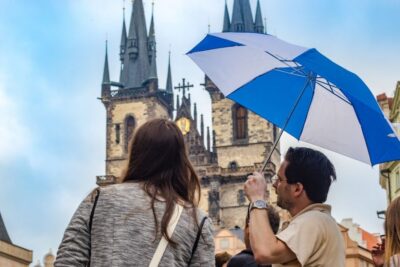
3-Hour Walking Tour of Old Town & Prague Castle
Read our review →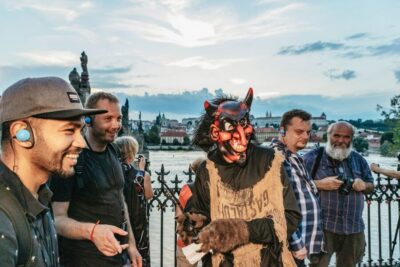
Ghost Walking Tour Where Legends Come To Life
Read our review →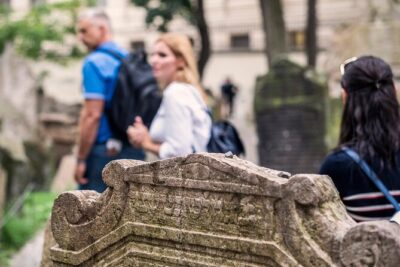
Jewish Quarter Walking Tour with Admission Tickets
Read our review →
Prague Guided Walking Tour and Cruise with Authentic Czech Lunch
Read our review →
Old Town and Jewish Quarter Guided Walking Tour
Read our review →
Prague Ghost and Legend of Old Town Walking Tour
Read our review →
Prague 3-hour Afternoon Walking Tour including Prague Castle
Read our review →
Ghosts and Legends Nighttime Guided Walking Tour
Read our review →Browse the lists this tour appears in