
Reviewed · PRAGUE COMMUNISM TOURS
Prague: Communism History and Nuclear Bunker Guided Tour
A real bunker, guided by lived memory. The tour connects Prague’s communist-era landmarks to a 50 feet underground nuclear bunker, with stories you hear from guides such as Stan, Ladislav, or Pavel. Expect Cold War displays, real equipment, and a gasmask workshop that turns history into a hands-on moment.
I like how the route starts with street-level context, so the later bunker visit makes emotional sense. I also like the practical rhythm, including tram transfer and the guided pacing through the museum, which keeps a grim topic from dragging.
One consideration: this is a walking tour with stairs and tight spaces, and it is not suitable for claustrophobia, mobility issues, or some heart or attention-related conditions. Also, there are no toilets at the starting point.
In This Review
- Quick reasons to book
- From communist streets to secret-police power, the tour’s best start
- The tram ride to the bunker: why the getting-there part is included
- Inside the nuclear bunker, what “designed for 5000” really means
- Cold War expositions and genuine artifacts, not just talking points
- The gasmask workshop: a hands-on Cold War reality check
- How guides like Stan, Ladislav, and Pavel shape the whole tone
- Price and logistics: where the $44 per person fits
- Who should book, and who should skip this bunker day
- Small drawbacks to plan for before you go
- Should you book the Prague Communism and Nuclear Bunker Guided Tour?
- FAQ
- How long is the Prague Communism and Nuclear Bunker guided tour?
- How much does the tour cost?
- What languages are available for the live guide?
- Is the tour wheelchair accessible?
- Are pets allowed on the tour?
- Are there toilets at the starting point?
- Is food included in the tour price?
Quick reasons to book
- A real 1950s nuclear bunker designed to hold up to 5000 people
- Cold War expositions with genuine equipment and period artifacts
- A gasmask workshop tied directly to the fear and preparedness of the era
- Guides with first-hand context from people who lived through the communist period in Prague
- Skip-the-line entry through a separate entrance
- Tram transfer plus short city stops, so you do not feel like you are stuck on one theme all day
From communist streets to secret-police power, the tour’s best start
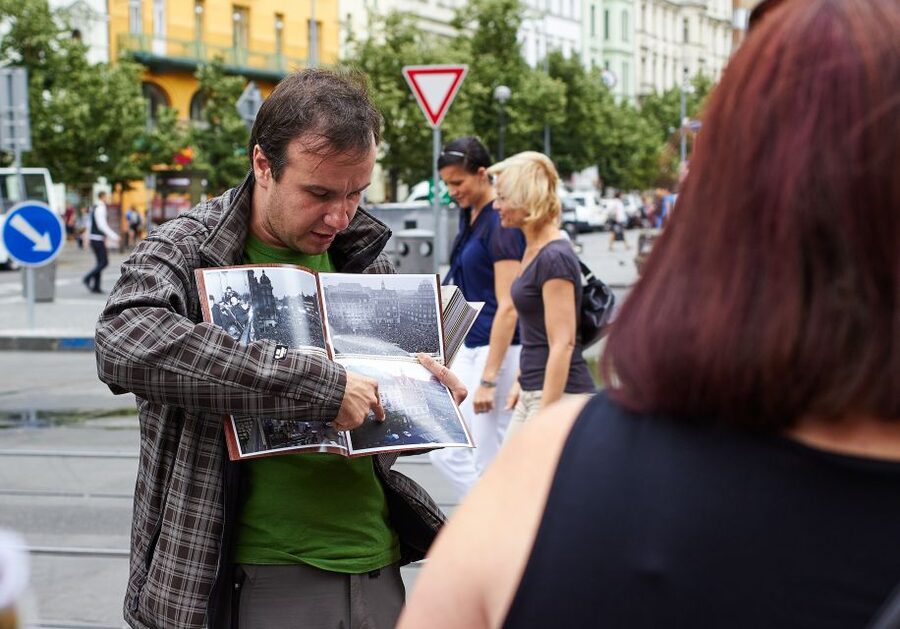
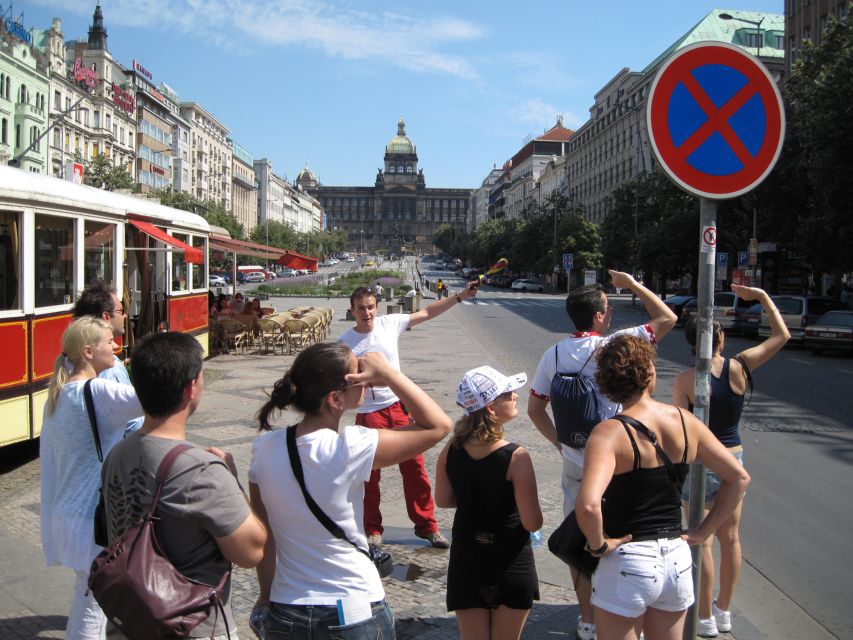
Your tour begins with a compact walking introduction to Prague’s communist-era setting, then it grows from there. The stops are chosen so you can connect big political events to real neighborhoods and familiar city sights.
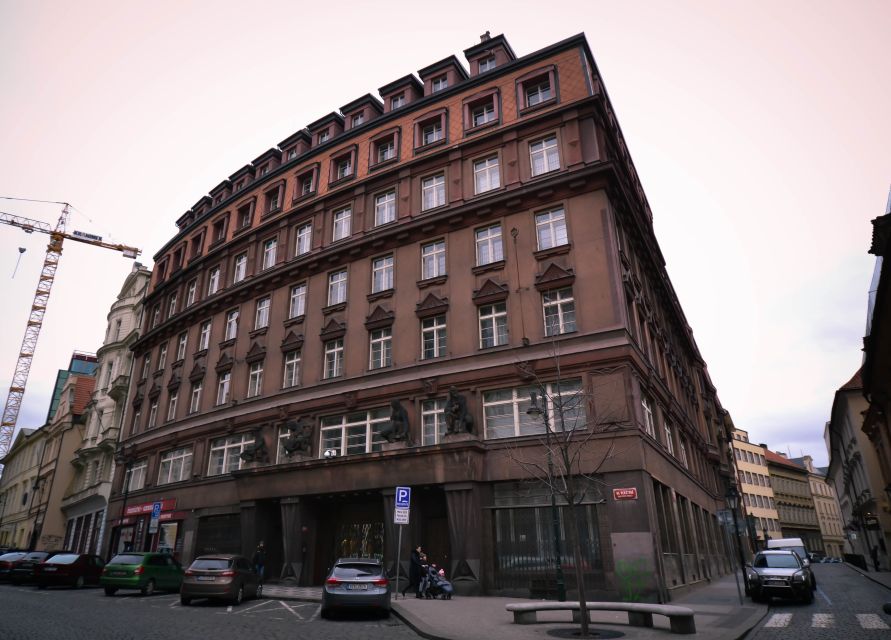
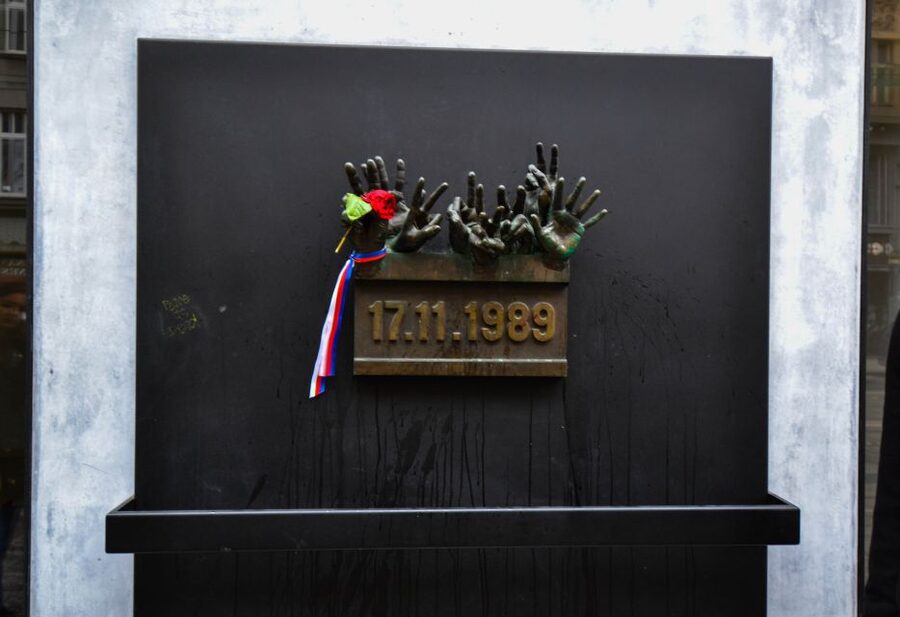
You will hear about the Velvet Revolution Memorial, and then move toward key areas like Wenceslas Square and the New Town finish area near Malé Náměstí. Even with just short guided stops, the point is clear: you are not just learning dates. You are learning where power showed up in everyday life, from major public squares to the offices and institutions linked with surveillance and control.
A standout theme in this tour is how it frames the Czech experience within the broader Cold War. You learn about communism’s logic, then you hear how it played out in daily routines: fear, paranoia, and the constant sense that someone might be watching. That helps later, when the bunker visit stops being abstract and starts feeling like a response to a real threat.
Why it matters for you: if Prague is already on your “history list,” this tour prevents it from becoming a set of landmarks you walk past without meaning. You get context while your feet are still on the ground.
More of the years behind the Iron Curtain:
- Prague Communism History and Nuclear Bunker Tour
★ 5.0 · 1,742 reviews - Communism & Nuclear Bunker Tour + 70s Canteen Lunch (own expense)
★ 5.0 · 1,036 reviews - Prague: Communism and Bunker Tour with 70s Canteen Lunch
★ 4.8 · 269 reviews
The tram ride to the bunker: why the getting-there part is included
After the city intro, you transfer to the bunker by public transportation, and the day is built around that movement. Practically, it keeps the tour from feeling like a single-site visit. It also gives you a sense of how far the bunker is from the tourist center, which makes it feel less like a staged museum stop and more like part of the city’s real infrastructure.
Expect a bit of walking and some stair sections during the day. Reviews and tour notes also make it clear that the bunker area is not ideal for people with mobility limitations, and it is not set up for wheelchair or stroller access. If you have to manage your legs carefully, this part of the tour is where you feel it most.
My take on value here: the tram transfer is not just logistics. It is part of how you understand the Cold War mindset. The state’s preparedness plan was not a theory. It was something built into space, routes, and schedules.
Inside the nuclear bunker, what “designed for 5000” really means
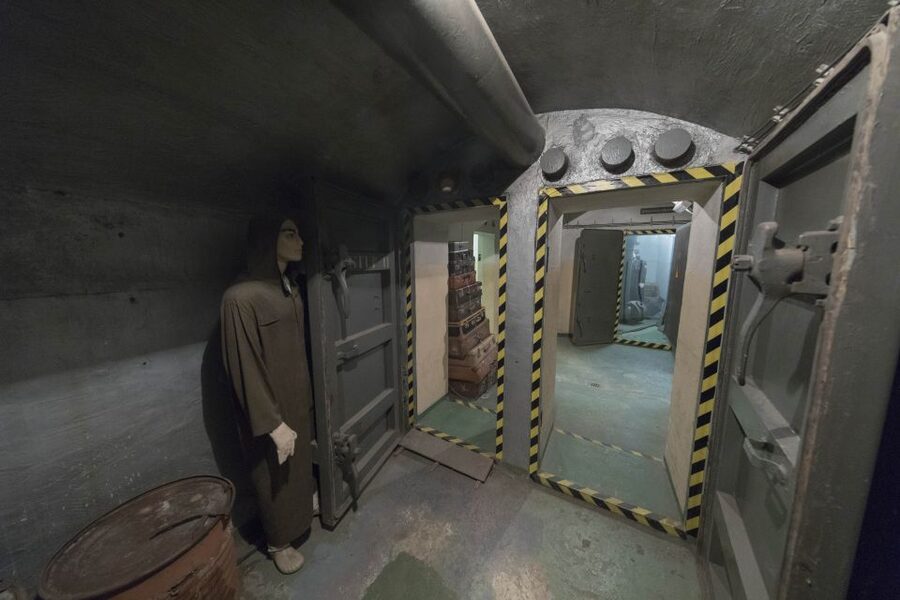
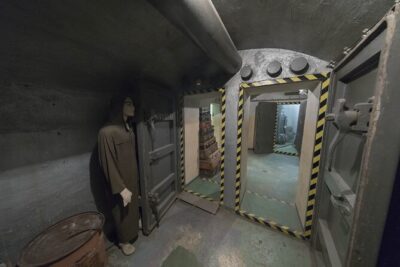
The main event is the visit to a real nuclear bunker from the 1950s, located about 50 feet underground. That depth alone changes the vibe. The tour time inside focuses on what the bunker was meant to do and what life might have felt like when the drills and fear became routine.
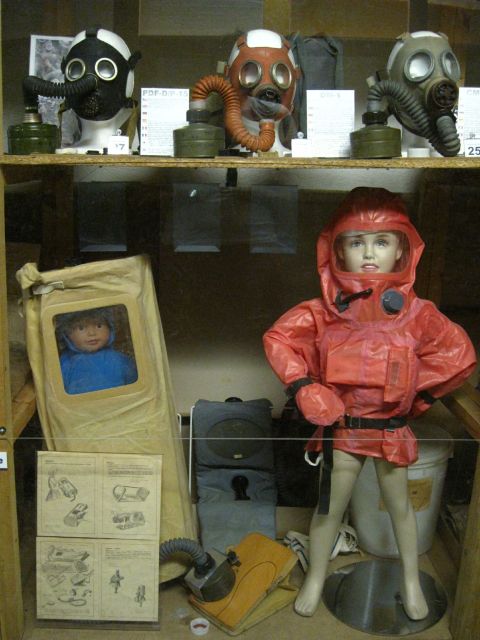
The bunker is described as being designed to accommodate up to 5000 people, and your guided visit brings that scale down to human detail. You are shown cold war-era expositions, with genuine equipment and artifacts meant to show what civilians were supposed to do and how preparedness was managed. It is not just rooms and signage. It is an attempt to reconstruct a system of survival.
You will also hear connections to the paranoia-driven culture of the era. The guide’s stories cover topics like spies, political prisoners, cold war refugees, dissidents, and other people caught in the machinery of the state. The goal is not shock for its own sake. The goal is comprehension: how fear shaped daily choices.
Some people also mentioned the bunker museum’s visuals and displays, including comments that certain exhibits can look worn. That does not change the core experience of going underground and seeing the period equipment, but it is worth knowing if you prefer pristine presentation.
Cold War expositions and genuine artifacts, not just talking points
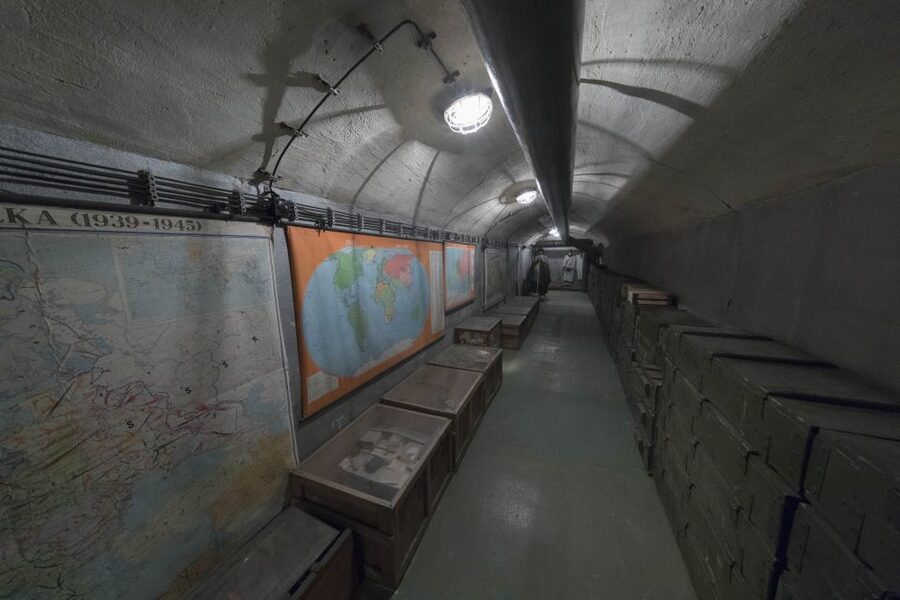
One of the best ways this tour earns its reputation is the way it uses tangible objects. Cold war history can turn into a lecture where you nod, take a photo, and forget. Here, the artifacts and expositions give your brain something concrete to hold onto while the guide explains the broader story.
You can expect to see cold war displays and period materials connected to the communist system, and the museum portion is designed to connect what you heard in Prague’s key public spaces to what the state built underground. The result is that communism feels less like an ideology and more like a lived environment, including how threats were communicated and how people were expected to respond.
Photos are allowed, but video recording is not allowed unless you have extra permission. If you like taking pictures, plan to use the time for still shots, especially around the most visually clear equipment and exhibit areas.
If you have allergies or are sensitive to dust, consider wearing a face mask during the bunker visit. One practical note from recent experience was that the dust level is not described as extreme, but it can still matter to people with respiratory sensitivities.
The gasmask workshop: a hands-on Cold War reality check
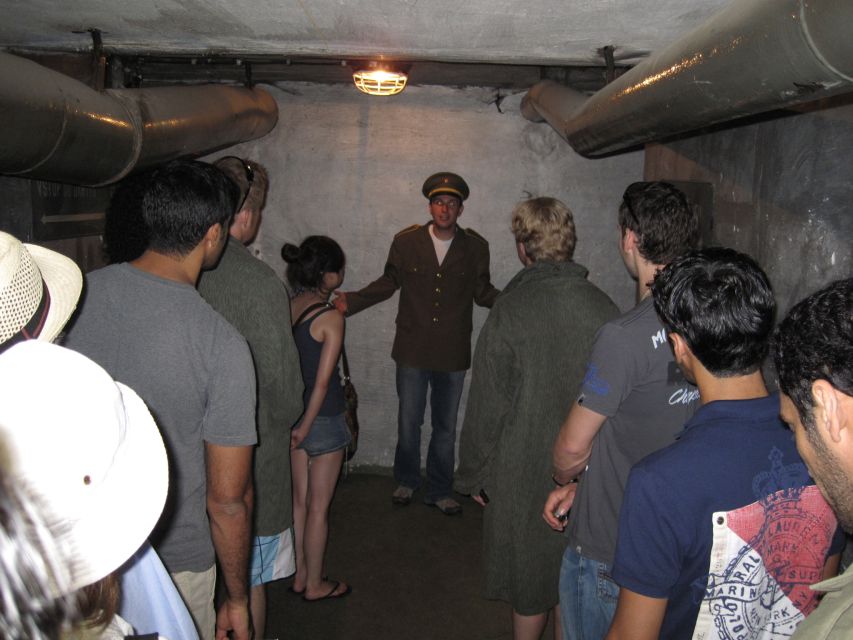
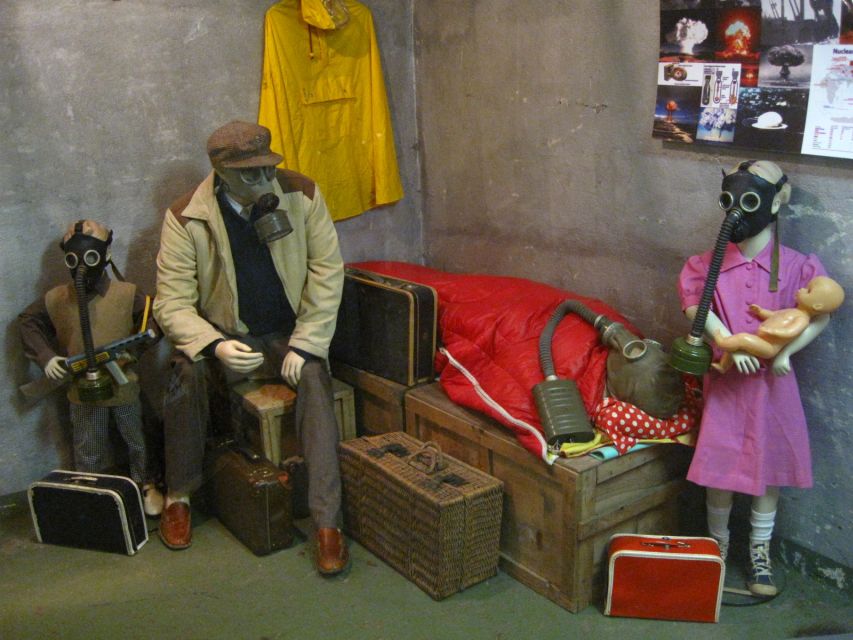
After the underground walk-through and museum time, the tour includes a special gasmask workshop. This is where the tour shifts from “learn what happened” to “feel how people prepared.”
Even if you have no interest in weapons or emergency gear, the workshop helps you understand the underlying logic of the period. In a world where people feared attack and contamination, preparedness became part of daily planning. Your guide explains not just the device, but why it mattered and how it tied into the fear culture of the time.
This is also one of the reasons the tour holds attention for people who do not call themselves history buffs. It is interactive, it forces focus, and it creates a memory hook you keep longer than another set of museum photos.
More centuries stacked along the Royal Route:

How guides like Stan, Ladislav, and Pavel shape the whole tone
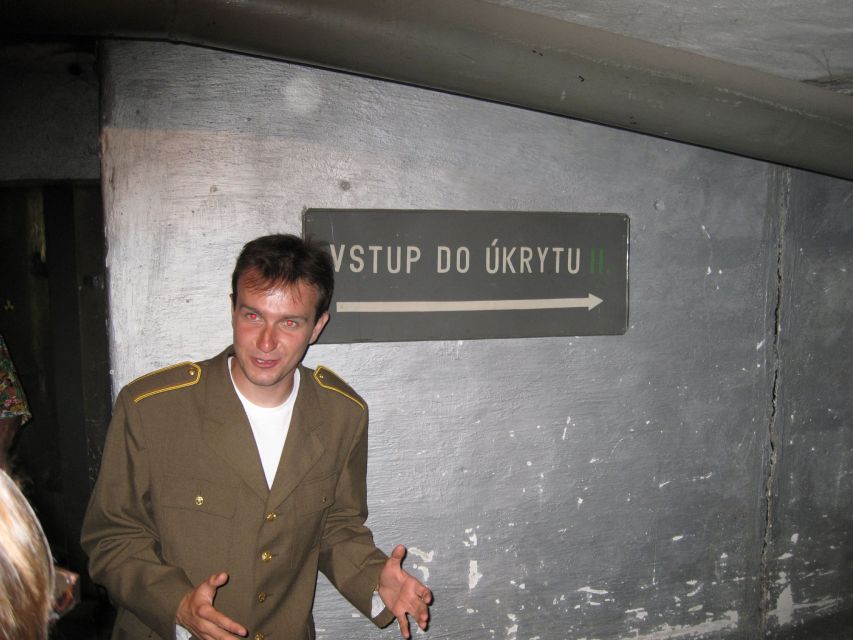
What makes this tour work is the person speaking, not just the facts on a sign. The guide is central to the emotional impact because the story is told through the prism of real life under communism, including how spying and repression felt from the inside.
You might meet guides such as Stan, Ladislav, Pavel, Katerina, or Maki. The common thread is a human approach: they connect major political events to ordinary feelings like anxiety, caution, and the small compromises people made to get through the day.
Many guides also use a tone that mixes seriousness with humor. That matters because the subject is genuinely dark. A guide who can pace the day keeps the experience thought-provoking rather than overwhelming.
What to do as a participant: come with questions you genuinely care about. If you are wondering how people spoke in public, what daily rules felt like, or how dissidents survived, ask. The tour format gives room for interaction, and the guide’s personal context is part of the value you are paying for.
Price and logistics: where the $44 per person fits
At about $44 per person for a roughly 150-minute guided experience, this tour is priced like an all-in history outing, not a quick add-on. You are paying for several things at once: a live guide, admission to the bunker museum and exhibitions, and public transportation to and from the bunker.
If you tried to build this on your own, you would likely spend time coordinating transit and entry, and you would miss the interpretive layer that connects Prague landmarks to the bunker’s purpose. The guide’s storytelling makes the museum feel like part of the same narrative rather than two separate stops.
You also get a skip-the-line advantage via a separate entrance, which helps when you have limited time in Prague.
On the other hand, the tour includes walking, stairs, and underground spaces. If you are paying for comfort and accessibility, this might not be your best match. If you are paying for understanding and context, it can be strong value.
Who should book, and who should skip this bunker day
This is a tour for people who want context and atmosphere, not just a photo sprint.
You should strongly consider it if:
- You want a Prague communist history experience that connects public landmarks to an underground survival site
- You are curious about Cold War fears, spying culture, and life under state control
- You enjoy guided interpretation, especially when it includes personal perspective
You should skip or rethink if:
- You need wheelchair access or have mobility limitations, because it is not suitable for that
- You have claustrophobia, since you will be inside an underground bunker
- You have concerns like heart issues or attention disorder that could be affected by the setting and pacing
- You travel with infants or very young children. The tour notes state it is not allowed for infants, and not for the smallest children under school age
Also, there are behavior and safety boundaries: no pets, no smoking, no alcohol or drugs, and you should not show up under the influence. If you plan around these rules, the day should run smoothly.
Small drawbacks to plan for before you go
No tour is perfect, and this one has a few practical edges that matter.
First, the day involves walking and stairs. Even people who are reasonably fit can find the bunker segment tiring. Comfortable footwear is strongly worth it.
Second, there is no toilet at the starting point, so use facilities before you meet up.
Third, the bunker museum is an underground environment. If you are dust-sensitive, plan for it. A face mask can help, and wearing one does not interfere with the tour.
Finally, some people have noted that certain bunker exhibits can look in need of maintenance. That does not undermine the core value of the bunker itself, but it is fair to keep in mind if your ideal museum is spotless and perfectly polished.
Should you book the Prague Communism and Nuclear Bunker Guided Tour?
I think you should book this tour if you want more than a list of Cold War facts. The best reason is the combination of Prague streets plus a real nuclear bunker visit, guided by people who can explain what the fear and surveillance felt like from the inside. The gasmask workshop is a practical bonus that turns abstract history into something your body understands.
You might want to skip it if your priorities are comfort and easy movement, or if you are not able to handle underground spaces and tight, enclosed areas. In that case, Prague has plenty of other history tours that stay above ground.
If you are coming to Prague for meaningful context and you can handle walking and stairs, this is one of the more memorable ways to understand Czechoslovakia’s communist era, not just as politics, but as daily life.
FAQ
How long is the Prague Communism and Nuclear Bunker guided tour?
The tour duration is listed as 150 minutes.
How much does the tour cost?
The price is $44 per person.
What languages are available for the live guide?
The live tour guide is available in German and English.
Is the tour wheelchair accessible?
No. It is not possible for wheelchair users or for people with walking disabilities or mobility issues due to walking and stairs.
Are pets allowed on the tour?
No, pets are not allowed.
Are there toilets at the starting point?
No. There are no toilets at the starting point.
Is food included in the tour price?
No food and drinks are included.
Just written up in Prague
- Private Transfer from Prague to Regensburg★ 5.0 · 1 review
- Prague: TV Tower Ticket & Novi Grad Digital Tour★ 5.0 · 1 review
- Prague to Dresden’s Old Town, Zwinger & Frauenkirche by Car★ 3.0 · 1 review
- Prague to Český Krumlov Private Guided Tour – With Mike★ 5.0 · 1 review
- Prague to Munich Private Transfer with 2 hours sightseeing★ 5.0 · 1 review
- Prague: 3-Hours Wars & Totality Guided Walking Tour★ 5.0 · 1 review
- Prague to Berlin Private Transfer with Optional Sightseeing★ 5.0 · 1 review
- The Plague Doctor of Prague: Self-Guided Mystery Puzzle Walk★ 3.0 · 1 review
Prague Communism Tours, compared.
Prague Communism History and Nuclear Bunker Tour
Read our review →
Communism & Nuclear Bunker Tour + 70s Canteen Lunch (own expense)
Read our review →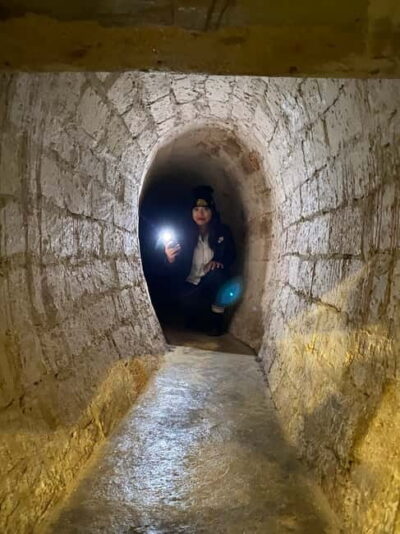
Communism and Bunker Tour with 70s Canteen Lunch
Read our review →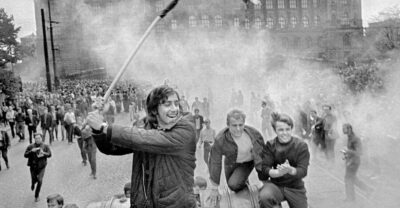
Second World War & Communism (Tip-based 3 hour tour)
Read our review →
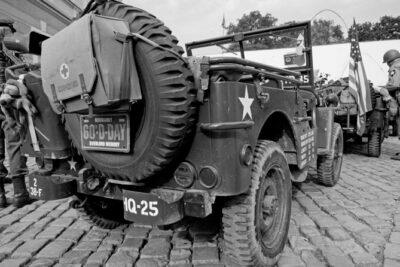
Prague Communism and World War II Walking Tour
Read our review →Browse the lists this tour appears in