
Reviewed · PRAGUE COMMUNISM TOURS
Cold War Communism Prague with a Local Historian Semiprivate
Cold War Prague can hit you fast. This walking tour strings together the big moments of communism in Czechoslovakia with real street-level landmarks, from 1968 through 1989. You also get the human side: names like Jan Palach and Vaclav Havel, plus how ordinary life worked under the regime.
What I like most is the small, semi-private group setup, with room for questions and a calm pace. I also love that the guide, Jiri, brings personal context, because he is the son of a student leader connected to the Velvet Revolution. That family link turns political dates into something you can actually picture.
One consideration: this is a walking tour in the center city, and it runs about 2 hours 30 minutes. Plan on being outside, and also note the operator says the tour needs good weather, so expect rescheduling options if conditions are bad.
In This Review
- Key things I found most useful
- Getting your bearings: Prague under communism, in one arc
- Wenceslas Square (Václavské náměstí): the timeline you can walk through
- Lucerna Arcade: culture under communism, plus the upside-down horse
- Franz Kafka statue: living conditions and the pressure behind the scenes
- Narodni třída and the wall with hands: the Velvet Revolution in public view
- National Theatre: Vaclav Havel and the shadow of secret police
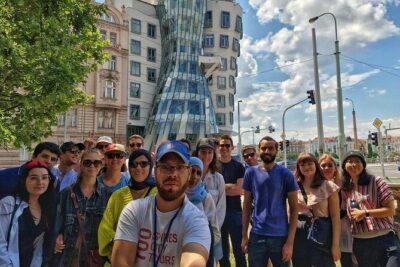
- Dancing House: the Cold War story keeps moving after 1989
- Price and value: what $62.60 buys you here
- Who this tour suits best (and who might want something else)
- Small-group pacing: how the 2.5-hour timing feels in practice
- Deciding whether to book: my recommendation
- FAQ
- How long is the Cold War Communism Prague walking tour?
- How much does the tour cost?
- Where does the tour start and end?
- Is there a group size limit?
- What is included in the price besides the tour itself?
- Is the ticket digital?
- What happens if the weather is bad?
- What is the cancellation policy?
- Does the tour require special accommodations or specific location access?
Key things I found most useful
- A tight 2.5-hour route that covers 1968 to 1989 without feeling rushed
- Wenceslas Square as the backbone, with the Revolution of 1968 and 1989 explained around the streets
- Velvet Revolution stops with built-in meaning, including a wall with sculpted hands on Narodni třída
- Kafka and everyday life under communism, using a statue stop to talk about living conditions
- National Theatre context, including how the secret police era shows up in the story
- Max 6 people, which keeps it conversational and good for anyone who asks lots of questions
Getting your bearings: Prague under communism, in one arc
Prague can look like a postcard most days. But the city also has long memory. This tour helps you read that memory by linking ideology to real places, like Wenceslas Square and the river-adjacent architecture that marks different eras.
You start by framing the Cold War period in simple terms: communism shaped public life in Czechoslovakia for nearly 50 years. From there, the story moves to the Prague Spring and the Soviet invasion in 1968, then forward to the Velvet Revolution in 1989, when communism ended in the country and across much of Europe.
What makes the approach work for you is that you do not just memorize dates. You connect the dates to how Prague looked and what people did, from protest symbolism to dissident pressure. You’ll also walk past modern landmarks like the Dancing House, and the guide uses them to keep the story from freezing in time.
More of the years behind the Iron Curtain:
- Prague: Communism History and Nuclear Bunker Guided Tour
★ 4.7 · 2,417 reviews - Prague Communism History and Nuclear Bunker Tour
★ 5.0 · 1,742 reviews - Communism & Nuclear Bunker Tour + 70s Canteen Lunch (own expense)
★ 5.0 · 1,036 reviews
Wenceslas Square (Václavské náměstí): the timeline you can walk through
This is your first big anchor point. Wenceslas Square is where you can feel the contrast between official power and public pressure, because the surrounding area holds multiple layers of the 20th century.
The guide uses the square to trace Cold War influences and to point out how the events of 1968 and 1989 played out in this kind of urban space. The important part is not that one spot is famous on a map. It’s that a square like this becomes a stage, and a stage changes meaning depending on who controls the narrative.
Practical tip: because this is the “hub” of the walk, arrive ready to notice. Look at how wide the area is, how it channels movement, and how that matters when crowds gather or when authority wants to project control.
Lucerna Arcade: culture under communism, plus the upside-down horse
Next you cut into a more compact, everyday space: the Lucerna Arcade. Even though the stop is short, it gives you a useful shift in tone. Instead of only discussing politics, you get a snapshot of culture and life in the same city that hosted major uprisings.
One standout detail here is the upside down horse art. It’s a visual break from the solemn stories of the Cold War, and that contrast helps the bigger point land: communism did not erase everyday creativity, humor, or design. It reshaped what could be shown openly, and people learned how to express ideas in smarter ways.
This is also a good pause. The walking rhythm stays manageable, and you get a micro-break that helps you stay focused for the rest of the route.
Franz Kafka statue: living conditions and the pressure behind the scenes
After Lucerna, the walk takes you toward a Franz Kafka statue and the nearby area. Kafka is often treated like a literary figure, but here the guide uses the stop to talk about living conditions during communism in Czechoslovakia.
That works because it ties the abstract to a feeling you can understand: the sense that society watched itself, that people adjusted behavior, and that normal life could come with invisible boundaries. You don’t need technical details of policy to grasp the effect. You just need a sense of how daily routines can be shaped by fear, censorship, and surveillance.
Also, Kafka’s cultural weight helps. This is not propaganda, it’s literature. And in this context, it becomes another way to talk about what people did to stay human under pressure.
Narodni třída and the wall with hands: the Velvet Revolution in public view
This is one of the most emotionally charged stops on the walk. You’ll spend time at the hands reaching out of the wall on Narodni třída, with the guide connecting it to locations and symbolism tied to 1989.
Even if you have heard the Velvet Revolution story before, this kind of stop changes how you experience it. You’re not just learning that people protested. You’re seeing how public art and public space can become a record of dissent. Those hands are a strong visual cue that the movement was not only political, it was personal and urgent.
Time-wise, this stop is long enough to slow you down and let the meaning settle. That matters because the later parts of the route get more layered again, with dissidents, the presidency, and the shadows of secret policing.
Another way the same evening in Prague could go:
National Theatre: Vaclav Havel and the shadow of secret police
At the National Theatre, the walk connects the communist era directly to Vaclav Havel, including his story as the last president of Czechoslovakia. Havel is a key figure for understanding how dissenters moved from critics to decision-makers.
The guide also uses this stop to layer in the secret police angle. That’s valuable because it gives you context for why dissident voices mattered so much. When the state controls information and intimidation is real, speaking out becomes risk. In that light, a theatre landmark is more than architecture. It becomes part of the stage where ideas meet consequences.
This stop also helps you understand why the dissident movement was not one unified thing. It was a network of people who found different ways to resist, from writing to public action. Havel becomes the thread that holds those themes together in your mind.
Dancing House: the Cold War story keeps moving after 1989
The final stop is the Dancing House, which helps you avoid a common travel mistake. Some tours treat history like a museum room where everything ends at the closing door. Here, the guide uses the space to keep the Cold War story moving beyond 1989.
Why that matters for you: the end of communism did not turn Prague into a different city overnight. The city had to absorb change, rebuild identity, and redefine what progress looks like. A landmark like the Dancing House lets you connect old political struggles to newer architecture and new confidence.
You finish close to the end point at Jiráskovo náměstí, so the walk lands you in a practical spot for continuing on your own, whether you want food, river views, or one more look at the city’s modern face.
Price and value: what $62.60 buys you here
At $62.60 per person for about 2 hours 30 minutes, the price is in the “reasonable for interpretation” range, not a bargain, not a splurge. You’re paying for a focused route and a guide who can explain complex history with a human voice.
The best value piece is the group size limit of up to 6 travelers. That semi-private format matters because you will likely ask questions at some point, and you do not want those questions swallowed by a large group. The guide style also comes through in the experience: people mention Jiri is pleasant, easy going, patient, and logical with explanations.
You also get bottled water included. It seems minor, but on a walking tour it keeps you comfortable without having to plan for refreshments while you’re learning.
If you are the kind of traveler who likes context over slogans, this tour tends to reward you. If you only want a quick highlights walk, you might find it slower than you expect, because the guide is explaining how events connect.
Who this tour suits best (and who might want something else)
This tour fits you best if you want to understand the Cold War era in Prague with real place names and clear cause and effect. It’s especially good if you’re interested in the Prague Spring, the Soviet invasion in 1968, and the Velvet Revolution in 1989, plus the stories of Jan Palach and Vaclav Havel.
It’s also a strong match if you like when a guide can answer questions patiently. The reviews point out that this style works well when you ask follow-ups, like how everyday life changed under communism or why certain protest symbols mattered.
If you are already deep into academic detail and want museum-level artifacts, you might prefer a more specialized historical program with indoor collections. This one is about walking, street context, and narrative connections rather than detailed object study.
Small-group pacing: how the 2.5-hour timing feels in practice
With a route built around key urban stops, the timing stays manageable. Wenceslas Square is longer as the main orientation point, while other stops are shorter but packed with interpretation.
You’ll also notice that several stops are free to visit, which keeps the experience focused on the guide’s explanations rather than “buy this ticket, then that ticket.” The only added included stop is tied to the Narodni třída wall experience, which helps keep the feel consistent.
Since confirmation is handled in advance and the tour uses a mobile ticket, you can keep your day plan simple. Just make sure you check the weather and dress for the day, not for the forecast you hope for.
Deciding whether to book: my recommendation
Book this tour if you want a clear, place-based way to understand communism, dissidents, and the shift from 1968 to 1989 in Prague. The combination of a small group, the guide Jiri, and the specific landmarks like Wenceslas Square, Narodni třída, and the National Theatre makes it a strong “one intro tour” for the topic.
Skip it if you only want a fast checklist of sights, or if you are not interested in political history beyond surface-level facts. Also, if weather is a big issue in your travel window, consider having flexible plans for the reschedule option.
If you do book, my best advice is to come ready to ask questions. This kind of tour rewards curiosity, and the format is set up for it.
FAQ
How long is the Cold War Communism Prague walking tour?
The tour is approximately 2 hours 30 minutes.
How much does the tour cost?
It costs $62.60 per person.
Where does the tour start and end?
It starts at Statue of Saint Wenceslas (Václavské nám., 110 00 Praha 1-Nové Město) and ends at Dancing House (Jiráskovo nám. 1981/6, 120 00 Praha 2-Nové Město).
Is there a group size limit?
Yes, the tour has a maximum of 6 travelers.
What is included in the price besides the tour itself?
Bottled water and all fees and taxes are included.
Is the ticket digital?
Yes, the tour uses a mobile ticket.
What happens if the weather is bad?
The experience requires good weather. If it is canceled due to poor weather, you will be offered a different date or a full refund.
What is the cancellation policy?
You can cancel for free up to 24 hours in advance for a full refund.
Does the tour require special accommodations or specific location access?
Service animals are allowed, it is near public transportation, and most travelers can participate.
Just written up in Prague
- Private Transfer from Prague to Regensburg★ 5.0 · 1 review
- Prague: TV Tower Ticket & Novi Grad Digital Tour★ 5.0 · 1 review
- Prague to Dresden’s Old Town, Zwinger & Frauenkirche by Car★ 3.0 · 1 review
- Prague to Český Krumlov Private Guided Tour – With Mike★ 5.0 · 1 review
- Prague to Munich Private Transfer with 2 hours sightseeing★ 5.0 · 1 review
- Prague: 3-Hours Wars & Totality Guided Walking Tour★ 5.0 · 1 review
- Prague to Berlin Private Transfer with Optional Sightseeing★ 5.0 · 1 review
- The Plague Doctor of Prague: Self-Guided Mystery Puzzle Walk★ 3.0 · 1 review
Prague Communism Tours, compared.
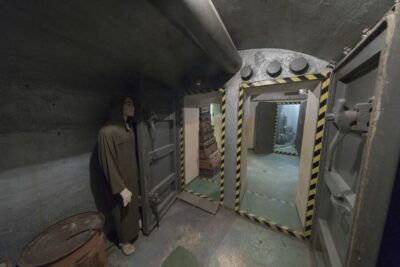
Communism History and Nuclear Bunker Guided Tour
Read our review →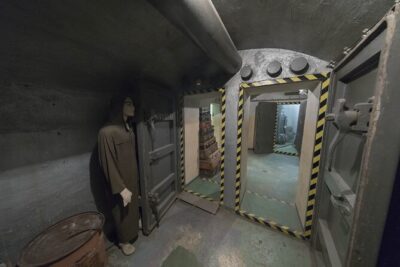
Prague Communism History and Nuclear Bunker Tour
Read our review →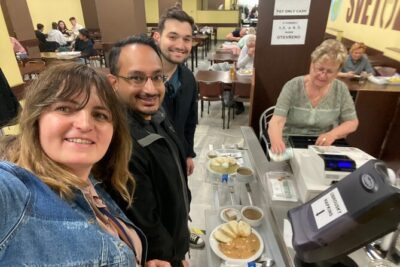
Communism & Nuclear Bunker Tour + 70s Canteen Lunch (own expense)
Read our review →
Communism and Bunker Tour with 70s Canteen Lunch
Read our review →
Second World War & Communism (Tip-based 3 hour tour)
Read our review →
Browse the lists this tour appears in