
Reviewed · PRAGUE GUIDED WALKING TOURS
Prague: 2-Hour Back to Communism Walking Tour
Prague keeps its 20th-century ideology on display. That is what makes this 2-hour Back to Communism walking tour so gripping: you trade generic sightseeing for real context, starting with the ideas behind socialism and then stepping through the places where communism shaped daily life. I love the way you get local storytelling from people who lived through the era, and I also love that the route focuses on specific landmarks tied to power, protest, and Soviet occupation.
One watch-out: this tour tends to explain communism mainly through the Soviet-era Czech experience, so if your goal is a broader, global comparison of communist movements, you might want to pair this with something wider.
In This Review
- Key highlights you should care about
- Turning Prague streets into a Cold War classroom
- Before you go: meeting points, what to bring, and what not to carry
- Stop by stop in central Prague, where communist power and resistance left marks
- The former secret communist police headquarters
- The former spot of the Stalin statue
- Communist party seats, past and present
- Places tied to protests, demonstrations, rebellions, and revolutions
- Soviet occupation and the Cold War aftertaste
- The tour’s real strength: you start with theory, then test it against daily life
- Language and pacing: how to get the best version of the tour
- Price and value: what $50 buys you in Prague
- Who this tour fits best, and who should think twice
- Should you book this Prague Back to Communism walking tour?
- FAQ
- How long is the Prague Back to Communism walking tour?
- What is the price per person?
- Where do we meet for the tour?
- Which languages are available for the live guide?
- What should I bring, and what is not allowed?
- Is the tour wheelchair accessible, and is a private group available?
Key highlights you should care about
- Start with the theory, not just monuments, so the rest of the walk makes sense
- See tangible sites, including a former secret communist police headquarters and the Stalin statue location
- Learn how power worked, from Communist party seats to places tied to demonstrations and revolutions
- Hear lived details, guided by local Cold War survivors, with room for questions
- Get value from a short time window, since it is designed to fit into about 1 to 2 hours
- Choose your language and format, with Czech, English, or German, plus private group options
Turning Prague streets into a Cold War classroom
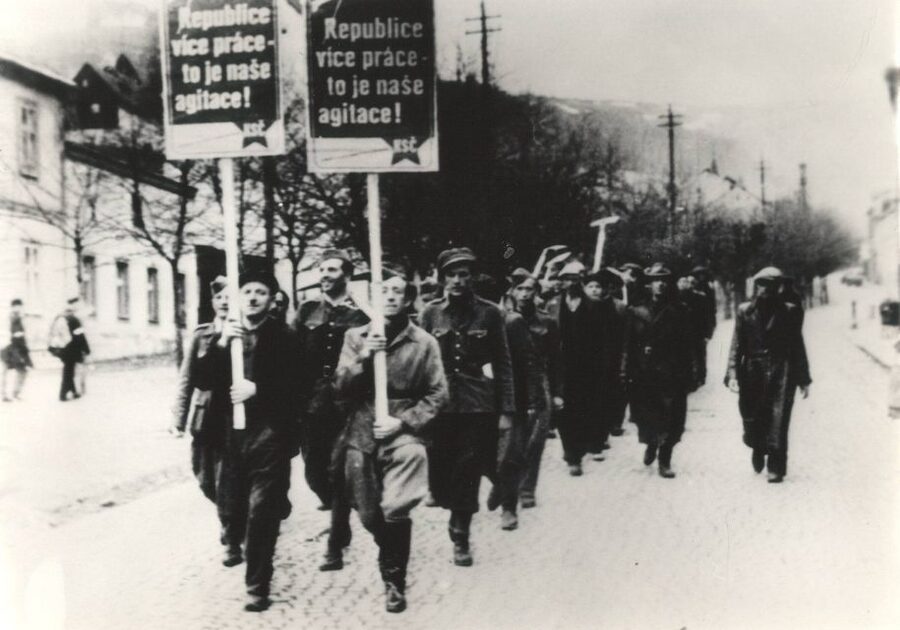
Prague can feel timeless. And then you stand in the center of the city and realize how much of the last century was about control, fear, propaganda, and hope, all competing for space in the same streets. This tour is built to make that connection fast. You start with a history-and-theory introduction to socialism and communism, including how the ideas developed in the 19th century and how they spread into Central and Eastern Europe. That opening matters, because the rest of the walk is not a random list of buildings. It is a guided explanation of how ideology becomes institutions, and how institutions become everyday life.
What I like best is the balance of big picture and street-level observation. You are shown key locations tied to the communist era, but you are also taught what to look for in the stories you hear. Places connected to surveillance and policing do not just exist as architecture. They represent a system that shaped where people could go, what they could say, and how they adapted. Meanwhile, sites tied to protest and revolution help you understand why resistance also had a geography, not just a political slogan.
This is also where the tour earns its title. You are not only walking through history. You are getting a guided return to the mindset of the era, with reminders that some parts of Prague still feel heavy from what happened there.
More of the years behind the Iron Curtain:
- Prague: Communism History and Nuclear Bunker Guided Tour
★ 4.7 · 2,417 reviews - Prague Communism History and Nuclear Bunker Tour
★ 5.0 · 1,742 reviews - Communism & Nuclear Bunker Tour + 70s Canteen Lunch (own expense)
★ 5.0 · 1,036 reviews
Before you go: meeting points, what to bring, and what not to carry
This tour is designed for a tight walking loop, around 1 to 2 hours. That makes planning easy, but you still want to show up prepared.
Where you meet: the meeting point can vary depending on the option you book. Two starting locations are listed on Na Příkopě: Na Příkopě 28 and Na Příkopě 864. If you are mapping it, use the exact address for your option so you do not waste time crossing the city center.
What to bring: plan on bringing a passport or ID card. That is a small step, but it matters for entry to the tour.
What you cannot bring: luggage or large bags are not allowed. If you are carrying a daypack, you should be fine, but keep it light. This kind of tour moves between stops without much tolerance for bulky baggage.
Languages: the live guide runs in Czech, English, or German. If your priority is clarity, pick your strongest language. The tour includes discussion and Q&A, and that only works well if you can follow in real time.
Format options: you can book as a private group, and the tour is wheelchair accessible. If you need specific accommodations beyond that, you should verify details with the operator, since the tour is still a walking experience.
Quick practical tip: wear shoes you trust. Even though it is short, the value of this tour depends on how fully you can focus on the stops and the guide’s stories, not on dealing with sore feet.
Stop by stop in central Prague, where communist power and resistance left marks
The route covers major nodes of the communist era in Prague, and it keeps the story grounded by moving from power centers to pressure points. You will see several categories of sites, and each one comes with a different kind of lesson.
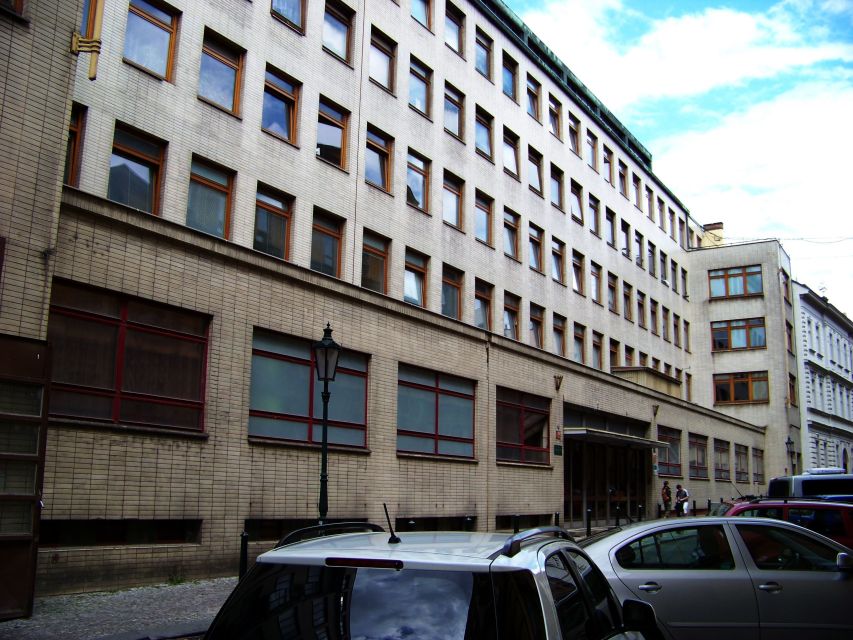
The former secret communist police headquarters
This is usually the emotional anchor of the tour. A former secret communist police headquarters is not just a historical reference point. It is a symbol of how the system functioned: controlling information, monitoring people, and shaping behavior through fear.
When you visit a place like this, the guide can connect what you see to what happened around it. You learn how the state used policing and intelligence to maintain order, and you also hear how that shaped daily life. Even if you already know the outline of the Cold War, these locations tend to make it feel real. You start to understand why conversations changed in public, why privacy mattered, and why some people learned to carefully measure words.
The former spot of the Stalin statue
Stalin statues are political weather vanes. They show what leadership wanted citizens to worship, and they show how quickly official narratives could shift. The walk includes the former spot of the Stalin statue, which is a perfect transition from repression to ideology.
This stop helps you connect the visual propaganda side of communism to the political reality. The guide can explain what those monuments meant and how they fit into the larger story of Soviet influence in Czechoslovakia and beyond. It also underscores something you might feel more than understand at first: when leadership symbols change, public memory has to scramble to keep up.
More guided walks around the centre:

Communist party seats, past and present
You will also visit the current and former seat of the Communist party. That matters because it ties ideology to bureaucracy. A party seat is where decisions get made, policies get translated into rules, and power becomes administrative reality.
In your mind, it is easy to think of communism as an abstract doctrine. This stop snaps it back into the concrete. You learn who held authority, how the system organized itself, and what it meant for ordinary people who had to live under those decisions. The guide’s lived perspective is especially useful here, because you are not only hearing what the party controlled. You are also learning what it felt like to exist beside that control.
Places tied to protests, demonstrations, rebellions, and revolutions
This is where the walk stops being one-note. Communism was enforced, yes, but it was also challenged, and the tour includes places associated with protests, demonstrations, rebellions, and revolutions.
These stops help you build a fuller picture. Resistance was not one event. It was a chain of responses to pressure, repression, and shifting political conditions. You also get a sense of how public space can become a stage for political change. Even without dramatic reenactments, the guide’s stories give you an understanding of why certain moments mattered, and why people took risks when they did.
Soviet occupation and the Cold War aftertaste
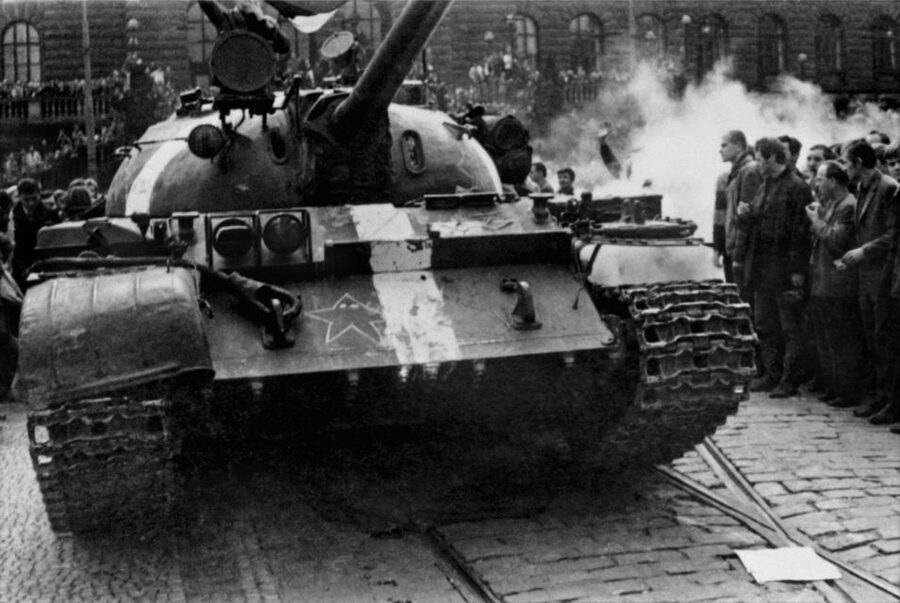
The tour addresses Soviet occupation directly. That is a big topic, and it can get abstract unless it is connected to something tangible. By the time you reach this theme, you have already seen the police and party structures, so the Soviet influence makes more sense. You can connect the dots between external control, internal governance, and how that combination shaped life for residents.
The route also notes that some areas still breathe depression until this day. I take that line seriously. Even if the buildings look ordinary, the atmosphere is part of the point. The guide does not treat the past like an old movie. You are invited to consider how memory lingers in cities, and how historical trauma can remain part of the urban mood.
The tour’s real strength: you start with theory, then test it against daily life
A lot of history walks are just: see this, read that, move on. This one tries a different approach. At the beginning, you get an introduction into socialism and communism, including their rise in the 19th century and how they spread through Central and Eastern Europe. That early foundation makes the later stops more than sightseeing.
Then the guide shifts from ideology to lived experience. Cold War survivors, who lived through the era, describe how common life looked. That typically means you hear about the rhythms of everyday existence under a system that shaped jobs, social life, and public speech. You also get the chance to discuss advantages and disadvantages, not just criticize the system.
That balance is important for how you can use the tour. If you want one-sided outrage, you might feel satisfied quickly and then stop learning. If you want understanding, this structure helps you evaluate claims, not just memorize facts. The guide can explain pros and cons as they appeared in that moment, and then you get to ask questions and challenge the logic in your own way.
And yes, discussions and questions are encouraged. That is where the tour becomes more than a script. If you are curious about how people navigated daily contradictions, you can ask. If you want clarity on timelines or personalities, you can ask. If you think you understand the subject already, you will still likely find a detail that changes how you picture it.
Language and pacing: how to get the best version of the tour
This tour runs with live guides in Czech, English, and German. In a short walking format, language quality makes a noticeable difference. If the guide is switching between languages or struggling to keep the flow, you can lose the thread of the story. If you are fluent in English, I would choose it for the smoothest experience, especially if you want to keep your focus on the stop-by-stop narrative and the Q&A.
Pacing is another factor. This walk is designed for about 1 to 2 hours. That means you should expect a structured pace and a fairly tight sequence of sites. If you love slow wandering and long museum time, you might find the tour brisk. But that brisk pace is also the point. It is built for people who want a coherent story within a limited window.
Group format matters too. A private group is available, which is great if you want more direct conversation and a pace that fits your questions. If you book a standard group format, you might still get discussion, but you should anticipate that the guide has to manage everyone’s timing, including people arriving at the same stop from different sides.
One practical note: the meeting point varies by option booked. Use the exact Na Příkopě address you selected so you do not arrive late and miss the opening theory segment. That first part sets expectations for everything after it.
Price and value: what $50 buys you in Prague
At $50 per person for a 1 to 2 hour guided walk, you are paying for more than a route through central streets. You are paying for interpretation, context, and a guide who lived through the era and can connect buildings to lived reality.
Here is how I think about value for this kind of tour:
- If you want a quick look at Prague history, this may feel pricey. You can do that on your own with guidebooks.
- If you want a guided explanation of communism as a system, including the theory at the start, the price starts to make sense.
- If you want local lived perspective and the chance to ask questions, you are essentially buying time with a primary storyteller.
Also, the tour is short. That helps your budget. You get a concentrated experience without losing half a day. If your Prague plan is already packed, this can be a smart use of limited time.
The final value test is your interest level. If communism, Soviet influence, and 20th-century ideology are actually your thing, you will likely feel that $50 is fair. If it is more of a background curiosity, you might prefer a shorter or cheaper overview tour.
Who this tour fits best, and who should think twice
I would recommend this tour if you:
- Want context for communist-era Prague, not just photo stops
- Like questions and discussion rather than one-way lectures
- Prefer local perspective, especially from people who lived through the Cold War period
- Want a compact 1 to 2 hour experience that still covers major themes
I would think twice if you:
- Want a broad survey of communism across many countries and time periods
- Are mainly after general Prague sightseeing with minimal ideology
- Need language precision above all else, since the guide’s language performance can vary depending on the run
Should you book this Prague Back to Communism walking tour?
If your goal is to understand how communist power worked in Prague, not just to see a few related landmarks, then yes, book it. The strongest reason is the structure: theory first, then key sites, then lived daily-life stories, with space for questions. That mix is hard to replicate on your own in a short time.
Book it especially if you are the type who likes connecting politics to places. This tour helps you do that, fast. And it gives you a reason to look at Prague with sharper eyes, even after the walk ends.
If you are unsure, choose your language carefully, and consider the private group option if you want your questions answered without time pressure.
FAQ
How long is the Prague Back to Communism walking tour?
The tour lasts about 1 to 2 hours.
What is the price per person?
The price is $50 per person.
Where do we meet for the tour?
The meeting point can vary based on the option booked, with starting locations at Na Příkopě 28 or Na Příkopě 864.
Which languages are available for the live guide?
The live guide is available in Czech, English, and German.
What should I bring, and what is not allowed?
Bring your passport or ID card. Luggage or large bags are not allowed.
Is the tour wheelchair accessible, and is a private group available?
Yes, the tour is wheelchair accessible, and private group options are available. Cancellation is also offered with full refund up to 24 hours in advance.
Just written up in Prague
- Private Transfer from Prague to Regensburg★ 5.0 · 1 review
- Prague: TV Tower Ticket & Novi Grad Digital Tour★ 5.0 · 1 review
- Prague to Dresden’s Old Town, Zwinger & Frauenkirche by Car★ 3.0 · 1 review
- Prague to Český Krumlov Private Guided Tour – With Mike★ 5.0 · 1 review
- Prague to Munich Private Transfer with 2 hours sightseeing★ 5.0 · 1 review
- Prague to Berlin Private Transfer with Optional Sightseeing★ 5.0 · 1 review
- Prague: 3-Hours Wars & Totality Guided Walking Tour★ 5.0 · 1 review
- The Plague Doctor of Prague: Self-Guided Mystery Puzzle Walk★ 3.0 · 1 review
Prague Guided Walking Tours, compared.
3-Hour Walking Tour of Old Town & Prague Castle
Read our review →
Ghost Walking Tour Where Legends Come To Life
Read our review →
Jewish Quarter Walking Tour with Admission Tickets
Read our review →
Prague Guided Walking Tour and Cruise with Authentic Czech Lunch
Read our review →
Old Town and Jewish Quarter Guided Walking Tour
Read our review →
Prague Ghost and Legend of Old Town Walking Tour
Read our review →
Prague 3-hour Afternoon Walking Tour including Prague Castle
Read our review →
Ghosts and Legends Nighttime Guided Walking Tour
Read our review →Browse the lists this tour appears in