
Reviewed · PRAGUE OLD TOWN TOURS
Communism in Prague Private Tour of the Old Town and Museum
Prague has a second story under communism. On this private Old Town walk, I like how your history expert guide connects WWII damage, the Soviet occupation, and the Velvet Revolution to the streets you can still stand on today. You start at Staroměstské náměstí and learn why 20th century power plays changed everyday life in Prague.
I also like the practical way the tour uses landmark views, from the Astronomical Clock to St Nicholas Church, to explain what the communist system meant for government, economy, society, and social welfare. One consideration: the 2-hour option is a walking tour only, and Museum of Communism tickets are only included with the 4-hour option, so if you want the bigger museum context, plan the longer time.
In This Review
- Key Things I’d Watch for on This Tour
- Why This Communism Tour Works So Well in Prague
- Meeting Up Outside the World of Franz Kafka, Then Getting Oriented Fast
- Staroměstské náměstí and the 1948 Takeover Moment
- Astronomical Clock and the Churches: What Changes Under One-Party Rule?
- WWII Damage Still Visible in Old Town, Then the Next Occupation Chapter
- The Old Police Station Stop and Why Secret Police History Changes Everything
- From Government to Economy to Society: How Daily Life Is Explained on the Walk
- From Jan Palach to Student Resistance: The Road to 1989
- Wenceslas Square: Protests Against One-Party Rule, Told With Street-Level Clarity
- Choose the 4-Hour Option for the Museum of Communism
- Price and Value: Is $104 Per Person Fair for a Private Tour?
- Logistics That Actually Matter for Your Enjoyment
- Who This Tour Suits Best
- Should You Book the Communism in Prague Private Tour?
- FAQ
- Where is the meeting point for this Prague tour?
- How long is the tour, and what options are there?
- Is the Museum of Communism ticket included?
- What languages are available?
- Is this tour private and wheelchair accessible?
- What should I do the day before the tour?
- Can I cancel and get a full refund?
Key Things I’d Watch for on This Tour
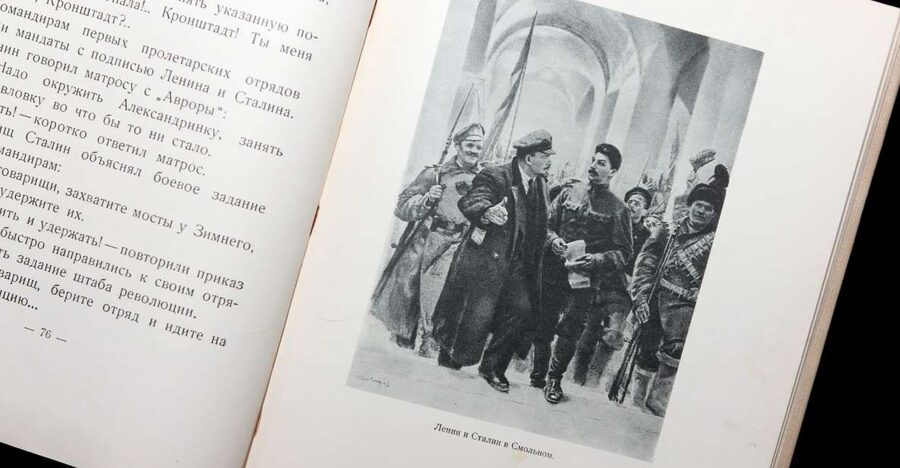
- A guided timeline across regimes: Nazi aftermath, 1948 coup, Soviet influence, Prague Spring, then Velvet Revolution.
- Old Town streets with visible WWII scars: you connect damage from the war to what came next.
- Secret Police history in real locations: the tour points out an old police station tied to the Czechoslovak Secret Police.
- Wenceslas Square explained like a story: protests against one-party rule and how the final pressure built.
- Národní Street memorial stop: tied to Nov 17, 1989 and the students confronted by riot police.
- Optional museum for the full “dream vs reality” view: Communism the Dream, the Reality and the Nightmare for 4-hour bookings.
Why This Communism Tour Works So Well in Prague
Prague can feel like one perfect postcard after another. This tour takes that same Old Town you already want to see and adds the missing chapter: how Czechoslovakia lived under communist rule, and how the system finally cracked.
The value here is not just facts. It is the way you move through a sequence of places that make the history feel obvious. Once the guide lays out the thread from 1948 to 1993, you start reading the city like a map of political change, not just architecture.
And it is private. That matters, because you can ask the questions that come up when someone explains government structure, economy, social welfare, propaganda, and censorship on the street where it happened.
More of the years behind the Iron Curtain:
- Prague: Communism History and Nuclear Bunker Guided Tour
★ 4.7 · 2,417 reviews - Prague Communism History and Nuclear Bunker Tour
★ 5.0 · 1,742 reviews - Communism & Nuclear Bunker Tour + 70s Canteen Lunch (own expense)
★ 5.0 · 1,036 reviews
Meeting Up Outside the World of Franz Kafka, Then Getting Oriented Fast
Your tour meets at the World of Franz Kafka, Nám. Franze Kafky 16/1, 110 00 Staré Město. That is a smart start point because it is in the heart of Old Town, so you can walk between major sites without zigzagging.
One small tip: check your email the day before. The tour notes say important information gets sent out then, so you will want to read it before you head out.
Your guide is a history expert fluent in your language (English, French, German, Italian, Polish, Russian, Spanish, or Czech). For a topic like this, language clarity is not a luxury. It makes the political details easier to follow, especially when you are comparing events across decades.
Staroměstské náměstí and the 1948 Takeover Moment
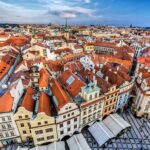
The walk begins at Prague’s oldest city square, Staroměstské náměstí. In 1948, the Communist Party declared the takeover of power in Czechoslovakia. Starting here gives the story a clear anchor, because you can connect the political turning point to the public space where power shows up first.
From there, you follow your expert guide past Old Town landmarks that most people notice for beauty, not history. But on this tour, those landmarks become evidence. For example, you hear background about Czechoslovakia and the post-war Soviet occupation, and then you connect that context to how the city life you see today took shape.
If you like understanding the cause and effect of political change, this is where the tour earns its keep. You are not jumping around randomly. You are building a timeline with places you can point to.
Astronomical Clock and the Churches: What Changes Under One-Party Rule?
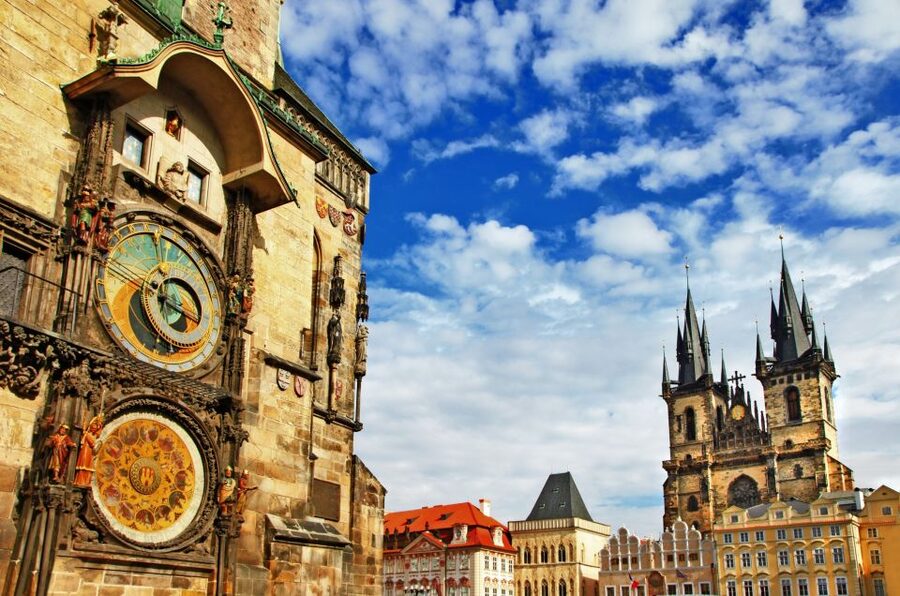
The Astronomical Clock is one of those Prague icons that almost everyone wants to see. Here, the guide uses stops like this to keep the focus on the system, not just the scenery.
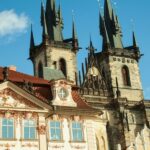
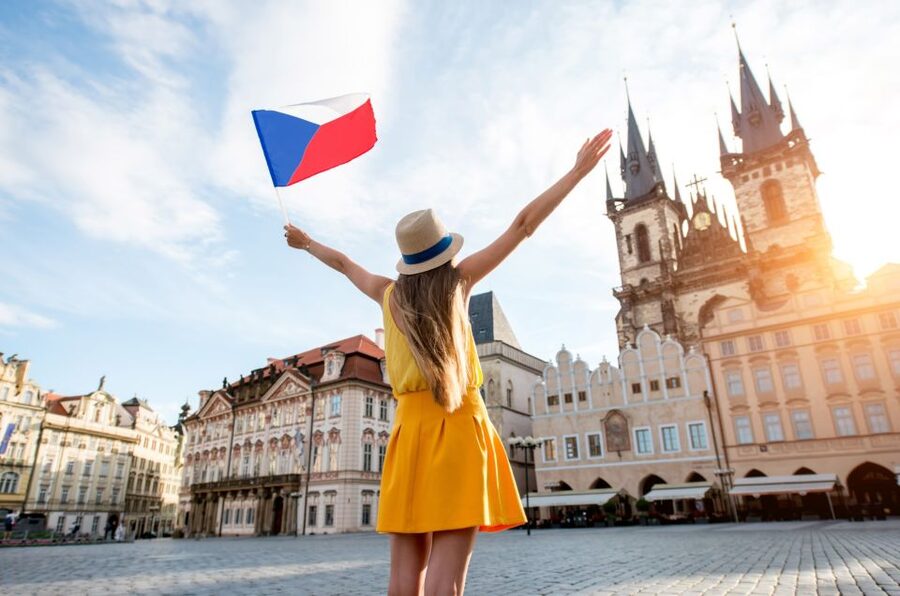
You also visit St Nicholas Church and the Church of Our Lady Before Týn. These are famous religious landmarks, but communism in Czechoslovakia is part of the story of how society was reshaped. On this tour, the guide links that reshaping to what you learn about government structure, daily life, and social welfare during the communist era.
What I appreciate is that the tour does not treat communism as only politics. It talks about everyday consequences: how the state affected what people could do, what they were encouraged to believe, and how public life worked under one-party rule. That makes the topic feel grounded instead of abstract.
WWII Damage Still Visible in Old Town, Then the Next Occupation Chapter
Prague’s Old Town carries reminders of WWII damage. This tour specifically includes time to see those remnants, then connect them to what came next.
That transition matters. The occupation of Prague did not end with the defeat of the Nazi regime in 1945. The guide frames what happened after the war as a continuation, not a clean break. By doing that, you understand why the communist period starts with such deep disruption, and why the Soviet presence stayed central to power.
If you are the kind of traveler who likes history that has physical evidence, you will enjoy this part. You are not relying only on dates and names. You are standing where the city’s wounds show.
More routes through the Stare Mesto lanes:
The Old Police Station Stop and Why Secret Police History Changes Everything
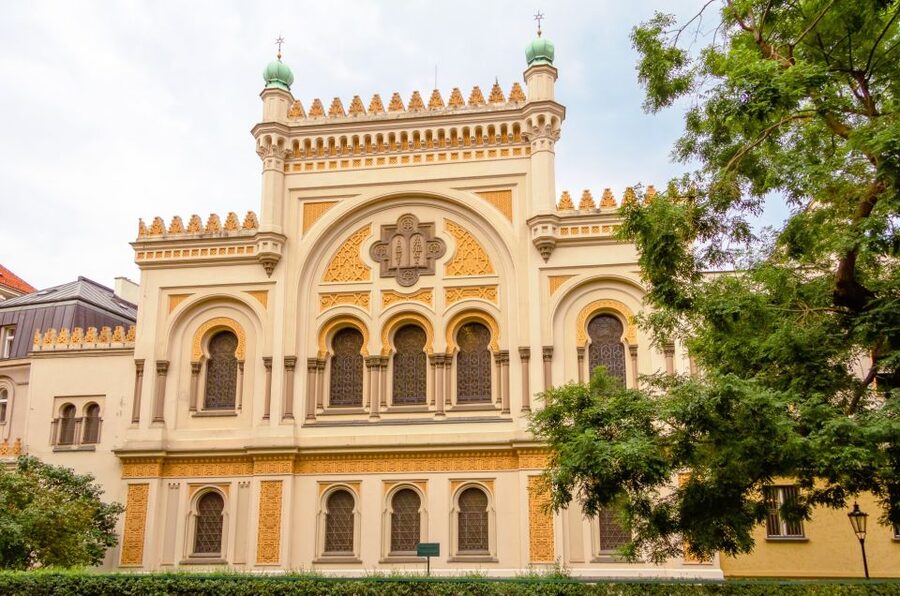
One of the most telling stops is the old police station that served as headquarters to the Czechoslovak Secret Police. This is exactly the kind of place that changes how you interpret the rest of the story.
Even if you already know the basics, hearing about secret policing in a specific location makes the system feel real. The guide connects that to how the government controlled society, information, and behavior. It also ties into later resistance, because people do not risk everything in a vacuum.
A nice part of the tour design is that it balances large events with the mechanics of daily control. You move from public squares and famous architecture to the quieter but frightening infrastructure of governance.
From Government to Economy to Society: How Daily Life Is Explained on the Walk
As you continue through the Old Town, the tour covers what life looked like from the inside. The guide touches on government structure, economy, society, and social welfare.
This is where you get practical context that most history tours skip. Communism is not only about leaders and revolutions. It is also about schooling, jobs, public messaging, and the feeling of what is allowed.
I like that the guide’s live commentary keeps returning you to the human side of policy. You hear how the system worked and why it created tension. Then later, when protests erupt, you already understand why ordinary people were pushed toward breaking point.
From Jan Palach to Student Resistance: The Road to 1989
The tour includes the Velvet Revolution Memorial on Národní street. This commemorates Czech students confronted by riot police on November 17, 1989.
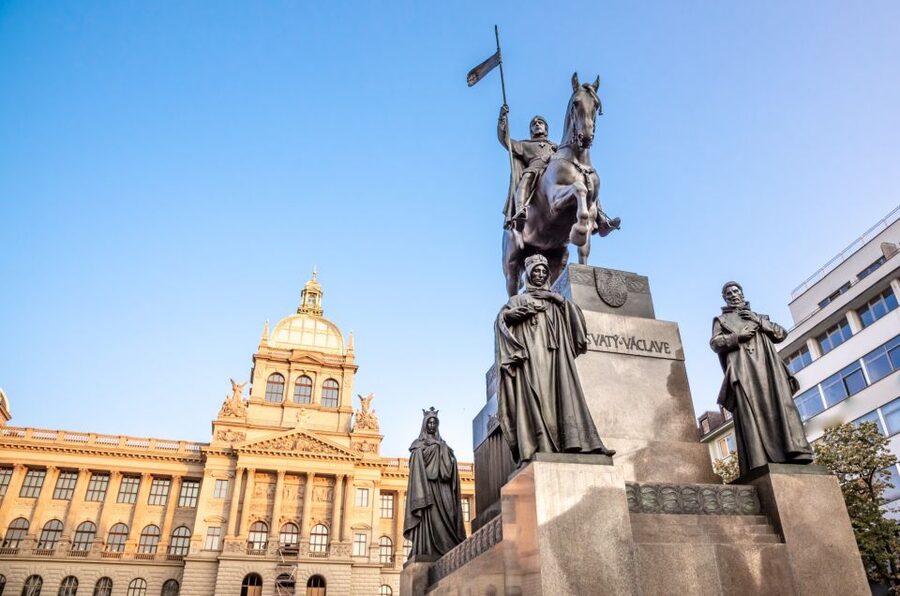
Right after that, the story connects to major pressure points that led to the downfall of communism. The guide discusses the loud mass demonstrations at Wenceslas Square, the central location of Velvet Revolution protests against one-party rule, and the significance of student Jan Palach’s suicide.
You do not need to be a political-history scholar to follow this. The guide treats the events as steps in a chain. Each moment builds emotional and political momentum until the system cannot hold.
If you want a clear narrative arc, this is one of the strongest sections. You go from memorial details to public confrontation, then to the idea of political, economic, and social change that followed.
Wenceslas Square: Protests Against One-Party Rule, Told With Street-Level Clarity
Wenceslas Square can feel like a showpiece. On this tour, it becomes a stage for one of the most important late 20th century turning points in Central Europe.
The guide brings you through what happened during the protests against one-party rule in Czechoslovakia. You hear about loud mass demonstrations, the confrontations, and how the situation evolved after the student actions and the growing public resistance.
What makes this valuable is how the guide ties Wenceslas Square to the earlier decades. You do not just hear that protests happened in 1989. You understand the earlier background: the turbulent events after the 1948 coup, the period of Salinization, Prague Spring, and the long shadow of Soviet influence.
So when you stand in Wenceslas Square, you are not only looking at a big open space. You are holding the last chapter of a much longer story.
Choose the 4-Hour Option for the Museum of Communism
If you pick the extended 4-hour option, you add a visit to the Museum of Communism in Prague. In this format, museum tickets are included, which is a key detail when comparing value.
The museum exhibition is titled Communism the Dream, the Reality and the Nightmare. The content is aimed at the gap between what the regime claimed and what people actually experienced.
Inside, you explore aspects of daily life, politics, sports, economics, education, art, mass media, propaganda, censorship, and political trials and executions in the Czech Republic in the 20th century.
This is the part that helps you connect dots. The Old Town walk gives you locations and a narrative thread. The museum gives you the deeper supporting material: how control showed up in culture, schools, media, and public messaging.
If you only take the 2-hour walking option, you might still leave with a clear story. But you will not have as much detail about the system’s everyday machinery. For that, the museum is the difference between a good overview and a fuller understanding.
Price and Value: Is $104 Per Person Fair for a Private Tour?
The tour costs $104 per person and runs for 2 to 4 hours depending on which option you choose. That pricing works best if you appreciate guided context over solo wandering.
Private touring has costs, but it also gives you something hard to replace: a real-time explanation, in your language, tied directly to the places you are standing in. For a complex topic like communism, that matters. You get the timeline shaped for you, and you can ask about the things that confuse you as history stacks on history.
If you are choosing between durations, here’s the value math to think about. The 2-hour option is best if you want the core Old Town walk and the major turning points. The 4-hour option adds the Museum of Communism, and museum tickets are included, which helps justify the extra time for anyone who wants more than street-level context.
Also, because the guide covers wide themes across decades, the cost feels more like “context per hour” than “site checklist.” You are paying for interpretation, not just access.
Logistics That Actually Matter for Your Enjoyment
This is a private group tour, so it tends to feel less rushed than big-group walks. Wheelchair accessibility is listed, so if mobility is part of your planning, you can book with more confidence.
Duration is listed as 2 to 4 hours, and availability determines starting times. That means you should pick the time window that matches your energy level, especially if you choose the museum option and plan to spend more time indoors.
Finally, keep in mind that the tour deals with heavy real-world topics: occupations, secret police, trials, and executions are part of the museum content. If you want emotional pacing, the guide’s clear narrative and the setting transitions from open squares to museum space can help you manage it.
Who This Tour Suits Best
This tour is a good fit if you:
- Want to understand communism in Czechoslovakia through real places in Prague’s Old Town.
- Like guided history that connects street-level landmarks to political events.
- Prefer a clear timeline that covers 1948, Salinization, Prague Spring, and the Velvet Revolution.
It is also a strong match if you are the type of traveler who enjoys seeing WWII damage reminders and then learning how the story continued after 1945.
If you hate dense political topics, or you only want scenic photo stops, this might feel too focused. But if you like facts with context, you will likely find it satisfying.
Should You Book the Communism in Prague Private Tour?
Book it if you want a structured, guided storyline in places you already recognize. I like that the tour is not only about revolutions. It talks about government structure, economy, society, and the day-to-day reality behind one-party rule.
Choose the 4-hour option if you want the Museum of Communism stop, because museum tickets are included then and the exhibition covers politics, propaganda, education, media, censorship, and trials in one place. If you pick only the 2-hour walking tour, you still get major sites and the Velvet Revolution thread, but you will miss a lot of the detailed system-building that the museum provides.
If your goal is understanding, not just sightseeing, this is a solid booking.
FAQ
Where is the meeting point for this Prague tour?
You meet your guide in front of the World of Franz Kafka, Nám. Franze Kafky 16/1, 110 00 Staré Město, Czechia.
How long is the tour, and what options are there?
The experience is offered as a 2-hour walking tour option or an extended 4-hour option that includes the Museum of Communism.
Is the Museum of Communism ticket included?
Museum tickets are included only with the 4-hour option. Tickets are not included in the basic 2-hour option.
What languages are available?
The live tour guide is available in English, French, German, Italian, Polish, Russian, Spanish, and Czech.
Is this tour private and wheelchair accessible?
Yes, it is a private group tour, and wheelchair accessibility is listed.
What should I do the day before the tour?
Please check your email the day before the tour to receive important information.
Can I cancel and get a full refund?
Yes. Free cancellation is available up to 24 hours in advance for a full refund.
Prague Collections, Out of the Cold
- Prague: Museum of Fantastic Illusions Entry Ticket
★ 4.3 · 4,337 reviews - IAM Illusion Art Museum Entry Ticket
★ 4.2 · 1,664 reviews - Prague: Museum of Senses Admission Ticket
★ 4.0 · 1,445 reviews - IAM Illusion Art Museum Prague Fast Pass Ticket
★ 5.0 · 957 reviews
Just written up in Prague
- Private Transfer from Prague to Regensburg★ 5.0 · 1 review
- Prague: TV Tower Ticket & Novi Grad Digital Tour★ 5.0 · 1 review
- Prague to Dresden’s Old Town, Zwinger & Frauenkirche by Car★ 3.0 · 1 review
- Prague to Český Krumlov Private Guided Tour – With Mike★ 5.0 · 1 review
- Prague to Munich Private Transfer with 2 hours sightseeing★ 5.0 · 1 review
- Prague: 3-Hours Wars & Totality Guided Walking Tour★ 5.0 · 1 review
- Prague to Berlin Private Transfer with Optional Sightseeing★ 5.0 · 1 review
- The Plague Doctor of Prague: Self-Guided Mystery Puzzle Walk★ 3.0 · 1 review
Prague Old Town Tours, compared.
3-Hour Walking Tour of Old Town & Prague Castle
Read our review →
3-Hour Old Town and Prague Castle Tour in German
Read our review →
Prague Old Town, Medieval Underground and Dungeon Historical Tour
Read our review →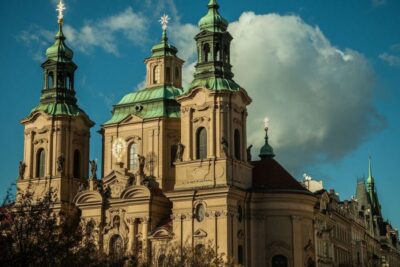
Old Town and Jewish Quarter Guided Tour in German
Read our review →
Ghosts and Legends of the Old Town Evening Tour
Read our review →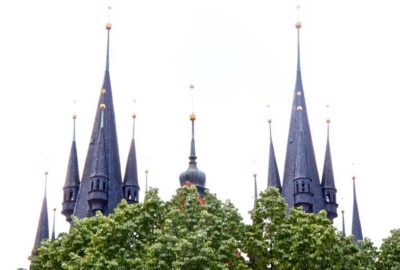
Old Town and Jewish Quarter Guided Walking Tour
Read our review →
Prague Ghost and Legend of Old Town Walking Tour
Read our review →Browse the lists this tour appears in