
Reviewed · PRAGUE GHOST TOURS
The Plague Doctor of Prague
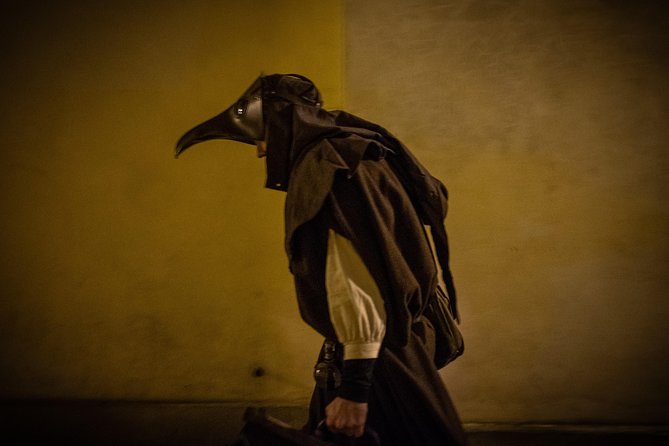
A plague doctor tour turns Prague streets spooky and smart. This one mixes 1715 plague beliefs, real locations, and a performer in costume, and it has been featured by major outlets like The New York Times, Vogue, and Forbes. You start at Aurus Hotel Prague and end at a convent site with a group photo, all in about 1.5 hours.
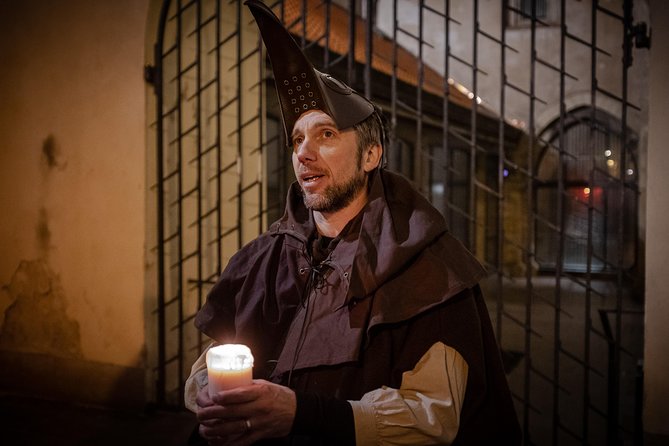
What I like most is the storytelling in character. Guides such as Thomas, David, Oskar, and Maddie are singled out for making the walk fun, clear, and easy to follow, without making it feel like a gimmick.
One thing to keep in mind is that this is an experience-first tour. If you want only straight academic history, you might feel it leans more toward light entertainment than heavy narration, and one person noted the costume could use a refresh (especially if you are on a rainy evening).
In This Review
- Key things to know before you go
- Why this 90-minute plague walk is a great Prague evening
- Starting at Aurus Hotel Prague and meeting Alexander Schamsky
- Klementinum, the new library, and the New Town Hall: quarantine as a way of life
- Staromestske namesti: markets, churches, and Prague under pressure
- Kafka, the Jewish Quarter, and Camus’s La Peste
- Na Frantisku hospital: healing methods and the people behind medicine
- National Gallery Prague and the Convent of St Agnes: the ending that ties it together
- Price and value: what $26.61 buys you in Prague
- Who should book this tour, and who might want a different style
- Small practical tips for a smoother evening
- Should you book The Plague Doctor of Prague?
- FAQ
- How long is the Plague Doctor of Prague tour?
- What language is the tour offered in?
- Where does the tour start?
- How large is the group?
- Will I get a ticket on my phone?
- Does the tour end at the same place it starts?
- Is there a group photo at the end?
- Is there free cancellation?
Key things to know before you go
- In-character plague doctor storytelling with guides who keep the tone funny and engaging
- Practical plague context, from saints like St. Sebastian and St. Rochus to quarantine life
- Jewish Quarter focus, including time linked to Franz Kafka and Albert Camus’s La Peste
- Medical history at an old hospital site, plus mentions of treatment methods and why so many people died
- Short stop format that fits an evening walk, usually with about 10 people max
Why this 90-minute plague walk is a great Prague evening
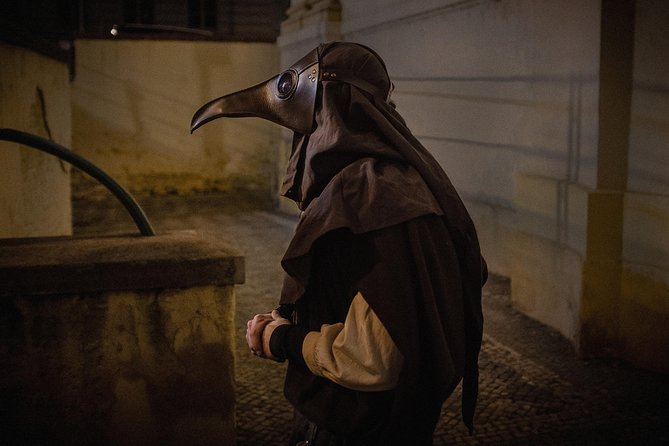
Prague at night has a different rhythm. The stones cool down, the streets feel narrower, and your brain stops rushing for selfies. That is the perfect setting for a guided walk about fear, rumor, and the first rough attempts at public health.
This tour works because it stays moving but does not drag. You are not stuck in one square for 45 minutes. You hop from landmark to landmark, and each stop adds a new layer: what people believed caused the plague, how authorities handled quarantine, and how the disease disrupted everyday life. The max group size of 10 also matters. With a small crowd, it is easier for the guide to keep eye contact and answer questions as you go.
One more value point: the walk keeps returning to people, not just buildings. Even when you are near churches, halls, or museum spaces, the focus is the human impact and the mindset of that era.
Other lantern walks through the darker lanes:
- Prague: Ghost Walking Tour Where Legends Come To Life
★ 4.4 · 5,253 reviews - Prague: Ghosts, Legends, Medieval Underground & Dungeon Tour
★ 4.3 · 5,104 reviews - Prague: Ghosts and Legends of the Old Town Evening Tour
★ 4.5 · 3,091 reviews
Starting at Aurus Hotel Prague and meeting Alexander Schamsky
You begin at Aurus Hotel Prague (Karlova 3, Staré Město). The performer introduces the plague doctor of Prague, Alexander Schamsky, and instantly frames the whole trip in the year 1715. That time period choice is clever. It lets the tour connect older plague ideas to what Prague was thinking and doing later on, not only during the earliest waves people often study.
This first stop also brings in the site’s identity as the House of the Golden Well, plus the saints commonly associated with protection during plague times, St. Sebastian and St. Rochus. That may sound like purely religious ornament, but it is actually key to understanding the era. People used saints and rituals as their mental technology for coping with an enemy they could not see.
You also get the tour’s core idea early: different root causes people believed in. Some of these theories were based on religion, others on bad air and contagion logic, and a lot of it came down to what people thought made illness spread. If you like history that explains why people acted the way they did, this start gives you a strong lens for the rest of the walk.
A quick drawback for this opening moment: since it is short (about 10 minutes), you should come ready to listen closely. If you arrive late or spend your first few minutes rechecking the meeting point, you may miss the setup that makes later stops click.
Klementinum, the new library, and the New Town Hall: quarantine as a way of life
Stop two centers on the New Town Hall area and connects it to the Klementinum, including its older monastery roots and library spaces. Then the tour shifts from symbols and saints into systems, specifically quarantine.
This is where the plague story becomes less spooky and more real. You get a plain-language look at different types of the Black Death and how wealthier and poorer residents in Prague were affected in different ways. That contrast matters because epidemics are never equal. Even if the illness hits everyone, the ability to escape, hide, pay, or leave town changes drastically by class.
You also learn what quarantine meant day to day. That includes the fear of exposure, the idea of being trapped near illness, and the way communities tried to manage movement and contact. I like this part because it explains fear as behavior. When you understand why people stayed apart, restricted contact, and relied on rules, the period feels less like distant medieval drama and more like a response to a crisis.
One thing to consider: because this section is timed tightly, the guide may move quickly if the group wants extra details. If you are the type who likes to ask many follow-up questions, pick one or two topics and go deep with the guide during the nearby pauses.
Staromestske namesti: markets, churches, and Prague under pressure
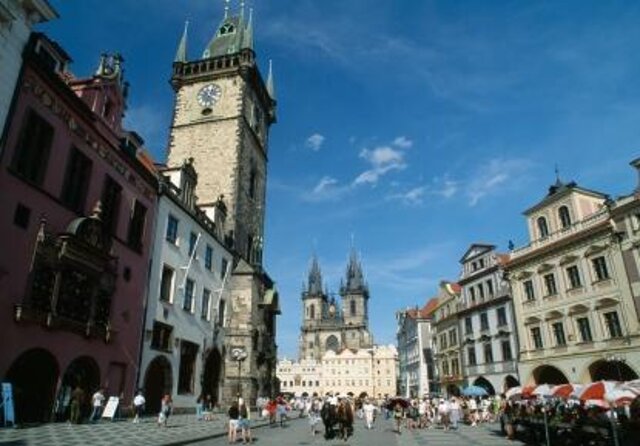
At Staromestske namesti, the tour uses the big market square as a stage for everyday life during plague times. You pass the Hussite Church, Týn Church, and the Old Town Hall area, and the guide turns them into more than postcard backdrops.
The market angle is important. A plague can shut down trade, and it changes how people buy food, where they gather, and who can travel. Even if you only take in a few minutes at each landmark, you start seeing how fear reshapes public space.
Then you get an excursion into the 30-years-war period. That addition makes sense. Plague did not live in a bubble. It arrived alongside conflict, shortages, and instability. In other words, the city’s stress level was already high, and the epidemic amplified everything.
This stop is also a nice breather in the walking rhythm. The time here is shorter (about 5 minutes), which keeps the pace from getting heavy. If you are visiting after a long day, this kind of pacing helps you enjoy Prague instead of feeling like you are on a forced march.
Kafka, the Jewish Quarter, and Camus’s La Peste
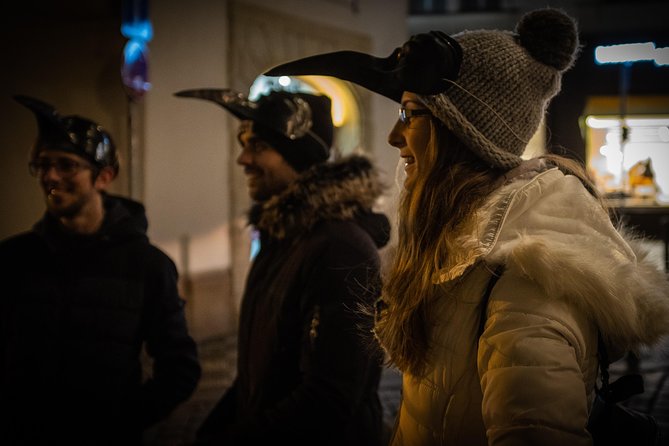
Stop four starts at the Franz Kafka statue area. The guide gives a brief introduction to Kafka, then pivots into what the plague meant for Jewish communities in Prague and across Europe. This is one of the tour’s most meaningful threads.
You then enter the Jewish Quarter. The guide also introduces Albert Camus’s novel, La Peste. Even if you have never read it, having the literary tie helps you hold the emotional tone of plague narratives. Stories about epidemics are rarely only about illness. They are about isolation, moral pressure, rumor, and how people cope when facts arrive late.
This part feels especially strong if you like connecting history to culture. It is not only a lecture about dates and structures. You walk through space and then connect that space to how later writers thought about plague.
Possible drawback? If your top priority is medical science, this portion may feel more social and literary than lab-based. That said, it still supports the tour’s main goal: understanding plague as a lived experience, not just a disease diagram.
Another way the same evening in Prague could go:
Na Frantisku hospital: healing methods and the people behind medicine
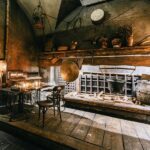
Stop five is one of the most substantial parts of the walk. You visit the old hospital Na Frantisku, where the guide explores plague in Prague, healing methods, and medical background of a disease that killed an estimated 200 million people worldwide.
This is where the tour balances horror with reality. You hear about what people tried to do when medicine had limits, and you get a sense of the gaps between theory and outcome. You also learn about lesser-known heroes of medicine who worked in the hospital. I appreciate this choice. Too many plague stories flatten everyone into a faceless crowd. Naming the helpers makes the era feel more humane.
Another reason I think this stop lands well for modern visitors is the way it reframes medicine as effort. Even when treatments were imperfect, people were still searching, working, and trying to protect others. That context is useful if you are walking in 2026 and comparing ancient and early modern health responses to what you already know about public health.
A small practical note: the tour keeps moving and the overall pace is fine for many fitness levels, but this stop is longer (about 15 minutes). Wear shoes you trust, especially if you are on a damp evening. One person even mentioned that rain helped the mood, so assume weather can change your comfort level.
National Gallery Prague and the Convent of St Agnes: the ending that ties it together
You conclude at National Gallery Prague – Convent of St. Agnes of Bohemia. The guide introduces her life and work, then brings everything back into a summary of plague times in Prague and Europe.
This ending matters because it gathers loose ends. Earlier you learned about beliefs, saints, quarantine life, markets, and the Jewish Quarter. Here you get the emotional and historical wrap-up, plus interesting facts about the current status of the disease. That final contrast helps you leave Prague with perspective. The plague is not only an old story. It is a reminder that outbreaks are always shaped by human choices, not only germs.
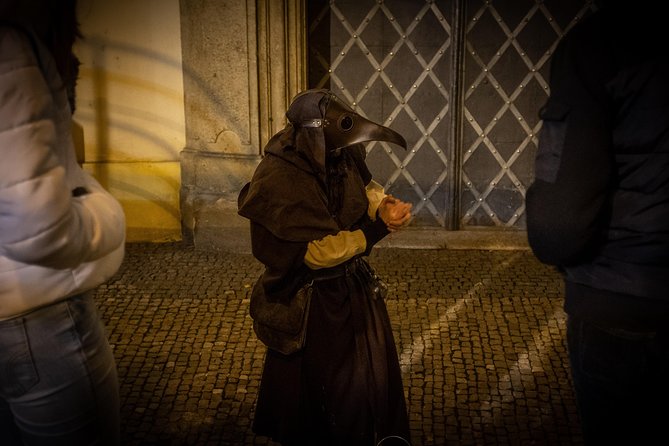
The tour ends with a group picture with the plague doctor. It is a small detail, but it helps. You get a clean finish, and you also have a quick proof you made it through the evening walk.
Price and value: what $26.61 buys you in Prague
At $26.61 per person for about 1 hour 30 minutes, the price is surprisingly reasonable for an evening performance plus a guided route through multiple major Prague-area sites. You also get a mobile ticket, the tour is offered in English, and each stop lists admission as free. That last part matters because it reduces the risk of feeling like you are always waiting for a ticket scan at separate venues.
The value gets better when you think about what you are paying for. You are not just paying for access to buildings. You are paying for a guide who connects plague beliefs, quarantine behavior, and the social impact on Jewish communities into one story you can follow on foot.
Group size also shifts value. A max group of 10 means more interaction and less time lost to crowd shuffling. That is one reason this tour tends to feel like an experience, not a rushed bus-like walk.
One more plus: it is recognized by major media outlets. That does not automatically make something good, but it usually signals a quality bar and a strong public-facing performance.
Who should book this tour, and who might want a different style
This is a great fit if you want a Prague evening that is:
- Creepy without being gloomy, since the guide balances spooky stories with humor
- Engaging for multiple ages, including kids and teens (the tour format is built for families, not only adults)
- Focused on human impact, especially the effect of plague on Jewish communities
You might want a different option if:
- You only want heavy academic history with very little performance
- You are extremely sensitive to costumes or smells, since at least one person noted the costume could use a refresh
Overall, it suits people who like public health themes, historical medicine, and story-driven city walks. If that sounds like you, this tour should click fast.
Small practical tips for a smoother evening
- Bring a layer. The tour is weather dependent and runs outdoors, so a light rain jacket can save the mood.
- Wear comfortable shoes. The pace is steady and mostly easy, but you will walk between multiple points.
- Have one or two questions ready about quarantine life, healing methods, or Jewish community impact. With the small group size, it is usually a good time to ask.
- Expect a performance element. The guide stays in character as the plague doctor and uses humor as a teaching tool.
Should you book The Plague Doctor of Prague?
Yes, I would book it if you want an evening in Prague that mixes storytelling with real context. The route is concentrated, the tour length is short enough to fit into a busy day, and the content hits several high-interest areas: quarantine life, saints tied to plague protection, Jewish history in Prague and Europe, and the role of an old hospital like Na Frantisku.
If you are the type who enjoys history that explains how people thought and acted under pressure, this is a very good match. If you prefer strictly academic presentations, go in knowing this is designed for entertainment as much as education.
FAQ
How long is the Plague Doctor of Prague tour?
It lasts about 1 hour 30 minutes.
What language is the tour offered in?
The tour is offered in English.
Where does the tour start?
It starts at Aurus Hotel Prague, Karlova 3, 110 00 Praha 1-Staré Město, Czechia.
How large is the group?
The tour has a maximum of 10 travelers.
Will I get a ticket on my phone?
Yes. It includes a mobile ticket.
Does the tour end at the same place it starts?
No. The activity ends in a different location, and details are provided at booking.
Is there a group photo at the end?
Yes, the tour ends with a group picture with the plague doctor.
Is there free cancellation?
Yes. You can cancel up to 24 hours in advance for a full refund. If you cancel less than 24 hours before, the amount paid is not refunded.
Just written up in Prague
- Private Transfer from Prague to Regensburg★ 5.0 · 1 review
- Prague: TV Tower Ticket & Novi Grad Digital Tour★ 5.0 · 1 review
- Prague to Dresden’s Old Town, Zwinger & Frauenkirche by Car★ 3.0 · 1 review
- Prague to Český Krumlov Private Guided Tour – With Mike★ 5.0 · 1 review
- Prague to Munich Private Transfer with 2 hours sightseeing★ 5.0 · 1 review
- Prague: 3-Hours Wars & Totality Guided Walking Tour★ 5.0 · 1 review
- Prague to Berlin Private Transfer with Optional Sightseeing★ 5.0 · 1 review
- The Plague Doctor of Prague: Self-Guided Mystery Puzzle Walk★ 3.0 · 1 review
Prague Ghost Tours, compared.
Ghost Walking Tour Where Legends Come To Life
Read our review →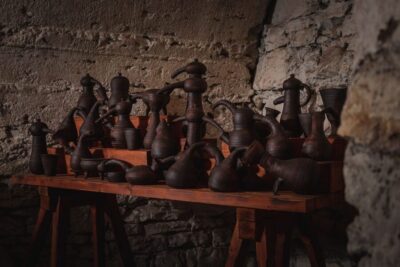
Ghosts, Legends, Medieval Underground & Dungeon Tour
Read our review →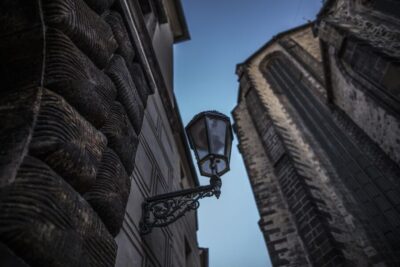
Ghosts and Legends of the Old Town Evening Tour
Read our review →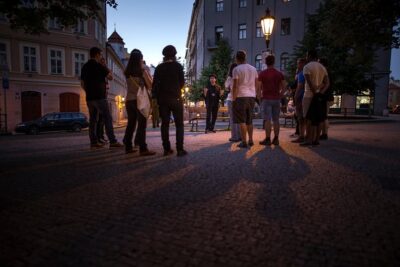
Prague Ghost and Legend of Old Town Walking Tour
Read our review →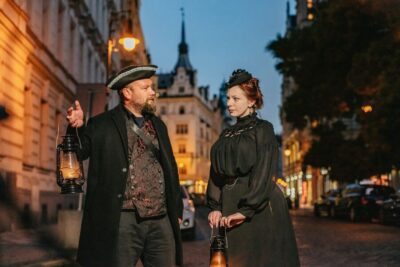
Ghosts and Legends Nighttime Guided Walking Tour
Read our review →
Prague Ghosts, Legends, Medieval Underground and Dungeon Tour
Read our review →
Walking Night Tour Ghost Stories and Legends of Prague’s Old Town
Read our review →
Browse the lists this tour appears in