
Reviewed · TEREZIN MEMORIAL DAY TRIPS FROM PRAGUE
Private Former Concentration Camp Terezin Tour from Prague
A private day at Terezín hits hard. You’ll leave Prague with pickup, ride comfortably to the former ghetto and camp complex, and experience the sites with an English-speaking guide who can pace the day around what you need to absorb. I love the private format, because it keeps the focus where it belongs. One possible drawback: this is not a casual sightseeing stop, so you should be ready for a very emotional, heavy day.
I also like that your entrance tickets are built in, so you can spend your time inside, not stuck in line. With a mobile ticket and line-skipping included, you get a smoother flow through multiple stops, roughly 6 hours total.
In This Review
- Key Highlights You Can Actually Feel
- A 6-hour private route through Terezín from Prague
- Mala Pevnost, the Small Fortress that became a prison machine
- The National Cemetery: remembrance built through exhumations after liberation
- Ghetto Museum in the former school: children’s art, daily details, and the scale model
- The small Jewish prayer hall: faith, secrecy, and survival after the war
- Magdeburg Barracks: culture forced into a system, then recorded for the future
- The Jewish Cemetery and crematorium: what the site documents
- Why the private format is worth the money here
- Logistics and pacing: the small things that help a heavy day
- Should you book this private Terezín tour from Prague?
- FAQ
- What time does the tour start, and how long will it take?
- Where does the tour meet, and is pickup available?
- Is this tour private?
- What language is the tour offered in?
- Are entrance tickets included for the stops?
- Are children allowed?
- Can I cancel and get a full refund?
Key Highlights You Can Actually Feel
- Private guide, your group only: No crowd noise, just time with the story at your pace.
- Tickets included, line-skipping included: Less waiting, more real time at the sites.
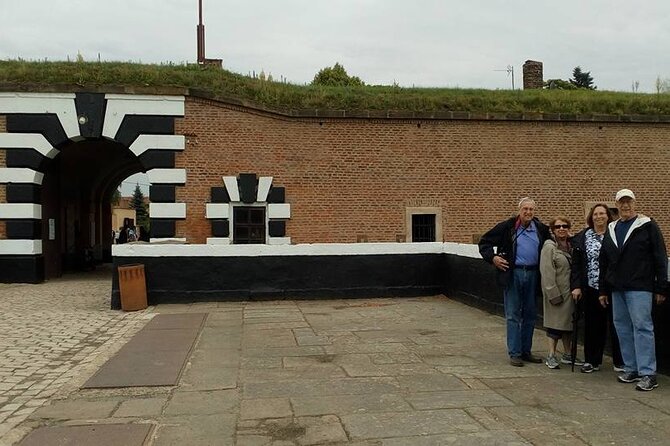
- Mala Pevnost (Small Fortress): See how a fortress became a prison system, not just a memorial backdrop.
- Multiple memorial layers: Cemetery, ghetto museum, prayer hall, barracks, and crematorium add up to a fuller picture.
- Pickup from Prague: Easy start at the Prague Marriott Hotel, plus pickup from your hotel or Airbnb.
A 6-hour private route through Terezín from Prague
This tour is built for people who want more than a quick overview. It runs about 6 hours, starting at 9:00 am from the Prague Marriott Hotel (V Celnici 8, Nové Město). You return to the same meeting point, which keeps logistics simple, especially if you are traveling with jet lag or tight plans.
You’ll get round trip transportation included, plus pickup is offered from your hotel or Airbnb as long as you provide the exact address. That matters here because Terezín is far enough outside central Prague that “DIY” can eat up your energy. And when the day is emotionally intense, saving mental bandwidth is a real form of value.
The tour is private, meaning only your group participates. That is a big deal at Terezín, where the pacing and tone are everything. In feedback tied to this experience, guides like Eva and Simona are repeatedly praised for guiding questions and keeping the visit respectful and clear. A driver named Jindra is also noted for attentiveness, which helps if you just want the road part handled.
One more practical note: the dress code is smart casual. You will be on the move through multiple indoor and outdoor spaces, so comfortable layers are a sensible choice even if your outfit stays “smart casual.”
Other visits to the Terezin memorial:
- From Prague: Terezin Concentration Camp Guided Tour w/ Audio
★ 4.6 · 2,248 reviews - Terezin Concentration Camp Day Tour from Prague
★ 4.0 · 1,007 reviews - From Prague: Terezín and Ghetto Museum Guided Tour
★ 4.3 · 571 reviews
Mala Pevnost, the Small Fortress that became a prison machine
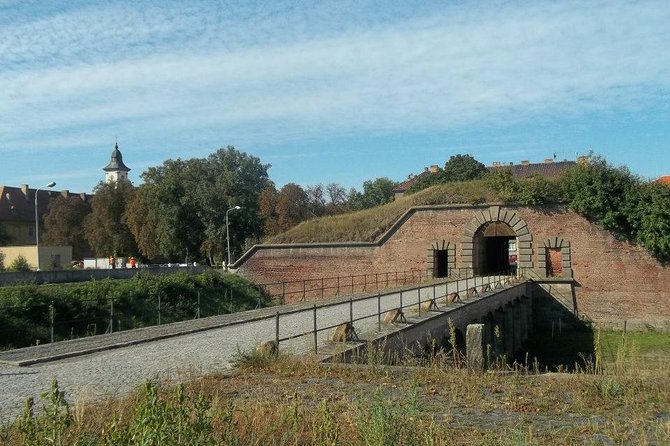
The day begins at Mala Pevnost (Small Fortress), and this stop alone is a lesson in how systems get built for control. The fortress was originally meant to be proud and impregnable, surrounded by walls and protected by flood trenches, with its first cornerstone laid by Emperor Joseph II. In other words, it was designed as protection.
But Terezín had other plans. By the mid-19th century, it became a prison. Then, during World War I, one of the best-known prisoners was Gavrilo Princip, later tied to the spark that set off the war, when he was brought here in 1914.
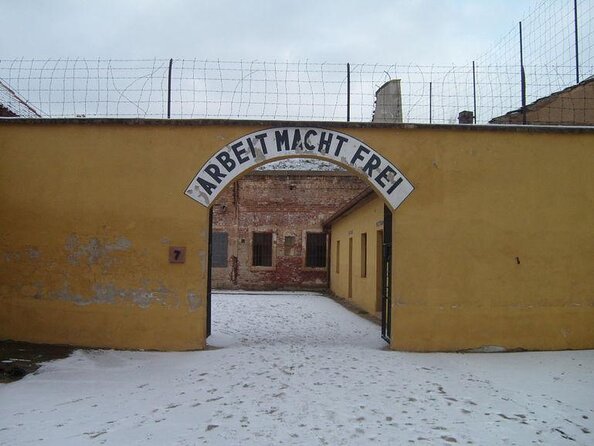
In World War II, the Small Fortress became a prison of the Prague Gestapo in 1940, sending especially political prisoners into the system. Then, about a year later, the entire town was transformed into a collective and pass-through camp for Jews.
Why this stop is especially valuable on a private tour: you can take time to connect those eras. You can also ask the questions that come up while you’re standing in the space, without feeling rushed. A possible drawback is that this is a long, single “anchoring” stop, and it sets an emotional tone early. If you are the type who likes to ease in gently, you may want to mentally prepare for intensity from the start.
The National Cemetery: remembrance built through exhumations after liberation
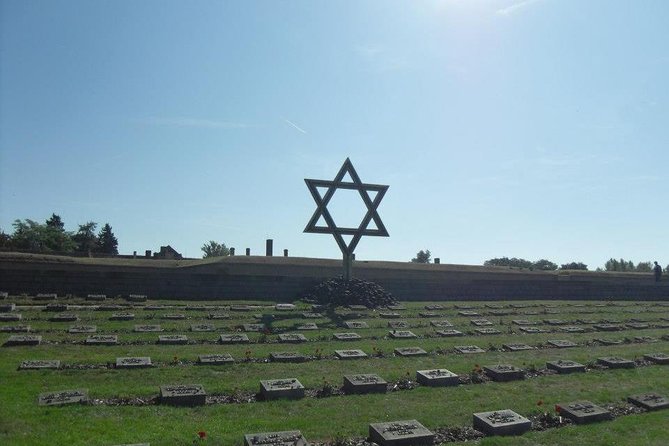
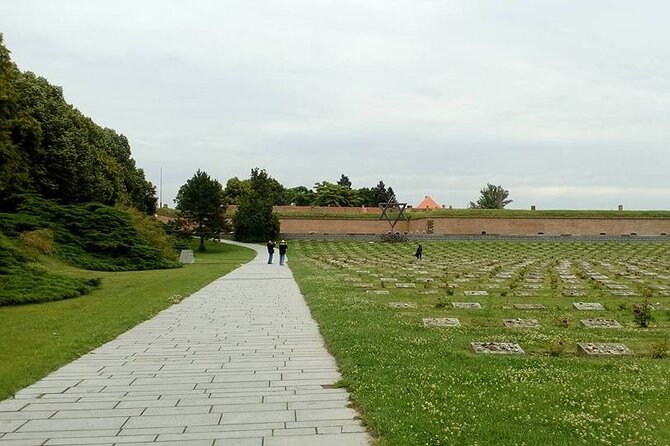
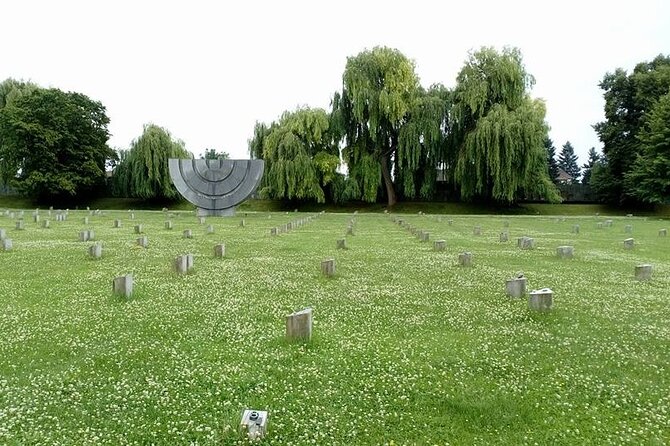
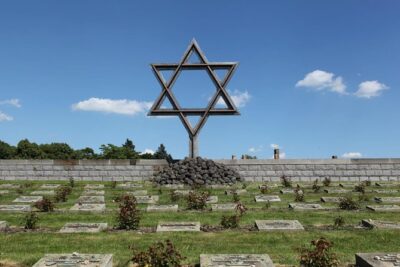
Next is the Terezín Memorial, National Cemetery. This is a shorter stop, about 15 minutes, but it has a clear purpose: it was created artificially after liberation in 1945.
Here’s what makes it meaningful and specific. The memorial’s creation was urged by former prisoners and heirs of those who died. At their request, physical remains were exhumed from six mass graves in the ramparts of the Small Fortress, used from March 1 to May 7, 1945. The site also includes prisoners connected to death marches arriving at the Small Fortress in May 1945.
On a private visit, I like the way this stop can shift the day from “what happened inside” to “how people insisted on being remembered.” It also helps explain why memorial spaces are not just quiet decoration, they are shaped by real hands, real decisions, and real urgency after liberation.
Ghetto Museum in the former school: children’s art, daily details, and the scale model
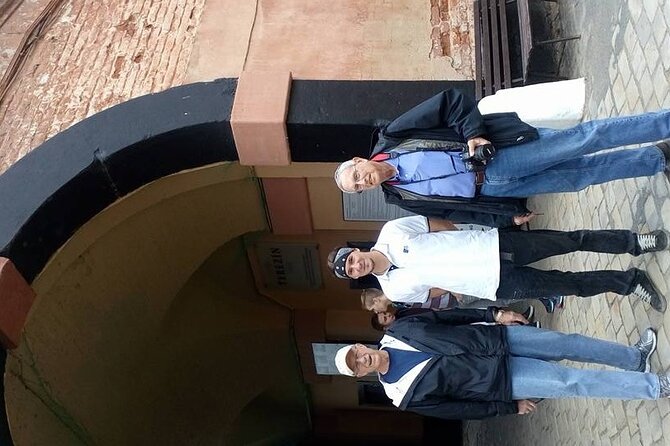
The Terezín Memorial, Ghetto Museum is the stop that gives you context you can’t always get just by walking the streets. It lasts about 45 minutes, and it is housed in the former municipal school, opened as a museum in 1991.
The permanent exhibition focuses on Terezín in the Final Solution of the Jewish Question from 1941 to 1945. You’ll also find a Memorial Hall devoted to the children of the ghetto, plus selections from children’s drawings made in the ghetto. That mix matters because it shows how documentation worked even under impossible conditions.
There is also a scale model of the ghetto with an electronic orientation system showing thematic units, along with information for visitors and supporting spaces like a reading room and a cinema for documentary screenings. Even if you are a “no museums, just the sites” traveler, this museum is often the piece that helps you understand what you are looking at from the outside.
The only real consideration: museum time is mental work. If you are prone to information overload on emotionally heavy days, plan for a slightly slower pace. A private guide helps here by pacing what you see and giving you moments to regroup.
The small Jewish prayer hall: faith, secrecy, and survival after the war
One of the most quietly powerful stops is the Terezin Memorial prayer hall, lasting about 30 minutes.
This prayer hall was founded during the ghetto period and served spiritual needs for prisoners living in nearby houses. After World War II changes, the story gets complicated. The space was owned by František Bubák, and before the war it also served as part of a funeral parlor. During 1942, Bubák’s family was forced to leave Terezín, but after the war he reclaimed the property.
Because his family feared repercussions from the Communist regime, they kept the prayer room’s existence secret while using it as storage. The descendants only notified authorities after the 1989 Velvet Revolution, when democracy returned to Czechoslovakia. Visitors have been allowed to see the room since the late 1990s.
This stop works well in a private format because it adds a different angle. Instead of only describing persecution and loss, it also shows how religious life, memory, and secrecy could continue in small ways, even when public truth was risky.
Some other Bohemian days to set against this



Magdeburg Barracks: culture forced into a system, then recorded for the future
Next is Magdeburska Kasarna (Magdeburg Barracks), about 30 minutes.
This building served as the headquarters for the ghetto’s internal government. Officially, it handled internal affairs, though important issues were controlled by the camp SS command. Today, the building holds a replica of prison barracks from the ghetto period and an exhibition focused on the ghetto’s artistic and cultural life.
What you’re looking for here is the tension: culture existed, but it was forced to survive inside concentration camp conditions. The exhibition includes artifacts related to music, visual arts, literature, and theatre, all tied to the desire for small humanity and hope.
The building also houses an educational Meeting Centre, which can help if you want to go beyond emotion and into understanding how the community tried to stay human.
A practical consideration: like any thematic museum-style stop, it can feel less “physical” than the fortress or cemetery. That is not a flaw, it’s a different tool for learning. If you prefer just the sites, you might be tempted to skim, but this is often the piece that changes how you think about resistance and survival.
The Jewish Cemetery and crematorium: what the site documents
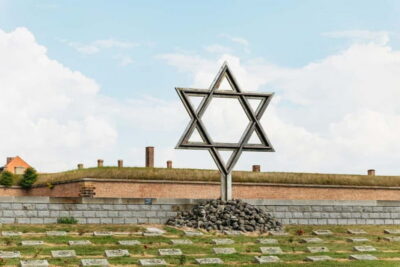
The tour ends at the Jewish Cemetery, including the crematorium, also about 30 minutes. Entrance is included here too, and this stop is especially sobering because it explains the machinery of death in concrete terms.
The crematorium was built by ghetto prisoners ordered by SS commanders. Operation began in early October 1942. The central part of the facility contained four oil-powered incinerators supplied by Ignis Hüttenbau from Teplice-Šanov. The front section served to unload corpses from coffins, and it bordered with the autopsy room on one side.
On the other side, an annex housed guards made up of Czech police officers and prisoners working at the crematorium. At the highest mortality rate, there were up to 18 prisoner workers who rotated in permanent shifts. When the mortality rate dropped, the number of workers decreased to four.
Supervision included SS-Scharführer Heindl, described as one of the camp’s feared top officers, with routine checks carried out by camp commanders.
Why a private guide matters at this stop: the site can feel overwhelming if you’re trying to “read it” yourself. A good guide helps translate the layout into a sequence you can understand without rushing past what you came to witness.
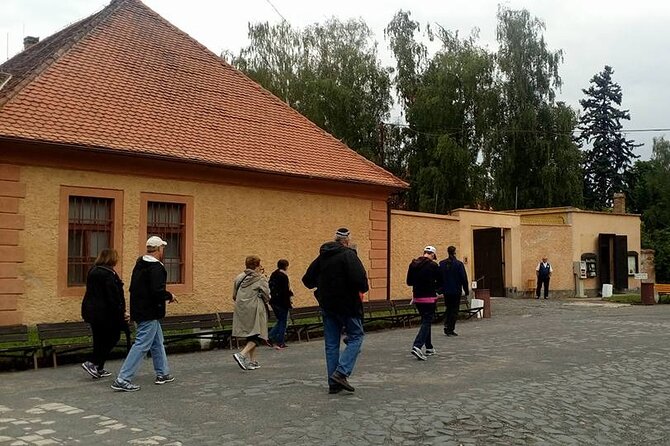
One more note from real-world advice: the overall complex is large, and you should plan to walk. Even when time slots look neat on paper, you may still feel the distance between stops. Wear shoes that you actually trust.
Why the private format is worth the money here
At $356.42 per person, you are paying for more than transport and a calendar route. You’re paying for control of the tempo. On a topic this heavy, that’s not a luxury. It is part of how you take it in without turning it into a checklist.
A private guide also tends to answer the exact questions that appear as you stand in each space. Some travelers specifically recommend a private approach for this reason, saying that larger group dynamics can cheapen the emotional seriousness of the visit. I get the instinct. When you can lower the volume, literally and emotionally, the day becomes more honest.
That said, this is still a set itinerary with set stops. If you want total freedom to customize every minute, a private tour can’t turn it into something else. But within this structure, the private format gives you breathing room, and the included ticket handling saves time so you can spend it at the sites themselves.
Also, this tour is commonly booked about 108 days in advance. If you have fixed dates, don’t assume you can grab a last-minute slot.
Logistics and pacing: the small things that help a heavy day
Here’s what you can count on based on the tour details:
- Pickup from Prague Marriott Hotel, plus pickup from your hotel or Airbnb if you share exact name and address.
- Mobile ticket and entrance tickets included, plus skip-the-ticket-line convenience.
- English guiding.
- Smart casual dress code.
- The tour is designed for most travelers, and it is not a huge group scenario since it is private.
- The experience ends back at the meeting point.
And here’s what I think you should do to make the day feel manageable:
- Give yourself a little buffer afterward, even if your schedule looks open. Your brain will still be sorting what it saw.
- If you are worried about getting through too fast, ask your guide to slow the pace at your hardest stop.
- If you like prep, reading basic context before you go can help you absorb the layout faster once you’re there, especially at the Small Fortress.
Should you book this private Terezín tour from Prague?
If you want a respectful, structured, English-led visit to Mala Pevnost, the Ghetto Museum, the prayer hall, Magdeburg Barracks, and the Jewish Cemetery crematorium, this private format is a strong fit. The inclusion of entrance tickets and the line-skipping advantage also makes it a practical choice, not just a “nice to have.”
You might skip it if you are looking for casual sightseeing, or if you truly prefer self-guided freedom with no guide context at all. Also, if you are not emotionally ready for heavy historical content, no tour will feel light.
But if you care about tone, pacing, and understanding what each space is doing, this one is built for that exact goal. It is not about entertainment. It is about bearing witness in a way you can actually process.
FAQ
What time does the tour start, and how long will it take?
The tour starts at 9:00 am and runs for about 6 hours (approx.), ending back at the meeting point.
Where does the tour meet, and is pickup available?
The meeting point is Prague Marriott Hotel, V Celnici 8, Nové Město, 110 00 Praha-Praha 1. Pickup is offered from your hotel or Airbnb as well, as long as you share the exact name and address.
Is this tour private?
Yes. This is a private tour/activity, so only your group participates.
What language is the tour offered in?
The tour is offered in English.
Are entrance tickets included for the stops?
Entrance is included for multiple stops. The National Cemetery has admission that is free, while the other listed sites include admission tickets.
Are children allowed?
Children must be accompanied by an adult.
Can I cancel and get a full refund?
Yes. Free cancellation is available, and you can cancel up to 24 hours in advance for a full refund.
Just written up in Prague
- Private Transfer from Prague to Regensburg★ 5.0 · 1 review
- Prague: TV Tower Ticket & Novi Grad Digital Tour★ 5.0 · 1 review
- Prague to Dresden’s Old Town, Zwinger & Frauenkirche by Car★ 3.0 · 1 review
- Prague to Český Krumlov Private Guided Tour – With Mike★ 5.0 · 1 review
- Prague to Munich Private Transfer with 2 hours sightseeing★ 5.0 · 1 review
- Prague: 3-Hours Wars & Totality Guided Walking Tour★ 5.0 · 1 review
- Prague to Berlin Private Transfer with Optional Sightseeing★ 5.0 · 1 review
- The Plague Doctor of Prague: Self-Guided Mystery Puzzle Walk★ 3.0 · 1 review
Terezin Memorial Day Trips from Prague, compared.
Terezin Concentration Camp Guided Tour w/ Audio
Read our review →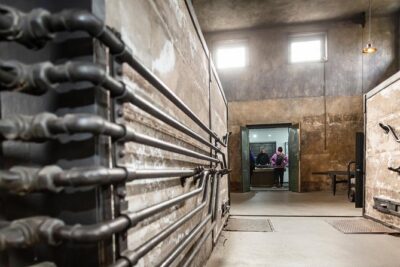
Terezin Concentration Camp Day Tour from Prague
Read our review →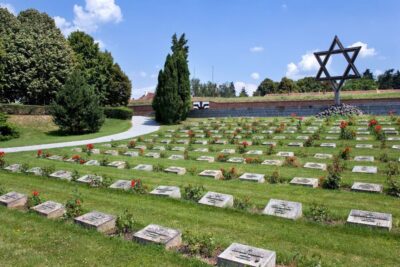

Terezin & Bohemian Switzerland from Prague: Bastei, Narnia & Café
Read our review →
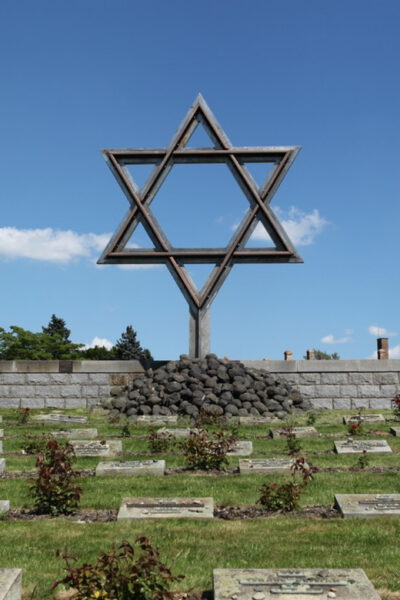
Terezin Concentration Camp Day Tour Including Admission From Prague
Read our review →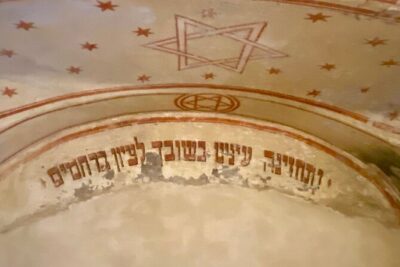
Terezin In-Depth Holocaust Tour From Prague’s Center (max 7 pax)
Read our review →Browse the lists this tour appears in