
Reviewed · PRAGUE JEWISH QUARTER TOURS
Prague Jewish Quarter Private Half-Day Walking Tour
Jewish Prague, told one careful step at a time. This private half-day walking tour takes you through the Prague Jewish Quarter and into the Jewish Museum synagogues, with stories that connect medieval life to World War II. It is the kind of tour where you do not just see buildings, you understand what they meant to the people who used them.
I particularly like two things. First, the route hits the big emotional sites, like the Old Jewish Cemetery and the working Old-New Synagogue where worship still follows strict tradition. Second, the guide experience, led by Eva Prague Tours, is personal and flexible, including pacing help for visitors who need it.
One thing to keep in mind: admission is not included. You will pay the Jewish Museum entrance fee (listed at €25 per person), and some sites involve rules around where people can stand or sit during services.
In This Review
- Key Stops and Why They Matter
- A Private Half-Day Through Prague’s Former Jewish Ghetto
- Price, Time, and What You Get With a Private Guide
- Starting at Prague Marriott, Then Getting Into Walking Mode
- Old-New Synagogue: Where Rules Still Shape the Visit
- Old Jewish Cemetery and the Weight of Scale
- Spanish Synagogue: Moorish Beauty and a Music Connection
- Klausen and Pinkas Synagogues: Museum Stops With Meaning
- Maisel Synagogue: From Rudolf II to Neo-Gothic Revival
- Jewish Museum Ceremonial Hall: Ritual, Mortuary, and a Change in Purpose
- How Eva Prague Tours Shapes the Experience
- Practical Tips So Your Visit Goes Smoothly
- Should You Book This Prague Jewish Quarter Tour?
Key Stops and Why They Matter
- Old-New Synagogue (1270), still a functioning synagogue, with separate seating for men and women during services
- Old Jewish Cemetery (1439) with burial context, including why so many graves overlap in cramped space
- Spanish Synagogue in Moorish style, known for classical music concerts, with past reconstruction closures to note
- Pinkas Synagogue, commemorating about 79,000 Czech Jewish victims
- Maisel Synagogue (Renaissance to Neo-Gothic), rebuilt after the ghetto fire, showing how Prague changed over centuries
- Ceremonial Hall at the Jewish Museum, tied to the Burial Society and ritual washing practices
A Private Half-Day Through Prague’s Former Jewish Ghetto
Prague’s Jewish Quarter can feel like a maze until someone gives you a rhythm. This tour gives you that rhythm, walking you between synagogues and cemetery spaces that once defined daily Jewish life in the city. It is also a strong way to see how the Jewish community’s story was interrupted, altered, and preserved in buildings.
Because it is private, you are not rushed to match other people’s pace. Eva’s style (friendly, energetic, and very organized) helps you focus on the details that matter, like dates, architectural clues, and the meaning behind names. One client with mobility issues described how Eva adjusted the pace, planned rest breaks, and advocated when waiting meant standing too long. If you have needs like that, it is worth telling the guide up front.
You get a balanced mix: sacred spaces, communal spaces, and museum exhibits. That matters, because Prague’s Jewish Quarter is not only about beauty. It is about continuity and memory, told through stone, inscriptions, and curatorial displays.
Other walks through Josefov:
- Prague: Jewish Quarter Walking Tour with Admission Tickets
★ 4.7 · 3,729 reviews - Prague: Old Town and Jewish Quarter Guided Tour in German
★ 4.8 · 3,143 reviews - Prague: Old Town and Jewish Quarter Guided Walking Tour
★ 4.6 · 2,847 reviews
Price, Time, and What You Get With a Private Guide
This is listed at $192.04 per person for about 4 hours. For that kind of money, the value is not in “seeing more.” It is in having a dedicated local guide, a focused route, and pickup support so you start the walk without the hassle.
Here is what is included: a professional local guide and a private walking tour. You also get a mobile ticket, and the tour is offered in English. A smart/casual dress code is requested, which is helpful because some interiors are sensitive to how people show up.
What is not included is also important. Admission is listed as not included for stops, and the ticket cost called out is €25 per person for the Jewish Museum. So if you are budgeting, treat this as a “guide plus ticket” day. The tour is still likely to pencil out well if you care about interpretation, not just photos.
One more practical note: this tour is often booked ahead (about 94 days on average). If you are traveling in a busy season or on a popular day of the week, you will feel better booking earlier.
Starting at Prague Marriott, Then Getting Into Walking Mode
The meeting point is at Prague Marriott Hotel, V Celnici 8, Nové Město, 110 00 Praha-Praha 1. The tour returns to the meeting point, so you are not stuck figuring out how to get back when you are tired.
Pickup is offered from your hotel or other accommodation. You just need the exact address and accommodation name when booking. That is a small detail, but it changes the day for the better, especially if you are arriving from outside Prague or you are trying to keep the afternoon moving.
Because it is a walking tour through mostly indoor and museum spaces, your “what to wear” matters more than people think. Smart/casual is the rule, but add comfort to the equation. You will spend time standing in entry areas, moving between rooms, and walking between synagogues and the cemetery.
Old-New Synagogue: Where Rules Still Shape the Visit
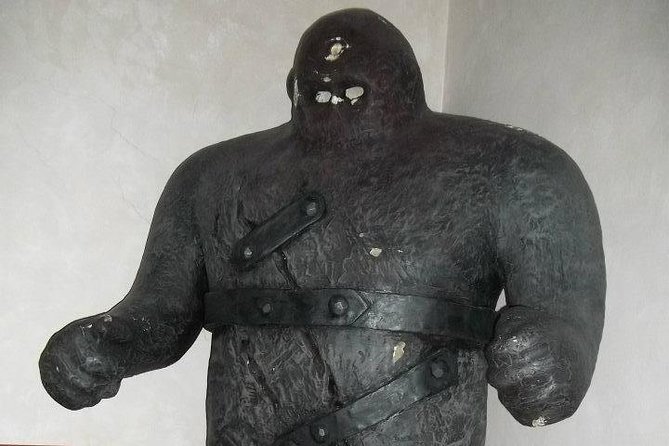
The tour begins with the Old-New Synagogue, described as the oldest synagogue in Europe and the oldest still in operation outside of Israel, dating to 1270 A.D. It is not a ruin or a replica. It is still working, so worship happens inside, and that affects how visitors experience the space.
One of the most distinctive details here is the service arrangement. Women are not allowed to be present during services in the same way as men. They are separated into a different hall and can only hear some of the words. Even if you are visiting outside of an active service moment, this rule tells you something essential: tradition is not just on display, it is built into daily practice.
What I like about starting here is the perspective shift. You are not only learning about the past. You are seeing how older structures continue to function and how modern visitors must respect ongoing customs.
Old Jewish Cemetery and the Weight of Scale
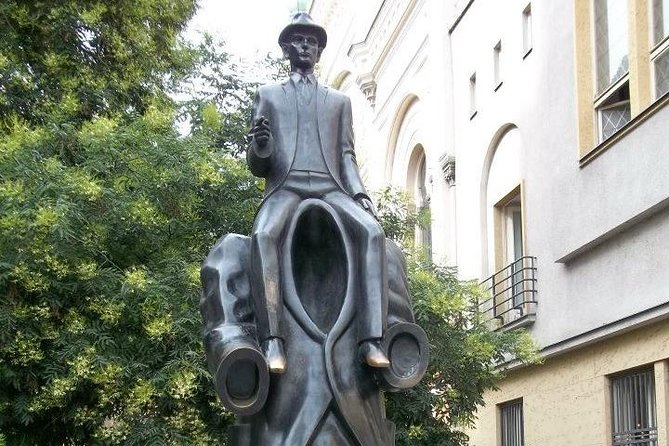
Next is the Old Jewish Cemetery from 1439 A.D., described as the oldest still preserved Jewish cemetery in Prague. If you only knew this place as a name on a map, this stop turns it into a lived reality by giving you the why behind the cramped layout.
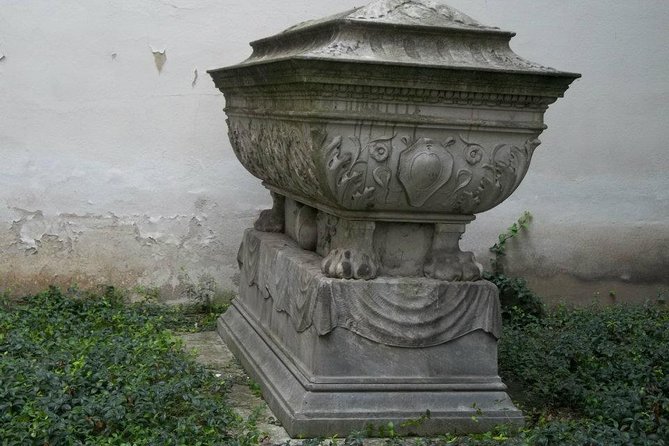
The cemetery is said to contain burial records for more than 100,000 people, and the reason is brutally practical: people had to be buried on top of each other because of lack of space. In 1787, the cemetery was abolished by Joseph II of the Habsburg empire.
This is also where the tour’s storytelling sharpens. You hear the legend of the Golem, a tale that often gets separated from the cemetery context online. On this tour, the legend fits into a bigger theme: Prague’s Jewish imagination, fear, hope, and moral warnings.
A word of advice: go in ready for emotional weight. This is not only architecture and dates. It is grief made visible, and your guide will help you read it without rushing past it.
More guided walks around the centre:



Spanish Synagogue: Moorish Beauty and a Music Connection
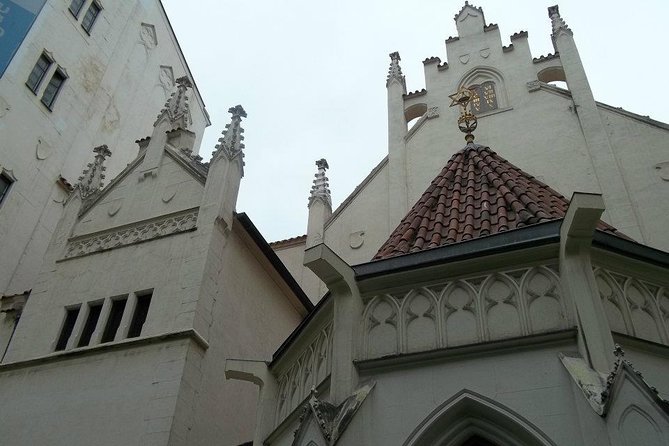
The Spanish Synagogue sits inside the Jewish Museum complex and is described as built in 1868, designed to replace an older synagogue from the 12th century A.D. The design is an oriental, Moorish style, and the tour notes the “Alhambra in Spain” comparison, which is exactly the kind of architectural shorthand that helps you picture it.
This synagogue is also known for classical music concerts, which is a big clue to how the space has been used beyond daily worship. If you enjoy architecture that changes with its purpose, this is a strong stop because it shows how sacred spaces can become performance spaces without losing their identity.
One practical consideration: the information provided notes a reconstruction closure starting May 2019 for two years. That may or may not affect your exact dates now, but it is smart to check before you arrive. If the site is under reconstruction during your visit, you will want your guide to help you make the most of whatever access is available.
Klausen and Pinkas Synagogues: Museum Stops With Meaning
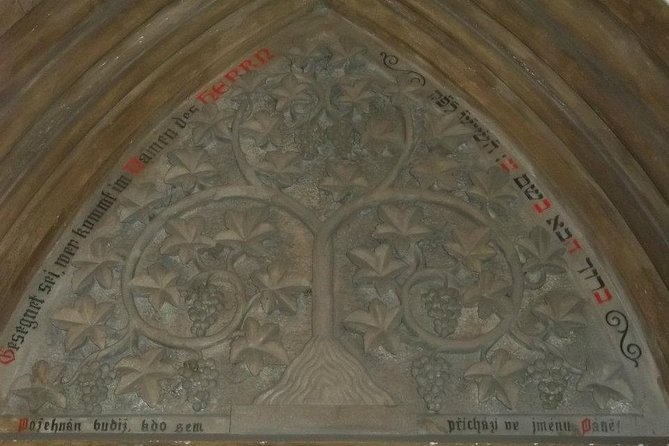
The Klausen Synagogue is described as the largest synagogue in the former Prague Jewish ghetto and an early Baroque example in the area. Today it is administered by the Jewish Museum, which matters because it frames what you see as part of a curated, educational route.
Then you move to the Pinkas Synagogue, the second oldest surviving synagogue in Prague. Its origins are tied to the Horowitz family, and the synagogue serves as a memorial space for about 79,000 Czech Jewish victims of the Shoah.
This is one of the stops where interpretation really counts. A synagogue is not only a building. It can also be a written record of who was lost, who was remembered, and how communities tried to preserve identity.
If you like tours that respect both the spiritual and the historical, you will appreciate how the stop connects family names, architectural survival, and memorial intent in a way that feels ordered, not random.
Maisel Synagogue: From Rudolf II to Neo-Gothic Revival
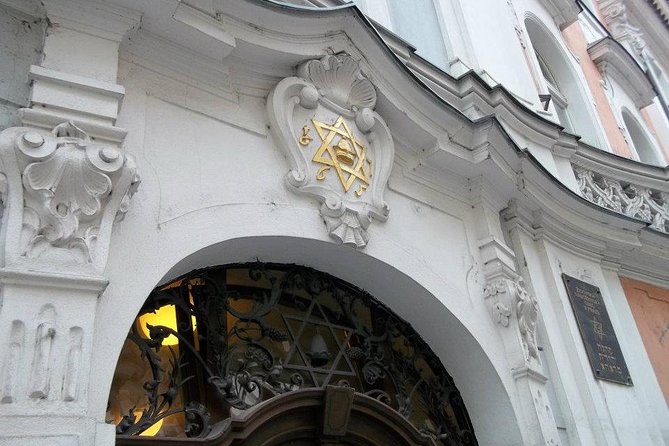
The Maisel Synagogue has the kind of backstory that makes you look at old buildings differently. It was erected in 1592 with a privilege granted by Emperor Rudolf II, and it was founded by Mordecai Maisel, described as the mayor of the Prague Jewish town.
The builders named here are Judah Tzoref de Herz and Josef Wahl. The tour also explains that it originally had a Renaissance temple layout with three naves, which was unusual for the time. That detail helps you “see” the original plan, not just the current appearance.
Then history hits hard. The synagogue burned down in the ghetto fire of 1689 and was rebuilt several times. Its current Neo-Gothic form dates to 1893 to 1905, shaped by Prof. A Grotte. That timeline shows Prague as a place where communities rebuilt, re-styled, and tried again.
If you tend to skip over architecture talk, give this one a chance. The guide’s job is to translate architectural features into real meaning, like why a synagogue might shift style after a disaster.
Jewish Museum Ceremonial Hall: Ritual, Mortuary, and a Change in Purpose
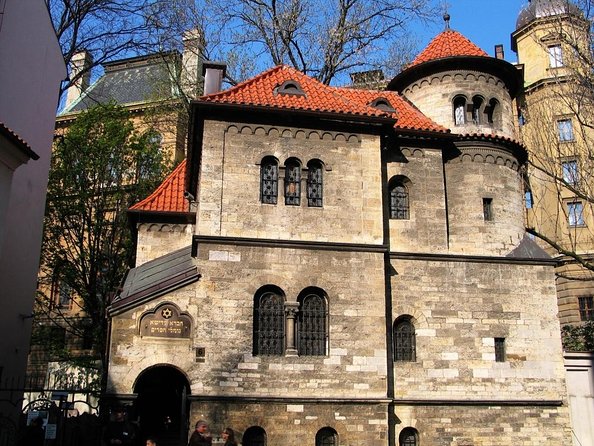
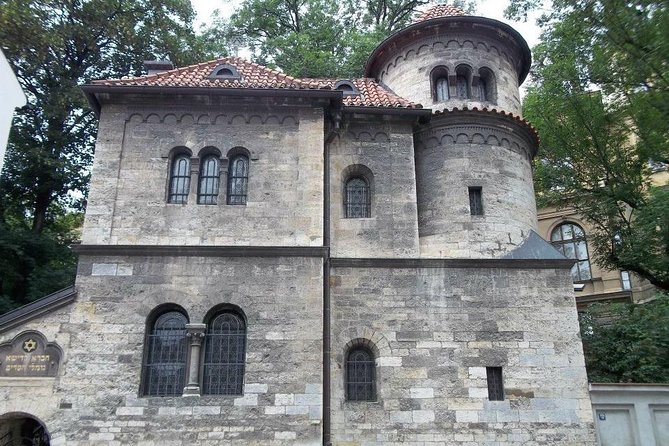
The tour finishes at the Jewish Museum in Prague, with focus on the Ceremonial Hall located next to the Old Jewish Cemetery. The hall is described as Neo-Romanesque and built in 1906 to 1908 on the site of an old mortuary used by the Prague Burial Society, the Hevrah Kaddisha.
One reason I like this stop is that it explains purpose, not just appearance. The first floor once housed a room for ritual washing of the dead, and the second floor was a club room for the burial society.
The building served that original purpose until the end of World War I, then became part of the Jewish Museum in 1926. So you are standing in a space that transitioned from community necessity to public education, without losing its origin story.
You may not leave with a single “wow” moment, but you will leave with a clearer idea of how Jewish communal life included care for the dead as a serious, structured duty. That is the kind of detail that makes the whole Jewish Quarter route connect.
How Eva Prague Tours Shapes the Experience
The biggest compliment people give here is not that the guide “knows facts.” It is that the guidance feels tuned to the day and the group.
Eva is repeatedly described as friendly, very organized, and fun to spend time with. People also highlight that the pacing can match your group’s needs, including breaks when lines or waiting make standing difficult. For me, that is exactly what turns a good historical walk into a memorable one.
You should expect English explanations that stick to the core story, plus practical recommendations along the way. Those local food and less-touristy place suggestions can be genuinely useful after the tour ends and you still have an evening to fill.
Practical Tips So Your Visit Goes Smoothly
- Plan on paying the Jewish Museum ticket (listed €25 per person) since admissions are not included.
- Dress smart/casual, and wear shoes you can stand and walk in for several short site visits.
- If you have mobility needs, mention them early. The guide has shown she can advocate and adjust pacing when needed.
- Expect rules and behavior guidelines in sacred spaces, especially where services are ongoing.
- If you are visiting around dates affected by past Spanish Synagogue reconstruction closures, confirm access before you go.
Should You Book This Prague Jewish Quarter Tour?
If you want a structured, emotionally grounded walk through Prague’s Jewish sites, I think you will like this. The private format helps you focus. The stops are chosen for meaning, not just convenience, and the guide approach is built around clarity and pacing.
I would book it if you care about more than selfies and want to understand why the Old Jewish Cemetery is so tightly packed, why the Old-New Synagogue still enforces separation rules during services, and how memorial spaces like Pinkas Synagogue communicate loss through design and remembrance.
I would be a little cautious if you hate museum admissions or you are traveling on a strict, “only free stuff” budget, since you will likely add the €25 Jewish Museum fee on top of the tour price. Also, if you have limited mobility and you prefer to sit most of the time, bring that up in advance so the plan is realistic for your body.
Overall, this is a strong choice when you want Prague’s Jewish Quarter to feel personal, organized, and respectful, with a guide who clearly enjoys showing it to you.
Just written up in Prague
- Private Transfer from Prague to Regensburg★ 5.0 · 1 review
- Prague: TV Tower Ticket & Novi Grad Digital Tour★ 5.0 · 1 review
- Prague to Dresden’s Old Town, Zwinger & Frauenkirche by Car★ 3.0 · 1 review
- Prague to Český Krumlov Private Guided Tour – With Mike★ 5.0 · 1 review
- Prague to Munich Private Transfer with 2 hours sightseeing★ 5.0 · 1 review
- Prague: 3-Hours Wars & Totality Guided Walking Tour★ 5.0 · 1 review
- Prague to Berlin Private Transfer with Optional Sightseeing★ 5.0 · 1 review
- Private Half-Day Trip from Prague to Kutná Hora★ 5.0 · 1 review
Prague Jewish Quarter Tours, compared.
Jewish Quarter Walking Tour with Admission Tickets
Read our review →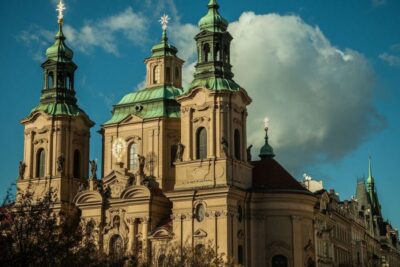
Old Town and Jewish Quarter Guided Tour in German
Read our review →
Old Town and Jewish Quarter Guided Walking Tour
Read our review →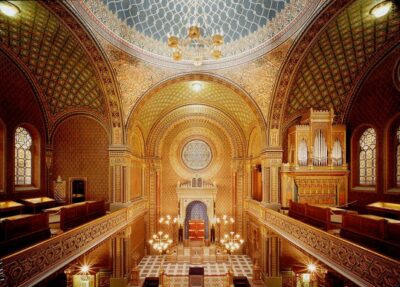
Prague’s TOP Sights – Old Town, Jewish Quarter, Charles Bridge (Tip-based tour)
Read our review →
Prague Old Town New Town and Jewish Quarter Morning Tour
Read our review →Iconic Prague Tour Old Town, Jewish Quarter and Charles Bridge
Read our review →
Old Town, Jewish Quarter & Astro Clock Walking Tour
Read our review →Browse the lists this tour appears in