
Reviewed · PRAGUE GUIDED WALKING TOURS
Prague: a walk among the installations of David Černý or a visit to the Mausoleum
This tour turns Prague street corners into conversation starters. You’ll follow David Černý’s works and learn to read the jokes, the shocks, and the social messages behind them, with a guide who can answer the tough questions without talking down.
What I like most is the small group size (limited to 5) and the fact that the tour is built for real dialogue, not a rushed checklist. I also love that it can be outdoor installations in the city or option 2 inside the artist’s own Musoleum, so you can choose the level of intensity you want.
One thing to consider: it is not suitable for people with mobility impairments, since you’ll be on foot and moving between stops.
In This Review
- Key points to know before you go
- Prague through David Černý’s lens, not another sightseeing walk
- Price and timing, why $42 can be good value here
- Meet point options, and which one fits your vibe
- Option 1: the city walk among Černý’s installations
- St. Wenceslas on horseback, the tour starts with a statement
- Freud suspended and Embryo, when the body becomes the message
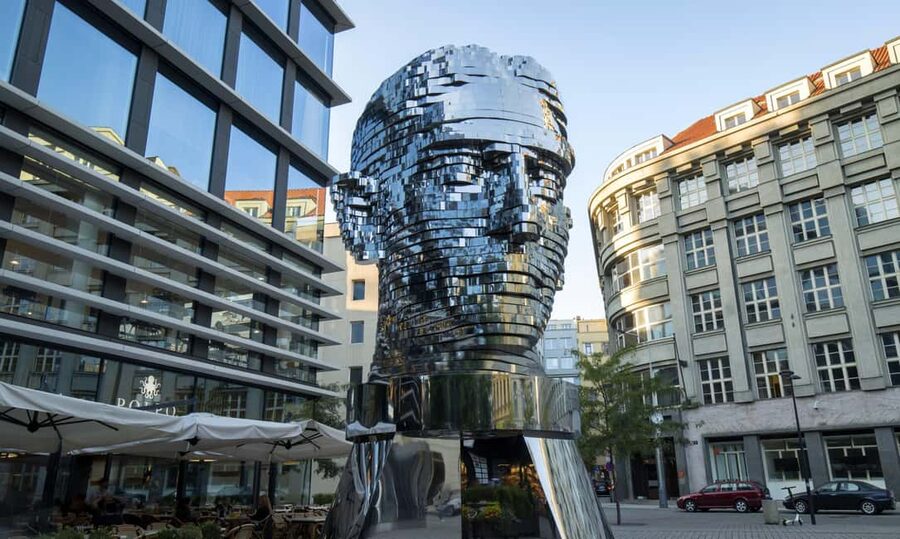
- Havel Memorial and Kafka’s rotating head, politics and thought in motion
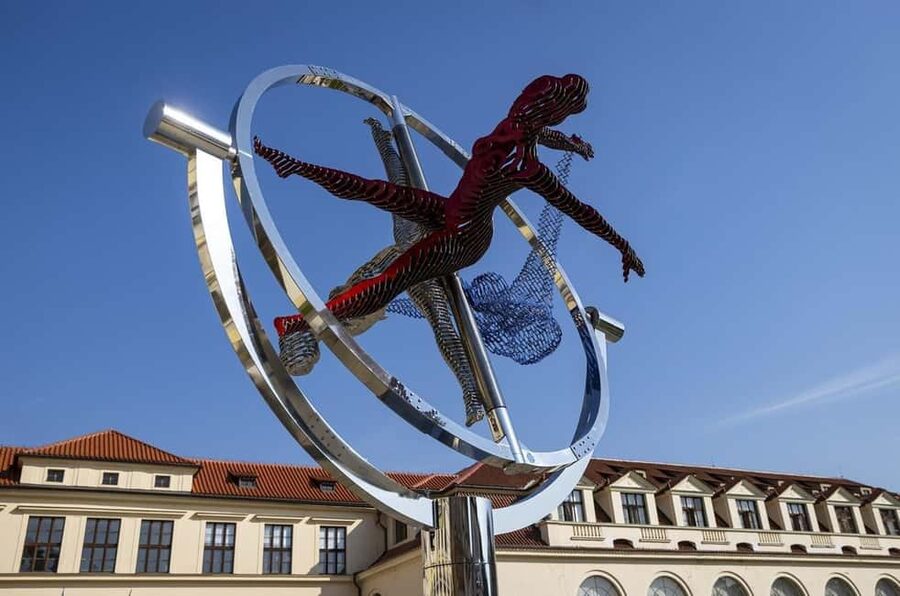
- Three women on the Deymov Palace and Woman at the Václav Havel Library
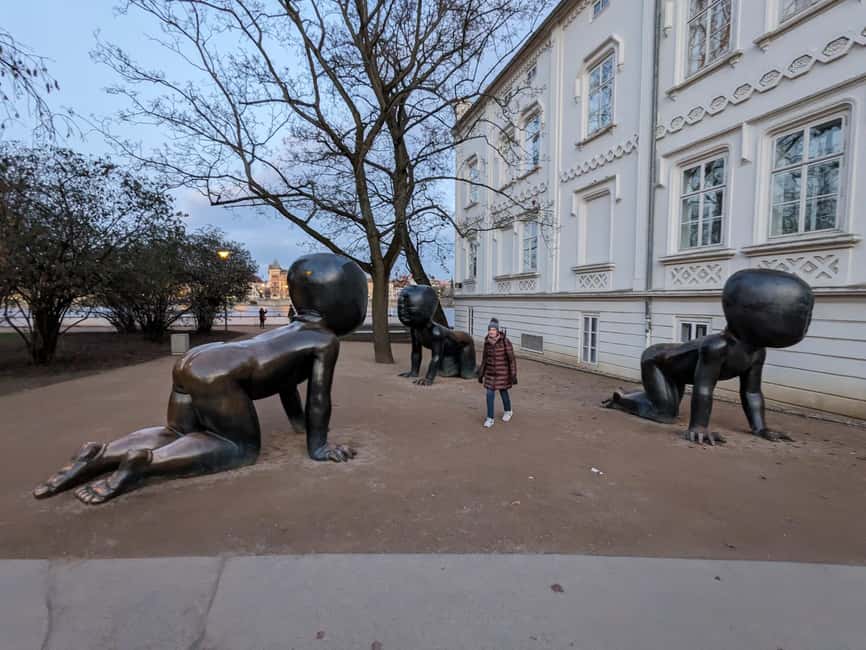
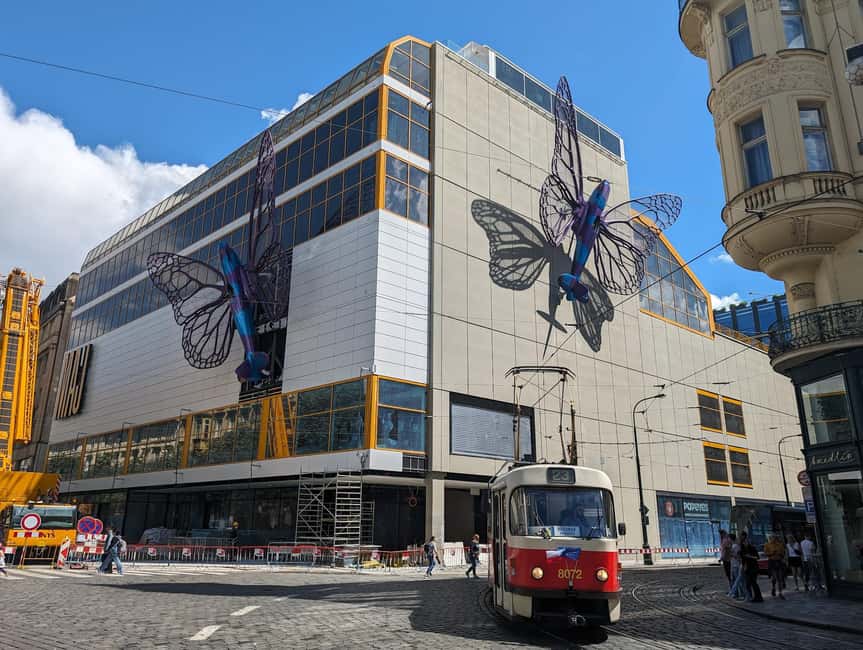
- Butterflies on the Maj Palace and Babies in Kampa, discomfort with a wink
- Piss and V.E.R.A., provocative pieces that ask you to take a breath
- Tank Torso and Lilith (optional), the tour’s final punchline
- Photo stops and the rhythm of the walk
- Option 2: stepping into David Černý’s private Musoleum
- Who gets the best payoff from this experience
- Practical tips so your tour feels smooth
- Should you book the Prague David Černý walk or the Musoleum?
- FAQ
- How long is the Prague David Černý tour?
- What language is the tour guide in?
- Is this tour a small group?
- Where do I meet for the outdoor route?
- Where do I meet for the Musoleum option?
- What is included in the outdoor route?
- What is included in the Musoleum option?
- Is the tour suitable for people with mobility impairments?
- Are drinks and transport tickets included?
- Can I pay later and cancel if my plans change?
Key points to know before you go
- Italian-language guided tour, with some content shown in the original language
- Two choices: Prague installations walk or David Černý’s Musoleum private museum
- Small group (max 5), so questions do not get swallowed by the crowd
- Critical reading of the works, with an open discussion style that respects different opinions
- A guide with insider access, Lorenzo Polo shares stories connected to the artist
- Duration 1-3 hours, depending on option and pace, with frequent photo stops
Prague through David Černý’s lens, not another sightseeing walk
Prague is famous for postcards. This experience is not interested in postcards. Instead, you’ll walk past some of David Černý’s most provocative pieces and learn how to look at them with your brain switched on.
Černý’s art has that dry, ironic edge. The works often feel like they’re interrupting the city, not decorating it. That tension is the point. You’ll stop, look longer than you normally would, and then talk about what you think the artwork is saying about people, power, and the way we judge each other.
And because the guide uses a critical, in-depth reading style, you do not just get descriptions. You get tools for noticing the layers: the humor, the discomfort, and the meaning hiding in plain sight.
More guided walks around the centre:
- Prague: 3-Hour Walking Tour of Old Town & Prague Castle
★ 4.7 · 5,696 reviews - Prague: Ghost Walking Tour Where Legends Come To Life
★ 4.4 · 5,253 reviews - Prague: Jewish Quarter Walking Tour with Admission Tickets
★ 4.7 · 3,729 reviews
Price and timing, why $42 can be good value here
At about $42 per person, this is not a free-walk, but it can still be strong value because you’re paying for two things that usually cost extra time and effort: guidance and focus.
First, you’re not wandering on your own trying to guess what you’re looking at. Second, the format includes multiple guided segments throughout the route, with time to pause for photos and reflect at each stop. The official duration is 1-3 hours, and the actual pace depends on which option you choose and how much you talk.
The small group matters here. With a group capped at 5, you get a real chance to ask questions and have your reactions taken seriously. If you like tours that feel like a conversation, this format supports that.
Meet point options, and which one fits your vibe
You start in one of two places, based on your choice:
- Option 1 (outdoor route): the Equestrian Statue of St. Wenceslas
Coordinates: 50°04′47.21″N 14°25′47.03″E
- Option 2 (Musoleum): David Černý’s Musoleum, Nádražní 2, 150 00 Praha 5-Smíchov
If you want Prague in motion, choose Option 1 and treat the city like a gallery. If you want the art universe at close range, choose Option 2 and step inside the creator’s private collection.
Option 1: the city walk among Černý’s installations
This is the route for people who want to see how contemporary art collides with historic streets. You’ll move between major Prague locations and pause at a sequence of Černý sculptures that often feel like they have opinions.
The walking is part of the experience. Each time you reach a new piece, the guide gives you an interpretive framework, then invites discussion. You get short stretches of walking and then repeated stops for viewing and guided talk.
Here are the kinds of works included on the outdoor version, and what you should watch for:
St. Wenceslas on horseback, the tour starts with a statement
You begin with the equestrian statue of St. Wenceslas. Starting with such a loaded public symbol is a smart contrast to Černý’s style. Even before you see the more surreal pieces, you’ll be set up to think about authority, mythology, and how public monuments shape what we think is important.
Another way the same evening in Prague could go:


Freud suspended and Embryo, when the body becomes the message
Works like Freud suspended and Embryo push attention onto the body, the mind, and the uneasy human questions we usually avoid in polite conversation. Even if you know very little about psychology or art, the titles give you a starting map: look at what’s displaced, distorted, or suspended, and ask why you feel that jolt.
Your guide’s job is to help you move from first reaction to interpretation, and the group discussion helps you compare perspectives.
Havel Memorial and Kafka’s rotating head, politics and thought in motion
The tour includes the Havel Memorial and Franz Kafka’s rotating head. This is where the outdoor route becomes more than “weird sculpture bingo.” You’ll get to connect how ideas circulate in public space, and how the sense of observation itself can feel political.
The rotating head piece is especially useful for thinking about gaze and attention, because it literally suggests movement and perspective.
Three women on the Deymov Palace and Woman at the Václav Havel Library
Two stops tie into Prague’s intellectual and cultural references: Three women on the Deymov Palace and Woman at the Václav Havel Library. These are good opportunities to look at how Černý places figures into settings linked to memory and ideas.
If you’re the type who likes to understand why a piece belongs on a specific building, this section helps. If you prefer pure shock value, you can still enjoy it, but the tour will steer you toward meaning.
Butterflies on the Maj Palace and Babies in Kampa, discomfort with a wink
Not all of Černý’s work is bleak. You’ll see Butterflies on the Maj Palace and Babies in Kampa, and the overall pattern of the tour is that the humor is rarely random.
Watch how the tone shifts. When the piece uses playfulness, your guide can help you ask a sharper question: play acting as comfort, or play acting as critique?
Piss and V.E.R.A., provocative pieces that ask you to take a breath
The included stops list Piss and V.E.R.A.. These names do not soften the experience. They set expectations for a direct, biting style.
Here’s the practical takeaway for you: don’t try to force agreement with the work. Instead, listen to how the guide frames the contradictions, and then notice your own reaction. That personal reaction is part of the “critical reading” process.
Tank Torso and Lilith (optional), the tour’s final punchline
The outdoor route includes Tank Torso and Lilith (optional). A tank theme signals power, damage, and violence. Lilith, as a concept, can push you toward thinking about taboo, fear, and who gets demonized.
By the end, you should feel like you’ve been taught to look at the city differently. The last stops tend to hit harder because you’ve built up the habit of reading the symbols.
Photo stops and the rhythm of the walk
The itinerary pacing includes multiple brief photo opportunities and guided segments, with walking times between stops. That rhythm matters because it prevents the tour from becoming one long lecture.
You’ll get repeated moments to step back, take a photo, and then refocus on what the guide points out. If you’re coming in with camera in hand, bring a phone with enough storage. A lot of these works are designed to be seen from angles, not only straight on.
Also, some content is presented in Italian and may include original-language elements. If your Italian is basic, you can still follow. Visual art helps, and the guide’s job is to keep the discussion accessible.
Option 2: stepping into David Černý’s private Musoleum
If the outdoor route is about Prague interrupting art, the Musoleum option is the reverse. You’re inside the artist’s own exhibition universe.
The Musoleum David Černý is at Nádražní 2, Praha 5-Smíchov, and it’s the better choice if you want the full arc of the work, not only the public highlights.
Inside, you’ll see:
- Unpublished works and drawings
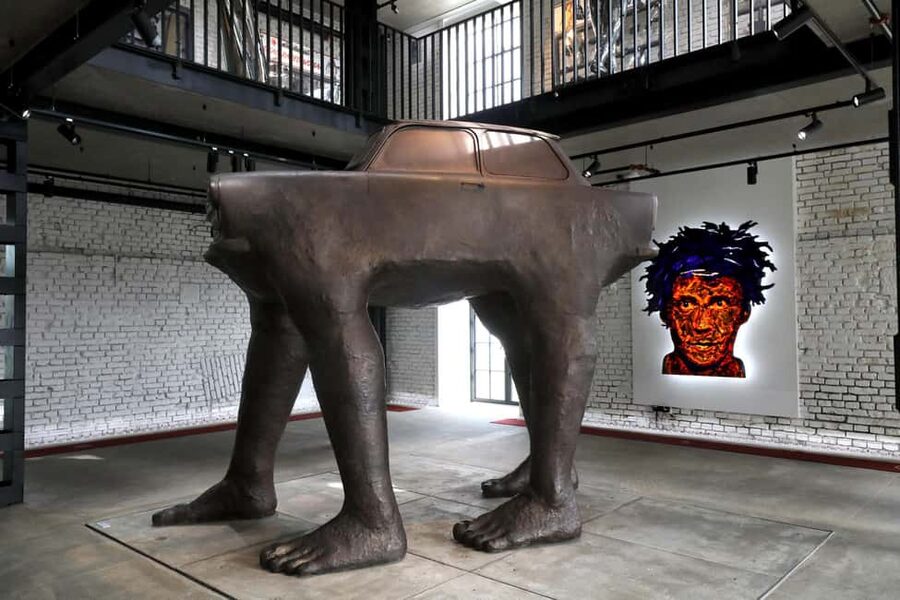
- Miniatures, portraits, and both famous and lesser-known sculptures
- Early works and kinetic sculptures
- Design projects you likely won’t encounter elsewhere
This option is valuable because it changes your understanding of the public installations. Even if you’re familiar with a few iconic pieces, the Musoleum helps you connect the dots between early ideas and later results.
It also helps you slow down. Public sculptures compete with tourists, traffic, and the next street corner. In the Musoleum, the pieces stand in a controlled space, so you can actually study the details.
Who gets the best payoff from this experience
This is best for you if you like tours with a point of view. You don’t need to be an art expert. You do need to be willing to look longer than 10 seconds and then talk about what you see.
It fits particularly well for:
- People who enjoy provocative art and don’t mind a dose of awkward humor
- Travelers who like their tours interactive, with space for different opinions
- Anyone curious about Central European intellectual and political references, especially since the route includes Havel and Kafka
- Art fans who want to hear stories with personal context, not just facts
The guide’s presence makes a big difference. In a standout detail from the experience, the guide Lorenzo Polo is described as friendly, highly informed, and personally connected to the artist. That kind of access can turn a sculpture explanation into an insider story, the kind you usually cannot get from a generic audio guide.
Practical tips so your tour feels smooth
A few things make a noticeable difference:
- Wear comfortable shoes. This is a walk between multiple outdoor stops.
- Bring water if you expect to need it, since drinks are not included.
- If you need public transport to reach the meeting point, remember transport tickets are not included.
- If you plan to buy books or publications, that is not included, so keep a little cash or card ready.
- If you have mobility needs, plan carefully. The experience is not suitable for people with mobility impairments.
Language-wise, the tour is in Italian, so check your comfort level. Visual art plus a good guide helps a lot, but you will miss some nuance if you don’t read or listen well in Italian.
Should you book the Prague David Černý walk or the Musoleum?
Book it if you want Prague to feel less like a museum schedule and more like a live debate. The combination of a focused guide, a small group, and a route packed with recognizable Černý works gives you both entertainment and something to think about.
Choose Option 1 if you love walking and want to see how the sculptures alter the mood of public spaces. Choose Option 2 if you want to go deeper into the artist’s process, including drawings, miniatures, early works, and kinetic experiments.
Skip it if you need an easy, step-by-step sightseeing route with no discussion. This tour is built around interpretation, and if you prefer passive listening, you might not get the full value.
If you’re choosing based on price, here’s the simple way to judge it: $42 works best when you actually want the guided reading and the back-and-forth conversation. If that is your style, this experience is a strong use of time in Prague.
FAQ
How long is the Prague David Černý tour?
The duration is listed as 1-3 hours, depending on the option and available starting times.
What language is the tour guide in?
The live tour guide speaks Italian. Some content is shown in its original language.
Is this tour a small group?
Yes. The group size is limited to up to 5 participants.
Where do I meet for the outdoor route?
For the outdoor route, the meeting point is the Equestrian Statue of St. Wenceslas (coordinates 50°04′47.21″N 14°25′47.03″E).
Where do I meet for the Musoleum option?
For the Musoleum option, the meeting point is David Černý’s Musoleum, Nádražní 2, 150 00 Praha 5-Smíchov.
What is included in the outdoor route?
The tour includes specific Černý works such as Freud suspended, Embryo, Havel Memorial, Kafka’s rotating head, Three women on the Deymov Palace, Woman at the Václav Havel Library, Butterflies on the Maj Palace, Piss, V.E.R.A., Babies in Kampa, Tank Torso, and Lilith (optional), plus St. Wenceslas on horseback.
What is included in the Musoleum option?
The Musoleum option includes David Černý’s Mausoleum, where you can see unpublished works, drawings, miniatures, portraits, and early, kinetic, and design projects.
Is the tour suitable for people with mobility impairments?
No. It is not suitable for people with mobility impairments.
Are drinks and transport tickets included?
No. Drinks and transport tickets, if needed are not included.
Can I pay later and cancel if my plans change?
Yes. You can reserve now and pay later, and there is free cancellation up to 24 hours in advance for a full refund.
Just written up in Prague
- Private Transfer from Prague to Regensburg★ 5.0 · 1 review
- Prague: TV Tower Ticket & Novi Grad Digital Tour★ 5.0 · 1 review
- Prague to Dresden’s Old Town, Zwinger & Frauenkirche by Car★ 3.0 · 1 review
- Prague to Český Krumlov Private Guided Tour – With Mike★ 5.0 · 1 review
- Prague to Munich Private Transfer with 2 hours sightseeing★ 5.0 · 1 review
- Prague: 3-Hours Wars & Totality Guided Walking Tour★ 5.0 · 1 review
- Prague to Berlin Private Transfer with Optional Sightseeing★ 5.0 · 1 review
- The Plague Doctor of Prague: Self-Guided Mystery Puzzle Walk★ 3.0 · 1 review
Prague Guided Walking Tours, compared.

3-Hour Walking Tour of Old Town & Prague Castle
Read our review →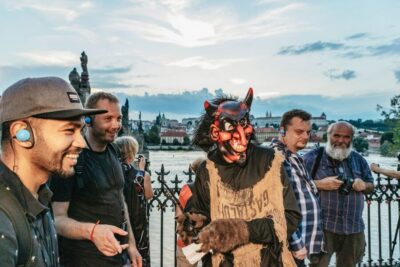
Ghost Walking Tour Where Legends Come To Life
Read our review →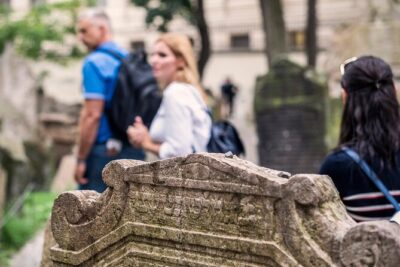
Jewish Quarter Walking Tour with Admission Tickets
Read our review →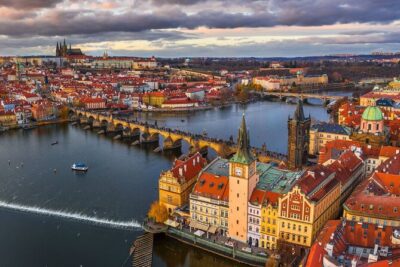
Prague Guided Walking Tour and Cruise with Authentic Czech Lunch
Read our review →
Old Town and Jewish Quarter Guided Walking Tour
Read our review →
Prague Ghost and Legend of Old Town Walking Tour
Read our review →
Prague 3-hour Afternoon Walking Tour including Prague Castle
Read our review →
Ghosts and Legends Nighttime Guided Walking Tour
Read our review →Browse the lists this tour appears in