
Reviewed · MUSEUMS
Museum Story of Prague
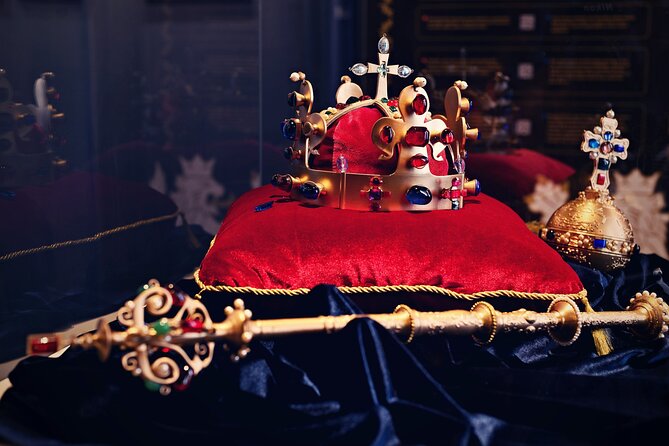
Prague history hits different when it’s staged like a story. The Story of Prague Museum strings together centuries of change using mixed reality, film moments, and audio elements, plus that eerie, silent Golem presence. You walk out with a clearer sense of how Prague keeps reinventing itself.
Two things I really like: the three-floor timeline that moves step by step through key eras, and the museum’s focus on interactive displays instead of dry glass-and-plaster. Even the well-known landmarks show up in context, not as random facts.
One consideration: the experience leans hard on QR codes, and if you prefer minimal screen time, plan to scan selectively. In practice, you might get what you need from the first section and slow down later.
In This Review
- Key things to know before you go
- A 90-minute ticket that turns Prague into a timeline
- Stop 1: Story Of Prague museum halls, where the Golem sets the mood
- Knights, Hussites, and the Old Town Hall and Astronomical Clock connection
- Second floor: the Nazi occupation, bombing of Prague, and Soviet occupation
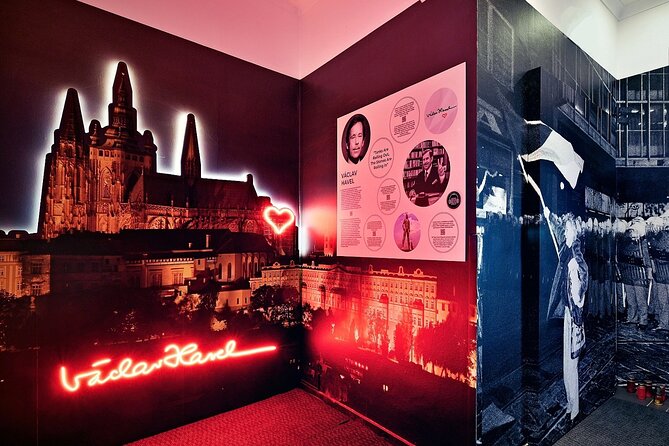
- Third floor: Velvet Revolution and Czech global achievements
- Hidden room and the stuff you might miss from photos
- How interactive tech shapes your visit, including QR codes
- Price, value, and timing for your Prague day
- Getting there and planning your route around public transit
- Who should book Story of Prague, and who should skip it
- Should you book this Prague museum?
- FAQ
- Where is the Museum Story of Prague located?
- How long is the Museum Story of Prague experience?
- What is the price per person?
- Is the admission ticket included?
- What time does the experience start?
- Do I receive a mobile ticket?
- How far in advance do people usually book it?
- What major time periods does the museum cover?
- Does it include medieval torture demonstrations?
- Is there free cancellation?
- Is the meeting point near public transportation?
Key things to know before you go
- 90-minute format: A tight, easy-to-fit visit with a full sweep of major eras
- Film, audio, and mixed reality: Storytelling that changes as you move between floors
- The Golem in dim halls: One of the most memorable visual anchors in the museum
- Medieval torture, without practical demonstrations: Dark topics, but not staged as live reenactment
- WWII and occupation chapters: Nazi occupation, bombing of Prague, and Soviet occupation are included
- A hidden room: Unique exhibits that you may not see in typical photos
A 90-minute ticket that turns Prague into a timeline
At about 1 hour 30 minutes, this museum is built for focus. You do not need to carve out half a day, and the pacing helps you connect events instead of collecting disconnected dates. For the price of $19.27 per person, it feels like good value when you want context for Prague’s streets without adding another long tour.
I like that the ticket experience is self-contained. You start at 10:00 am, and the museum carries you from early legends and medieval power to modern political change. If you enjoy learning by moving through rooms, you will likely feel the timeline clicking into place.
Also, it is convenient in a practical way: the meeting point is near public transportation, and you get a mobile ticket. That matters because Prague can be a lot of walking, and you do not want extra friction before you even start.
Other Prague collections out of the cold:
- Prague: Museum of Fantastic Illusions Entry Ticket
★ 4.3 · 4,337 reviews - IAM Illusion Art Museum Entry Ticket
★ 4.2 · 1,664 reviews - Prague: Museum of Senses Admission Ticket
★ 4.0 · 1,445 reviews
Stop 1: Story Of Prague museum halls, where the Golem sets the mood
Your first big pull is atmosphere. The museum uses dim lighting and story-led staging, so you quickly shift from outside-city energy to something more theatrical. One of the first striking moments is the towering Golem, waiting silently in the hall like folklore made physical. It is not just a spooky prop, it works as a tone-setter for the museum’s approach: history mixed with myth, and facts delivered through scenes.
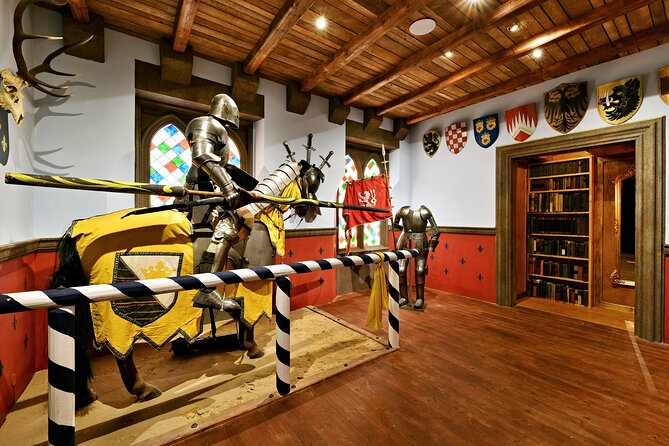
From there, the early eras roll in. You get the world of knights and kings, then you move into the power struggles tied to Jan Žižka and the Hussites. Instead of treating these as separate chapters, the museum frames them as part of Prague’s ongoing pattern of conflict, identity, and resistance.
A small but meaningful detail: the museum brings in medieval torture as a topic, but it is described as without practical demonstrations. That is important. You still get the grim historical reality, but you are not subjected to live reenactments. If you are sensitive to heavy themes, that distinction can make the experience more manageable.
Knights, Hussites, and the Old Town Hall and Astronomical Clock connection
I love when a museum connects the past to specific places you might see later. Here, the story explicitly reaches the construction of the Old Town Hall and the Astronomical Clock. That means the landmark you might already recognize has a stronger backstory than you would get from a quick street-level glance.
Why this matters for you: if you visit the Old Town after, you can look up at the clock and better understand why it became a symbol of Prague’s civic identity. You are not just spotting a famous face in a crowd. You are seeing it as part of a story about time, power, and public life.
The museum’s presentation style also helps with retention. Instead of listing dates, it pairs scenes and media with the timeline. That is especially helpful when you want to understand how medieval politics and later religious conflict shaped Prague into what you see today.
Second floor: the Nazi occupation, bombing of Prague, and Soviet occupation
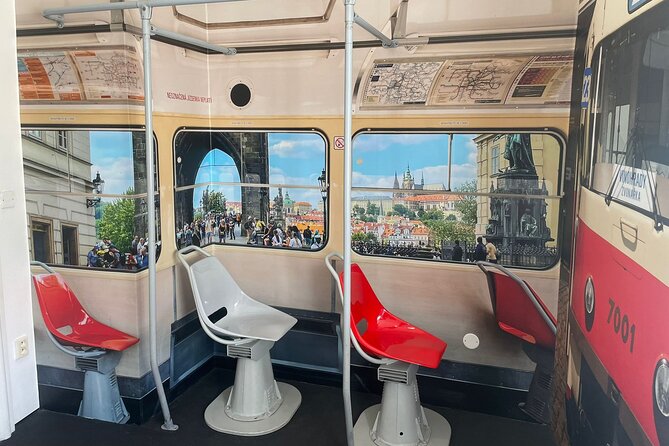
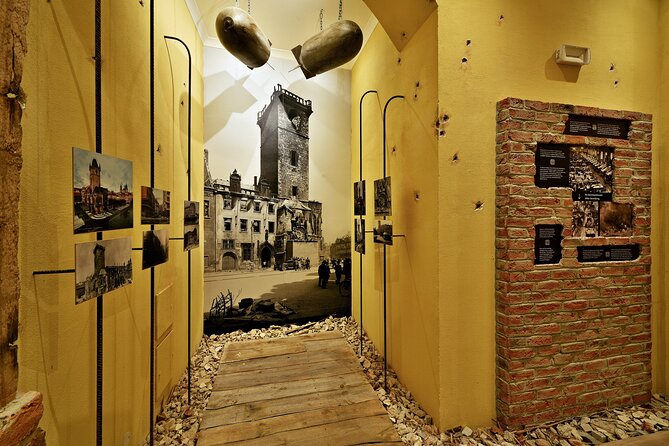
The museum does not shy away from heavy chapters. On the second floor, you revisit the Nazi occupation, the bombing of Prague, and the Soviet occupation. This is where the tone becomes more serious and less myth-adjacent.
You should go in knowing the emotional load is real. Even if you are not a history fanatic, this section can hit hard because it is tied to Prague’s direct experience. The museum uses film installations and audio elements as part of the storytelling, which can make the material feel more immediate than a standard exhibit wall.
A practical note: pace yourself. If your learning style is “keep moving,” you can stay on schedule and still absorb it. If you tend to want a quiet moment before moving on, plan for that here. The second floor is where your attention matters most.
Third floor: Velvet Revolution and Czech global achievements
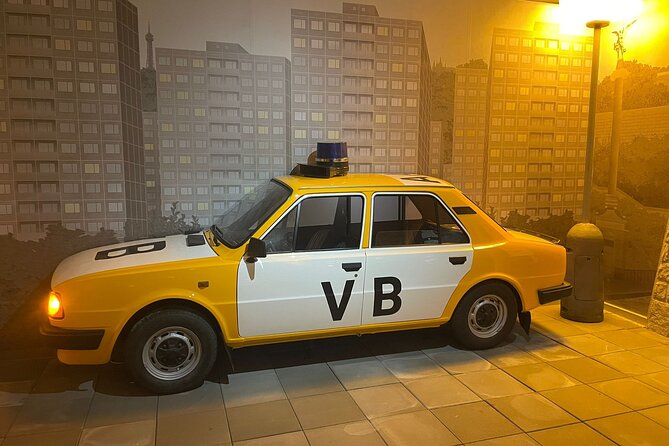
Then the museum changes gears. The third floor focuses on the Velvet Revolution and Czech global achievements. It is a relief to reach this section, because the museum has already done the hard work of setting up why political change mattered.
For me, this top-floor shift feels like the point where the museum stops being only about survival and starts being about direction. You get a sense of what came next for the country, and why Prague is more than just a stage for old drama. It becomes a launchpad for modern identity and accomplishments.
If you like stories that end with momentum, this is a strong finish. It also gives you something to carry back into your day wandering neighborhoods. You look at streets with a little more context, and you notice how “modern Czech life” is rooted in real turning points.
Another way the same evening in Prague could go:



Hidden room and the stuff you might miss from photos
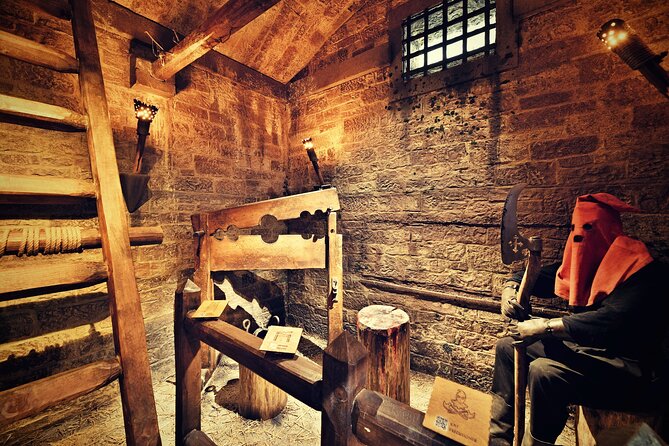
One of the best values in any museum is the element you cannot easily learn from a quick online search. This one includes a hidden room and unique exhibits not seen in photographs. That means you are rewarded for actually walking through and taking the time to notice what is in front of you.
It also changes how I recommend the visit. Do not rush just to complete the timeline. Spend a little extra time when you find something that feels unusual or separate. That is where the museum’s “there is more here” spirit shows up.
How interactive tech shapes your visit, including QR codes
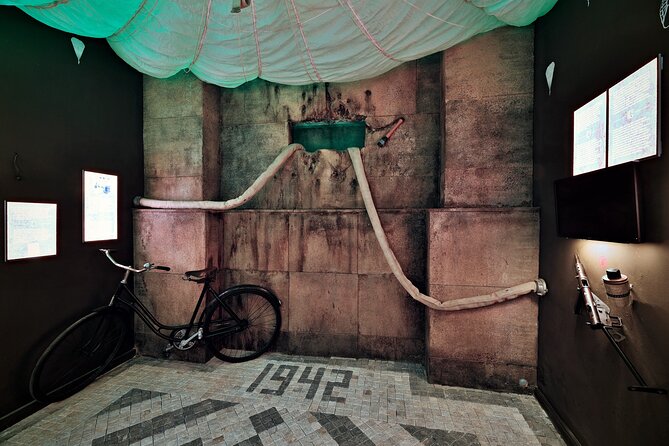
This museum uses interactivity as part of the storytelling, not as a gimmick. You can expect interactive displays, plus a blend of mixed reality with film installations and audio elements. The goal is to place you in the story, so the history feels less like reading and more like stepping into a scene.
The main downside is the museum’s reliance on QR codes. One visitor feedback points to QR codes being overdone, with scanning slowing down after the first floor. I do not think that means the experience is bad. It just suggests a smart strategy for you: if QR codes start to feel repetitive, switch your approach. Scan only when you truly want the extra layer, and let the room’s audio and visuals do their job.
A simple way to enjoy this tech: treat the screens as optional support. The rooms are built to work even when you do not go deep into every code.
Price, value, and timing for your Prague day
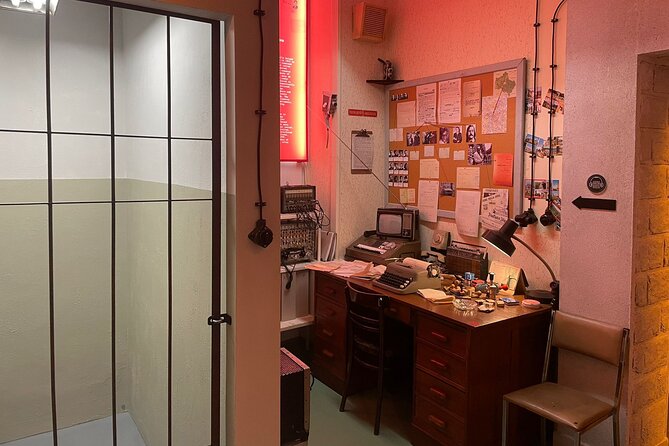
Let’s talk value. At $19.27, you are paying for a museum that covers a huge range: medieval power, religious conflict, Prague’s civic landmarks, World War II-era trauma, Soviet-era occupation, and then the political shift of the Velvet Revolution. For a 1 hour 30 minutes visit, that is a lot of content.
Also, it’s priced like a reasonable add-on, not a “big ticket” commitment. If you are building a Prague itinerary with a mix of walking, viewpoints, and one indoor anchor, this works well. You can place it on a day when the weather is hit or miss, and you will still come away with a clearer story of the city.
Timing is straightforward too. The experience starts at 10:00 am. Booking earlier can help, since it is an experience people typically schedule in advance, with an average booking lead of 12 days. If your travel dates are set, I would not wait until the last minute.
Getting there and planning your route around public transit
The meeting point is near public transportation, which is exactly what you want for Prague. You can use your transit options to cut down on extra taxi costs or long detours.
In terms of day flow, I suggest you pair this museum with a nearby walk afterward. The museum references Prague landmarks and milestones, so after you leave, you will notice the city differently. Even if you do not immediately visit the exact Old Town Hall or clock area, your eyes will understand why those places matter.
Wear comfortable shoes. You are moving through multiple floors and rooms, and you will likely want to pause at key scenes like the Golem area and the floor transitions.
Who should book Story of Prague, and who should skip it
This museum is a strong fit if you want:
- A story-driven introduction to Prague’s history
- A mix of interactive displays, film, and audio instead of only reading panels
- A practical time-boxed visit around 90 minutes
You should also feel comfortable with the way darker topics are handled in one specific aspect. Medieval torture is included, but it is stated as without practical demonstrations, so you are not dealing with live staging.
I would think twice if you strongly dislike screen-based extras like QR codes, especially if you hate the idea of scanning repeatedly. You can still enjoy the museum, but you may want to mentally prepare to use a lighter touch.
If WWII-era and occupation topics are hard for you, consider whether you want that emotional intensity on your trip. The museum includes Nazi occupation, bombing of Prague, and Soviet occupation, and it does not soften those parts.
Should you book this Prague museum?
If your goal is to understand Prague in context, I think this is a good booking. The museum covers a wide sweep of eras in a tight time window, and it uses interactive storytelling that makes the city’s past feel connected rather than overwhelming.
My advice: go with a simple plan. Spend full attention on the floors that interest you most, and treat QR codes as optional. If you do that, you avoid the one common complaint while still getting the best parts: the Golem atmosphere, the clear timeline from medieval to modern change, and the inclusion of major Prague landmarks like the Old Town Hall and the Astronomical Clock.
FAQ
Where is the Museum Story of Prague located?
It takes place in Prague, Czech Republic.
How long is the Museum Story of Prague experience?
Plan for about 1 hour 30 minutes.
What is the price per person?
The price is $19.27 per person.
Is the admission ticket included?
Yes, the admission ticket is included.
What time does the experience start?
The start time is 10:00 am.
Do I receive a mobile ticket?
Yes, you receive a mobile ticket.
How far in advance do people usually book it?
On average, it is booked about 12 days in advance.
What major time periods does the museum cover?
It covers knights and kings, Jan Žižka and the Hussites, the Nazi occupation, the bombing of Prague, the Soviet occupation, and the Velvet Revolution, plus Czech global achievements.
Does it include medieval torture demonstrations?
It includes medieval torture without practical demonstrations.
Is there free cancellation?
Yes. Free cancellation is available if you cancel up to 24 hours before the experience starts for a full refund.
Is the meeting point near public transportation?
Yes, the meeting point is described as near public transportation.
Just written up in Prague
- Private Transfer from Prague to Regensburg★ 5.0 · 1 review
- Prague: TV Tower Ticket & Novi Grad Digital Tour★ 5.0 · 1 review
- Prague to Dresden’s Old Town, Zwinger & Frauenkirche by Car★ 3.0 · 1 review
- Prague to Český Krumlov Private Guided Tour – With Mike★ 5.0 · 1 review
- Prague to Munich Private Transfer with 2 hours sightseeing★ 5.0 · 1 review
- Prague: 3-Hours Wars & Totality Guided Walking Tour★ 5.0 · 1 review
- Prague to Berlin Private Transfer with Optional Sightseeing★ 5.0 · 1 review
- The Plague Doctor of Prague: Self-Guided Mystery Puzzle Walk★ 3.0 · 1 review
Museums, compared.
IAM Illusion Art Museum Prague Fast Pass Ticket
Read our review →
Admission Ticket to Museum of Senses in Prague
Read our review →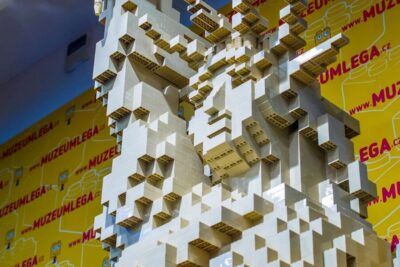
Ticket to Audiovisual Light Art at Lumia Gallery
Read our review →
Browse the lists this tour appears in