
Reviewed · PRAGUE
Medieval Prague Through a Nightwatchman’s Eyes
Night makes Prague’s legends feel real. This 90-minute night watchman walk turns Old Town lanes into a single darkly funny storyline, with a guide in historical dress leading the way. You’ll get medieval sights plus the kind of street-level context that makes Prague’s past feel like it has a pulse.
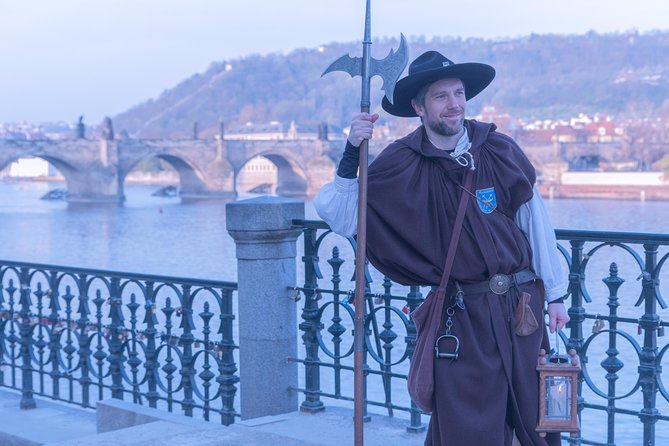
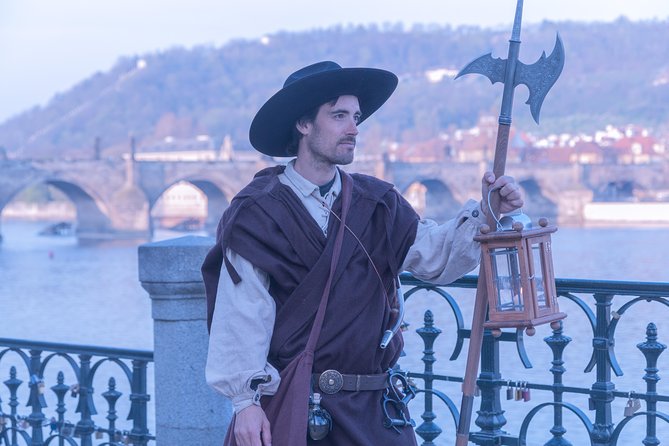
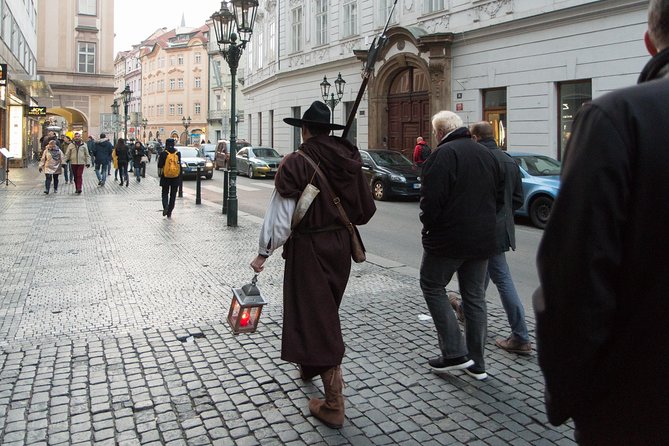
I especially like the way the guides commit to the role. People highlight performances by Thomas, David, and Oscar, with props like lanterns and halberds, plus plenty of jokes and storytelling that keep moving even when it’s chilly or showery. You’ll also appreciate the small-group feel (up to 15), which makes it easier to ask questions as you go.
One consideration: the route is at night and includes somber topics like executions. If you’re bringing young kids or you’re sensitive to grim stories, you may want to pace yourself and decide what you want to hear.
In This Review
- Key highlights you’ll care about
- Why this night walk feels different than a daytime Prague tour
- Starting at Prasna brana, Powder Gate, and the city’s guarded edges
- Ovocný trh fruit market, bread for common people, and daily life
- The Estates Theater area and Don Giovanni’s Prague connections
- Passing the first Central European university and why it matters on foot
- Old Town Hall with the Astronomical Clock, defenestration, and public executions
- Jan Hus monument and Church of Our Lady before Týn, where faith meets street corners
- Rudolfinum riverside break, Prague Castle views, and a breather before Charles Bridge
- Ending at Charles Bridge beginning, Charles IV, and the people across the water
- Pace, weather, and what to wear for a 1.5-hour night route
- Value for $26.62, and why it often beats a larger group tour
- Who should book this night watchman walk
- Should you book Medieval Prague Through a Nightwatchman’s Eyes?
- FAQ
- How long is the night watchman tour?
- What is the price per person?
- What language is the tour offered in?
- What is the group size limit?
- Where is the meeting point?
- Where does the tour end?
- Are admission tickets included for the stops?
- Is hotel pickup or transportation included?
- Does the tour run in bad weather?
- What is the cancellation policy?
Key highlights you’ll care about
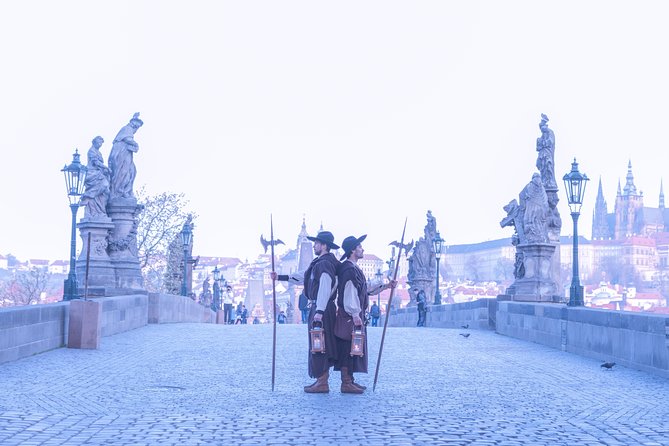
- Costumed night watchman guide who stays in character and uses period-style props
- Old Town at night route that includes Powder Gate, Old Town Hall, and the Charles Bridge area
- Mozart and Don Giovanni connections tied to the Estates Theater and a commemorative statue
- Hidden, quieter corners where you’re not just staring at the biggest landmarks
- One easy-to-manage walking plan at about 1 hour 30 minutes for up to 15 people
Why this night walk feels different than a daytime Prague tour
Daytime sightseeing can turn into checklists. This tour is built around mood. You start near the city gates and end at the Charles Bridge area, so the story naturally travels from “city defense and everyday survival” to “power, culture, and the people below the castle.”
The real win is how the guide explains what life looked like for ordinary residents. You’re not just told dates. You hear why certain places mattered, who depended on them, and how fear, law, and rumors shaped daily routines. Multiple guides are praised for staying in character from start to finish, and that role-playing does more than entertain. It helps you remember what you see.
I also like that the tour is practical. It’s short enough to fit your night without turning your evening into a marathon. And it runs in all weather, so you’re not waiting for perfect conditions while the day disappears.
Not decided yet? These cover the same corner of Prague:
- Prague: 50-Minute Sightseeing Evening Cruise
★ 4.2 · 33,780 reviews - Prague: Medieval Dinner with Unlimited Drinks
★ 4.4 · 19,847 reviews - Prague: Castle Tour with Local Guide and Entry Ticket
★ 4.6 · 10,422 reviews
Starting at Prasna brana, Powder Gate, and the city’s guarded edges
You begin at the Powder Tower area (Náměstí Republiky 5, Staré Město). The first stop is Prasná brána, an old gate that originally helped protect Prague, with its name tied to gunpowder storage from later centuries.
This is a smart opening because it gives you a frame for the rest of the walk. When you understand that Prague was once walled and gated, the narrow streets feel less random. They look planned for control, movement, and defense. And at night, gates and street corners naturally carry more atmosphere, so the “night watchman” theme clicks fast.
What to watch for here: the gate’s scale compared to the lanes around it. Even without going inside, you get a sense of how people would experience entering and leaving the protected core of the city.
A small tip: if it’s raining or windy, start with a slightly slower pace and keep your eyes on footing. Early streets around Old Town can get slick.
Ovocný trh fruit market, bread for common people, and daily life
Next you’re at Ovocný trh, the fruit market area. Here the tour shifts from defense to the everyday economy. You hear about the older market life, the food of common people, and the idea of bread as a basic, shared reality.
This stop works well because it adds contrast. Medieval Prague wasn’t only towers, churches, and rulers. It was also hauling food, trading, waiting in crowds, and watching what authorities allowed or punished. As the guide ties market routines into the watchman’s perspective, you start noticing how much “public space” mattered.
If you like history that feels human, this is one of the best places for it. Markets are where laws met real life. People learned quickly what could cost them trouble.
The only drawback is that this is a short stop. You get the point, then you move on.
The Estates Theater area and Don Giovanni’s Prague connections
As you continue, you reach the Theatre des États area, where the tour brings you back to Mozart-era Prague. It focuses on the premiere of Don Giovanni in the famous Estates Theater.
This is great for music lovers and for anyone who thinks history has to be serious all the time. The tour uses cultural milestones as story anchors, not as trivia dumps. You get a sense of how Prague’s creative life overlapped with political power and social rank.
Two details you should pay attention to:
- The guide ties the theater story into local hero context for the Czech Republic.
- Along the route, you pass by a statue linked to Il Commendatore, referencing Don Giovanni’s first play from 1787.
Even if you know Mozart already, you’re likely to learn something new about how art and civic identity braided together in Prague.
Passing the first Central European university and why it matters on foot
You also pass by a site connected with what’s described as the first Central European university. This part is brief, so you’re not touring a campus.
Still, it’s a useful reminder that Prague was not just a fortress city. It was also a place where learning and authority grew side by side. On a walking route like this, these “quick passing” moments matter because they show you how many roles one city can play.
If you want to follow up after the tour, this is a great stop to note mentally. It’s exactly the kind of detail that usually gets missed when you only aim for the biggest photo spots.
Another way the same evening in Prague could go:
Old Town Hall with the Astronomical Clock, defenestration, and public executions
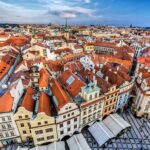
At Old Town Square, you hit the Old Town Hall and its Astronomical Clock. This stop is the tour’s strongest anchor for power and punishment. The guide talks about the town hall and the market place, plus the defenestration events and famous executions that took place in the broader public sphere.
Yes, it’s heavy material. That’s the point. Old Town Square was where authority made itself visible, and where justice could be staged as a warning. When the watchman character connects these stories to street life, it helps you understand why people lived with fear even when they were just going to buy bread.
What makes this stop valuable for you:
- You’re standing in the center of how Prague ruled itself socially.
- You see how public space can become a theater, not just a landmark.
Possible consideration: if you have a low tolerance for gruesome stories, this is where you may want to mentally prepare. The tour does frame it as part of daily historical reality, not shock for shock’s sake.
Jan Hus monument and Church of Our Lady before Týn, where faith meets street corners
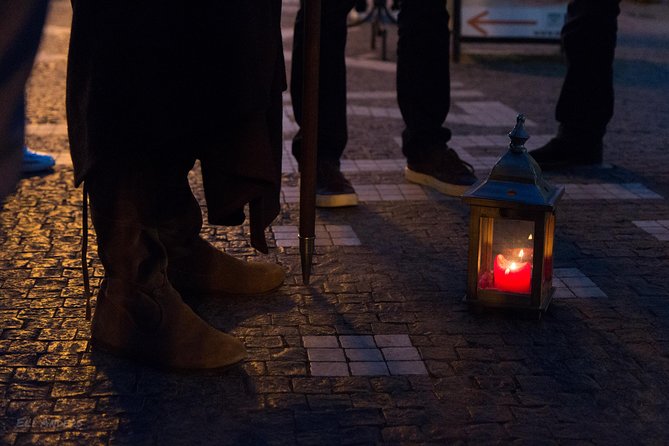
After the square, you stop by the Jan Hus monument. The guide pays honor to the Hussites of Prague and brings the 14th and 15th century into focus.
This is the kind of stop that adds political depth. Jan Hus is not just a statue. He’s connected to big faith conflicts that shaped how people saw authority, clergy, and legitimacy. The watchman theme also fits here because religious tensions were not abstract debates. They affected what people said, where they gathered, and what risks they took.
Then you move toward Church of Our Lady before Týn, noted as dating to 1368. The tour frames it as one of the oldest churches you can still find today. From the outside, you get the feeling of permanence. It’s the opposite of the market and the square where things changed fast.
What I like about combining Hus and Týn is that you get two angles in a short time:
- reform and conflict through the Hussite lens
- endurance and identity through the church lens
If you’re the type who likes your history layered instead of linear, this section will please you.
Rudolfinum riverside break, Prague Castle views, and a breather before Charles Bridge
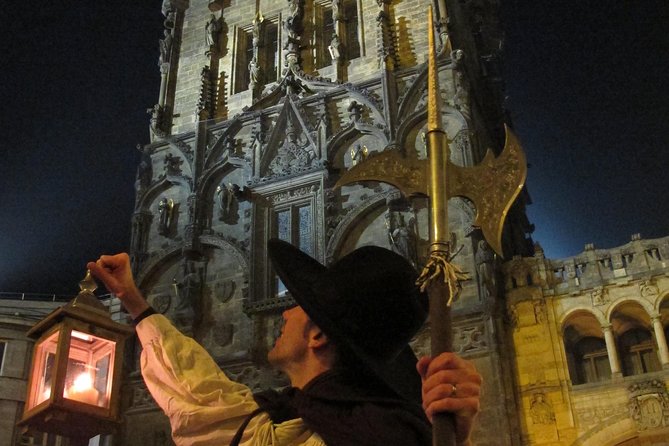
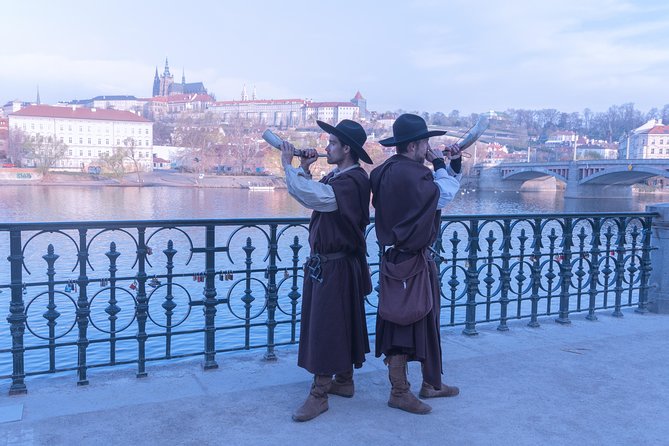
You pass by Rudolfinum and then take a break along the riverside at a quiet spot. This is a practical pause in the middle of the walk, and it comes with a payoff: views on Prague Castle.
Night tours can wear you out because you’re alert the whole time. This break helps reset. You can get photos, but also just stand still and look. That castle view makes the whole route feel connected, because you’re physically linking the city below with the power above.
It’s also a good moment to check your plans for the rest of the evening. You’re not forced to keep walking nonstop, and you can decide if you want to stay near the river for a little longer after the tour ends.
Ending at Charles Bridge beginning, Charles IV, and the people across the water
The tour ends at the beginning of Charles Bridge near the Charles IV Statue area (Křižovnické nám., Staré Město). The guide talks about nobles from the other side and Charles IV, tying the bridge into the larger story of who crossed, who benefited, and who had to live with the results.
Charles Bridge is one of Prague’s most famous sights, but you’re not just there for the crowd. In this tour format, it becomes a transition point. You’ve already covered gates, markets, law, and faith. Now you see a link between the everyday city and the elite power centered around the castle.
If you time it right, you can use the tour ending as your launching pad. Many people stay nearby for further evening strolling, dinner, or a second look at the view lines from different angles.
Pace, weather, and what to wear for a 1.5-hour night route
This walks about 1 hour 30 minutes. The route is for people with moderate physical fitness. That usually means you should be comfortable on uneven sidewalks and willing to keep moving.
It operates in all weather conditions, and the guide uses historical dress, so plan for real-world cold and rain. I strongly suggest you wear:
- closed-toe shoes with good grip
- a rain layer or poncho you can move in
- a warm top you can layer quickly
If you’re traveling with kids, they must be accompanied by an adult. The content includes grim episodes like executions, so you’ll want to judge what’s appropriate for your group.
The route is English. If you’re comfortable with English conversation, you’ll get the full value of the storytelling.
Value for $26.62, and why it often beats a larger group tour
At $26.62 per person for about 90 minutes, this tour is priced like a budget-friendly experience. What makes it feel like better value is what’s included:
- a guide in historical dress
- all taxes and local taxes
- a mobile ticket
- stops that are listed as admission ticket free
You’re paying mainly for the guide performance and the way the story stitches together the Old Town. Since it’s capped at 15 people, it doesn’t feel like you’re being rushed through a crowd. In practice, that size also makes it easier to hear details and ask questions.
Transport and hotel pickup are not included, so you’ll want to plan your own way to the start point at the Powder Tower area. That’s normal for city walking tours, and it keeps the tour focused on the walking story instead of transit time.
Who should book this night watchman walk
This is a strong fit if you want Prague that feels lived-in, not just postcard-ready. It’s especially good if you like:
- street-level history
- storytelling that connects culture, law, and daily life
- short walking tours you can still enjoy at night
If you already did a big daytime highlights tour, this is a useful second look. It follows a different emotional track, from gates and markets to public authority and faith.
It’s also a great choice for families who want engagement. Several people mention teens staying interested because the guide keeps things lively and funny while still covering the facts.
If you hate walking at night or you’re very sensitive to gruesome historical events, you might prefer a lighter-themed tour instead.
Should you book Medieval Prague Through a Nightwatchman’s Eyes?
Yes, if you want Prague to feel like a story you can walk through. The route hits major Old Town anchors like Prasná brána, Old Town Square with the Astronomical Clock, and the Charles Bridge area, but it does more than point and explain. The watchman character ties it together with a street-level lens on survival, fear, and everyday life.
Book it if you value:
- a costumed guide who stays in role and uses props
- a small-group format
- a night atmosphere that matches the darker chapters of Prague’s past
Skip it if grim execution stories would spoil your mood, or if you want a purely scenic, relaxed evening walk.
If you book, do one simple thing that will pay off: show up on time, wear grippy shoes, and give yourself permission to listen instead of rushing for photos. That’s when the whole night watchman concept clicks.
FAQ
How long is the night watchman tour?
The tour lasts about 1 hour 30 minutes.
What is the price per person?
It costs $26.62 per person.
What language is the tour offered in?
The tour is offered in English.
What is the group size limit?
The tour has a maximum of 15 travelers.
Where is the meeting point?
You meet at the Powder Tower, Nám. Republiky 5, Staré Město, 110 00 Praha 1, Czechia.
Where does the tour end?
The tour ends at the beginning of Charles Bridge near the Charles IV Statue, Křižovnické nám., Staré Město, 110 00 Praha-Praha 1, Czechia.
Are admission tickets included for the stops?
Admission ticket costs are listed as free for the stops in the itinerary.
Is hotel pickup or transportation included?
No. Hotel pickup and drop-off are not included, and transportation to and from attractions is also not included.
Does the tour run in bad weather?
Yes, it operates in all weather conditions. You should dress appropriately.
What is the cancellation policy?
Free cancellation is available if you cancel up to 24 hours in advance for a full refund. If you cancel within 24 hours, you will not get a refund.
Just written up in Prague
- Private Transfer from Prague to Regensburg★ 5.0 · 1 review
- Prague: TV Tower Ticket & Novi Grad Digital Tour★ 5.0 · 1 review
- Prague to Dresden’s Old Town, Zwinger & Frauenkirche by Car★ 3.0 · 1 review
- Prague to Český Krumlov Private Guided Tour – With Mike★ 5.0 · 1 review
- Prague to Munich Private Transfer with 2 hours sightseeing★ 5.0 · 1 review
- Prague: 3-Hours Wars & Totality Guided Walking Tour★ 5.0 · 1 review
- Prague to Berlin Private Transfer with Optional Sightseeing★ 5.0 · 1 review
- The Plague Doctor of Prague: Self-Guided Mystery Puzzle Walk★ 3.0 · 1 review